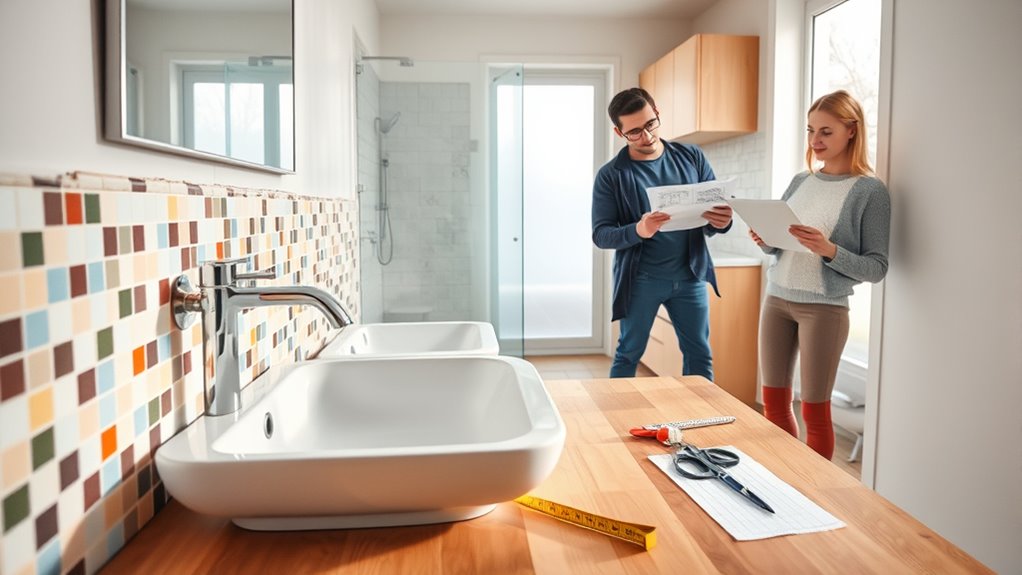

When planning a bathroom renovation, you can handle simpler tasks like painting, replacing fixtures, or installing hardware yourself to save money. However, for complex plumbing, electrical work, or structural changes, it’s best to hire professionals to guarantee safety and code compliance. Knowing what you can confidently do and when to call in experts helps avoid costly mistakes. Keep exploring for tips on making your project a success from start to finish.
Key Takeaways
- DIY minor updates like painting, fixtures, and hardware to save costs and improve appearance.
- Leave complex plumbing and electrical tasks to licensed professionals to ensure safety and code compliance.
- Be aware of safety risks involving water, electricity, and structural changes; avoid DIY for these areas.
- Properly assess your skills and tools before attempting any renovation tasks yourself.
- Hire pros for tasks that could lead to costly damage or hazards if improperly executed.

Renovating a bathroom can be an exciting project, but deciding whether to do it yourself or hire professionals is a crucial first step. One of the key factors influencing this decision is understanding the cost considerations involved. When you choose to handle certain tasks yourself, you can save money on labor costs, but you’ll need to invest time and effort into acquiring the necessary skills and tools. For minor updates like painting walls, replacing fixtures, or installing new hardware, DIY can be a cost-effective approach. However, for major work such as plumbing, electrical systems, or structural changes, the costs of mistakes or subpar work can outweigh savings. Professional contractors bring expertise that ensures the job is done correctly the first time, potentially preventing costly repairs later. Additionally, understanding the importance of safety precautions is vital when working with complex systems in bathrooms, as mishandling electrical or plumbing components can lead to hazards. safety precautions are another critical aspect to think about. Bathrooms contain electrical outlets, water connections, and plumbing that, if mishandled, can lead to hazards like leaks, mold, or electrical shocks. If you’re not well-versed in these systems, attempting complex installations or repairs may pose safety risks. For example, working with electrical wiring requires knowledge of local codes and proper procedures to prevent fire hazards or shocks. Plumbing work, especially involving water supply lines or sewage systems, demands precision to avoid leaks or water damage. When safety precautions are overlooked, you could end up causing damage to your home or risking personal injury. That’s why it’s often wise to leave these tasks to licensed professionals who are trained to adhere to safety standards and building codes. On the other hand, there are tasks that you can confidently handle without risking safety or incurring excessive costs. Painting walls, replacing fixtures like towel bars, or installing new cabinet hardware are manageable projects that don’t require advanced skills. These smaller updates can substantially improve your bathroom’s look and feel without the need for professional help. Just remember, even with simple projects, following proper safety precautions—like turning off water supplies before replacing fixtures or wearing protective gear—ensures a smooth process.
As an affiliate, we earn on qualifying purchases.
Frequently Asked Questions
How Do I Know if My Plumbing Skills Are Sufficient for a DIY Bathroom Project?
You can determine if your plumbing skills are sufficient by honestly evaluating your plumbing experience and tool proficiency. If you’ve handled simple repairs before, like fixing leaks or replacing fixtures, you might be ready for more involved tasks. However, if your experience is limited or you’re unsure about using specialized tools, it’s best to leave complex plumbing work to professionals. Safety and proper function should always come first.
What Safety Precautions Should I Take When Attempting DIY Bathroom Renovations?
Did you know that improper electrical safety is a leading cause of DIY accidents? When renovating your bathroom, always turn off power at the breaker before working on electrical fixtures. Wear gloves to prevent mold and mildew exposure, and guarantee proper ventilation to avoid mold buildup. Use the right tools, read safety instructions carefully, and consider consulting a professional for complex tasks. Your safety is the top priority!
How Long Does a Typical Bathroom Renovation Take When Done by Professionals?
A typical bathroom renovation by professionals takes around 2 to 3 weeks, but timing expectations can vary based on project scope and contractor coordination. Delays may happen due to supply chain issues or unforeseen repairs. To stay on schedule, communicate clearly with your contractor, and plan for some flexibility. Regular updates help guarantee the project progresses smoothly, so you can enjoy your refreshed bathroom sooner.
What Are the Common Costs Associated With Hiring a Bathroom Renovation Expert?
When hiring a bathroom renovation expert, expect a cost breakdown covering labor, materials, permits, and fixtures. Typically, labor makes up about 40-60% of your total costs. Watch out for hidden fees like additional labor or unexpected material charges. To avoid surprises, get detailed quotes upfront, ask about potential extra costs, and confirm what’s included. This way, you stay within budget and avoid unexpected expenses during your renovation.
Can I Upgrade My Bathroom Fixtures Myself Without Affecting Warranties?
You can definitely handle DIY upgrades for bathroom fixtures without jeopardizing their warranties, but you need to follow manufacturer instructions carefully. Keep documentation of your work and use compatible parts to avoid voiding fixture warranties. However, if you’re unsure or the upgrade involves plumbing or electrical work, it’s best to leave it to pros to prevent warranty issues and ensure everything functions safely and correctly.
bathroom fixture replacement kit
As an affiliate, we earn on qualifying purchases.
As an affiliate, we earn on qualifying purchases.
Conclusion
So, now that you’re armed with the scoop, go ahead—paint that wall, tile that floor, and save some cash. But remember, plumbing and electrical work? Leave those to the pros unless you fancy a flood or a spark show. After all, your bathroom’s not just a pretty face—it’s where you start and end your day. Play it smart, DIY what you can, and call in the experts for the rest. Happy renovating!
bathroom hardware installation tools
As an affiliate, we earn on qualifying purchases.
As an affiliate, we earn on qualifying purchases.
professional plumbing repair services
As an affiliate, we earn on qualifying purchases.
As an affiliate, we earn on qualifying purchases.