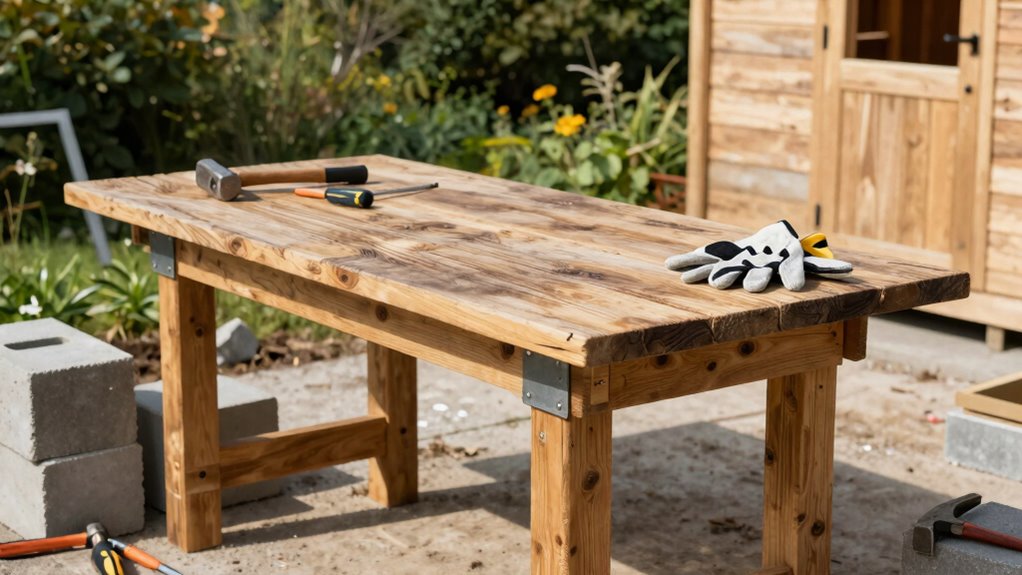

To build a tough outdoor work surface, start by choosing durable, sustainable materials like composite lumber, bamboo, or recycled plastics that resist rot, warping, and insects. Install it on a solid, well-drained foundation with proper anchoring and a slight slope for water runoff. Regularly clean, seal, and inspect the surface, and consider weatherproof covers or coatings for extra protection. Keep it maintained, and you’ll create a long-lasting outdoor workspace that stands up to the elements.
Key Takeaways
- Select durable, eco-friendly materials like composite lumber or bamboo for long-lasting resistance.
- Ensure a stable foundation with gravel or crushed stone and secure anchoring to prevent shifting.
- Incorporate proper drainage and ventilation to reduce moisture buildup and extend surface lifespan.
- Apply weatherproof coatings or sealants regularly to protect against UV, moisture, and temperature changes.
- Perform routine maintenance, including cleaning, repairs, and inspections, to preserve durability over time.

Are you tired of work surfaces that wear out quickly outdoors? If so, building a tough outdoor work surface starts with choosing the right materials. Opting for sustainable materials can make a notable difference in durability and environmental impact. For example, composite lumber made from recycled plastics and wood fibers resists rotting, warping, and insect damage better than traditional wood. Bamboo, another sustainable option, grows quickly and offers exceptional strength, making it suitable for outdoor work surfaces. These materials not only last longer but also lessen your ecological footprint. Incorporating biodiversity considerations into your project can also help support local ecosystems and promote conservation efforts.
Choosing sustainable, durable materials like composite lumber and bamboo extends outdoor work surface longevity and reduces environmental impact.
When constructing your outdoor work surface, pay close attention to proper installation techniques. Guarantee the foundation is solid—using gravel or crushed stone for drainage helps prevent water pooling and reduces the risk of rot and decay. Anchoring your surface securely to the ground with sturdy posts or brackets prevents shifting over time. Incorporating a slight slope into your design to facilitate water runoff further protects the structure from moisture-related damage. Additionally, selecting durable materials can significantly enhance the longevity of your project. Using materials that are resistant to environmental factors ensures your surface remains functional and attractive over time. Proper installation methods can also include ensuring adequate ventilation underneath the surface to reduce moisture buildup, which is crucial for longevity.
Once built, maintaining your outdoor work surface is vital to prolong its lifespan. Regular maintenance tips include cleaning the surface with gentle soap and water to remove dirt and debris that can cause wear over time. Applying a protective sealant or stain designed for outdoor use every couple of years helps guard against moisture, UV rays, and temperature fluctuations. If you notice any cracks or loose boards, address them promptly to prevent further damage. Keep your work surface free of standing water and organic debris, which can accelerate deterioration. Regular inspections can catch small problems early, saving you time and money in the long run.
Weatherproofing is necessary, especially if you live in an area with heavy rain, snow, or intense sun. Covering your work surface with a waterproof tarp or installing a permanent roof structure can substantially extend its lifespan. Also, consider using furniture or work surface pads during heavy-duty tasks to minimize scratches, dents, and other surface damage. Incorporating water-resistant features into your design can further protect your investment from harsh weather conditions. Regularly inspecting your work area ensures that small issues don’t become major problems down the line. Additionally, choosing weatherproof finishes or coatings can provide extra protection against extreme environmental conditions.
outdoor composite lumber decking
As an affiliate, we earn on qualifying purchases.
As an affiliate, we earn on qualifying purchases.
Frequently Asked Questions
What Is the Best Type of Wood for Outdoor Durability?
Cedar and redwood are your best options for outdoor durability because they naturally resist rot and insects. When choosing wood, consider a good wood treatment, like sealing or staining, to extend lifespan. Material comparison shows these woods outperform treated pine or spruce for outdoor use. You’ll want to regularly maintain your work surface with protective finishes to keep it sturdy and weather-resistant over time.
How Long Does a DIY Outdoor Work Surface Typically Last?
A DIY outdoor work surface typically lasts 10 to 15 years, depending on your material choices and weather resistance. Picture your sturdy surface standing firm through sun, rain, and snow—its resilience built into every plank. Opt for weather-resistant woods like cedar or treated lumber, and seal them well. With proper maintenance, your work surface remains strong, reliable, and ready for action, season after season, year after year.
Can I Build a Work Surface on Uneven Ground?
Yes, you can build a work surface on uneven ground. First, do some ground leveling by removing high spots and filling low areas to create a flat base. Then, use stability reinforcement techniques like adding gravel or concrete pads beneath the frame. This guarantees your outdoor work surface stays sturdy and level, even on uneven terrain, making your workspace safer and more reliable.
What Safety Precautions Are Needed During Construction?
Did you know that falls account for over 30% of construction-related injuries? To stay safe during your outdoor work surface project, always wear personal protective equipment like gloves, goggles, and sturdy boots. Follow equipment safety tips, such as inspecting tools before use and keeping the workspace clear. Stay alert and cautious, ensuring safety measures are in place to prevent accidents and keep your project on track.
How Do I Maintain and Clean the Outdoor Work Surface?
To keep your outdoor work surface in top shape, regularly clean it with gentle cleaning techniques, like sweeping away debris and wiping with a damp cloth. Use a mild soap solution for stubborn stains and rinse thoroughly. Maintenance tips include sealing the surface annually to prevent damage, checking for cracks, and repairing them promptly. Staying consistent with cleaning and inspections guarantees your work surface remains durable and safe for years to come.
weatherproof outdoor work surface cover
As an affiliate, we earn on qualifying purchases.
As an affiliate, we earn on qualifying purchases.
Conclusion
By following these steps, you can create a durable outdoor work surface that withstands the elements and heavy use. Imagine building a sturdy bench for your backyard workshop, made from treated wood and sealed with weatherproof paint—you’ll enjoy it for years. Whether you’re tackling a small project or a big renovation, investing in quality materials and proper sealing guarantees your work surface stays tough. Start building today, and enjoy a reliable workspace for all your outdoor projects.
outdoor sealant for wood and composite
As an affiliate, we earn on qualifying purchases.
As an affiliate, we earn on qualifying purchases.
drainage gravel for outdoor projects
As an affiliate, we earn on qualifying purchases.
As an affiliate, we earn on qualifying purchases.