Before installing heavy wall shelving, make certain you choose strong materials like steel or hardwood and verify your wall can support the weight. Locate wall studs with a stud finder for maximum support and use appropriate anchors if needed. Measure carefully, mark precise bracket locations, and keep shelves level for stability. Using quality hardware and proper installation techniques is key to safety and durability. Want to know more tips for a secure setup? Keep going to learn the essentials.
Listen free for 30 days with Audible
Thousands of audiobooks and originals — cancel anytime.
As an affiliate, we earn on qualifying purchases.
Key Takeaways
- Confirm wall type and select appropriate anchors or studs to support the shelf’s weight.
- Use strong, durable materials like steel or hardwood for the shelves.
- Locate and mount into wall studs for maximum stability and safety.
- Properly measure, mark, and level brackets for even weight distribution.
- Follow correct installation procedures to ensure long-term durability and safety.

Installing heavy wall shelving can be a great way to maximize storage space, but it’s important to plan carefully beforehand. The first step is understanding how vital material selection is. You need a material that’s strong enough to support heavy loads without bending or breaking over time. Steel, hardwood, or specially reinforced plywood are popular choices because they offer high durability and weight capacity. Avoid lighter materials like thin particleboard or flimsy plastic, which won’t hold up under significant weight. Think about the environment where you’ll install the shelving. If it’s in a humid basement or garage, choose materials resistant to moisture and temperature fluctuations to prevent warping or deterioration.
Next, consider the weight capacity of the shelving. This isn’t just about how much weight the shelving can hold, but also about how much weight the wall and mounting hardware can support. It’s tempting to load shelves with heavy boxes or tools, but you need to guarantee your wall can handle that load. Check the wall type—drywall, concrete, brick—and select appropriate anchors and mounting hardware. For drywall, toggle bolts or molly bolts provide better support for heavy loads, while concrete or brick walls require specific anchors designed for those surfaces. Be mindful that the weight capacity of your wall anchors is just as important as the strength of the shelves themselves. Overloading can lead to dangerous failures, so always stay within the recommended limits.
Before drilling any holes, locate the wall studs using a stud finder. Installing shelves directly into studs maximizes their weight capacity and ensures stability. If you can’t align your shelves with studs, use heavy-duty anchors designed for the wall type. Mounting brackets should be securely fixed into these supports, providing a solid foundation for your shelves. Remember, the mounting hardware’s quality and installation method directly influence the overall weight capacity. Properly secured brackets distribute weight evenly and reduce stress on any one point, making your shelves safer and more durable. Additionally, choosing the right mounting hardware can make a significant difference in supporting heavy loads safely. Ensuring that your hardware installation is correct and secure is crucial for the longevity and safety of your shelving. When selecting hardware, it’s also wise to consider the load distribution to prevent uneven stress on the brackets and wall.
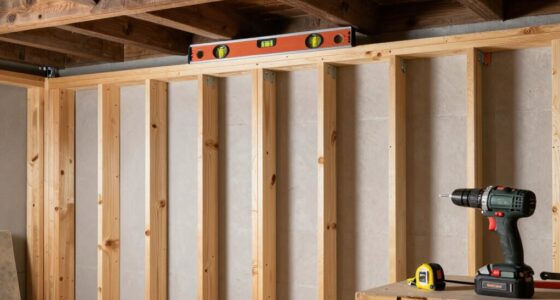
It’s also helpful to consider the weight distribution across the shelves to prevent any weak spots from causing failure over time. When planning your installation, be sure to account for the wall type to select the most suitable mounting method. Finally, take time to measure and plan the layout before installation. Mark precise locations for brackets, ensuring they align with wall studs or are supported by appropriate anchors. Use a level to keep your shelves straight and to distribute weight evenly across the wall. When everything is properly planned and installed with suitable materials and hardware, your heavy wall shelving will not only maximize your storage but also stand the test of time safely.
As an affiliate, we earn on qualifying purchases.
Frequently Asked Questions
How Much Weight Can Heavy Wall Shelving Support Safely?
Heavy wall shelving can typically support between 100 to 300 pounds, depending on the installation. You should focus on proper weight distribution across the shelves to prevent stress on any single point. Material durability also plays an essential role; steel and solid wood tend to hold more weight safely than weaker materials. Always check the manufacturer’s specifications and verify your wall anchors and brackets are rated for the intended load.
What Tools Are Necessary for Installation?
Think of installing heavy wall shelving as assembling a sturdy ship—you’ll need the right tools to navigate smoothly. You’ll require a drill, level, stud finder, screwdriver, and anchors suited for your material selection. Proper mounting techniques involve securing brackets into wall studs for maximum support. Having these tools and techniques prepared guarantees your shelves stay afloat under weight, creating a reliable and safe storage solution.
Can Heavy Wall Shelving Be Installed on Drywall Alone?
You can install heavy wall shelving on drywall alone, but it requires proper anchoring to support weight and guarantee safety. Use heavy-duty anchors or toggle bolts designed for drywall, and consider decorative options like stylish brackets to enhance aesthetic appeal. Keep in mind that choosing the right hardware not only provides stability but also complements your decor, creating a functional and attractive display space. Proper installation is key to both safety and aesthetic considerations.
How Do I Prevent Shelves From Sagging Over Time?
To prevent shelves from sagging over time, choose sturdy shelf material like solid wood or metal, which can handle weight better. Make certain to evenly distribute the weight across the entire shelf, avoiding concentrated loads in one spot. Use strong brackets or supports that match the weight capacity of your shelves. Proper installation on wall studs also ensures better support, reducing the risk of sagging and ensuring longevity.
What Maintenance Is Required for Heavy Wall Shelving?
Maintaining your heavy wall shelving is like tending a garden—you need regular care to keep it thriving. You should periodically check the material durability, ensuring screws and brackets stay tight, and wipe the surfaces to preserve their aesthetic options. If your shelves are made of wood or metal, apply protective finishes or lubricants as needed. Regular inspections keep your shelves safe, functional, and looking great for years to come.
As an affiliate, we earn on qualifying purchases.
Conclusion
Before you install heavy wall shelving, remember that a job worth doing is worth doing right. Take the time to research, gather the right tools, and guarantee your walls can handle the weight. Proper installation isn’t just about convenience; it’s about safety and longevity. As the saying goes, “Measure twice, cut once.” By following these tips, you’ll create a sturdy setup that stands the test of time—because a job well done is a job worth doing well.
As an affiliate, we earn on qualifying purchases.
As an affiliate, we earn on qualifying purchases.
Evergreen bestsellers Picks
bestsellers
As an affiliate, we earn on qualifying purchases.