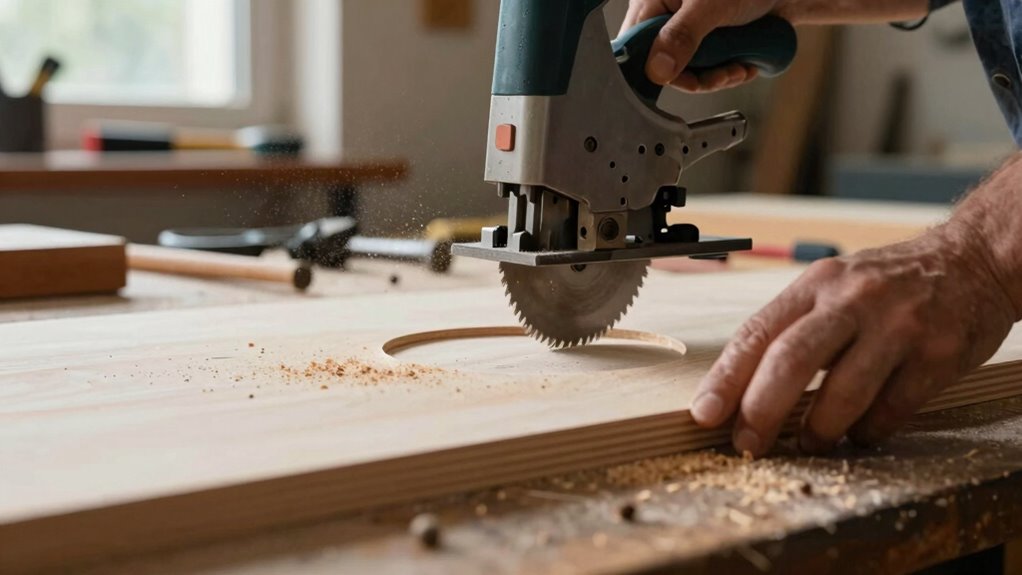

To cut openings in plywood panels effectively, choose a router with the appropriate bits like spiral for clean cuts or pattern bits for detailed shapes. Secure the panel and set the router to the right depth. Make multiple shallow passes to prevent tear-out and guide the router smoothly along marked lines. Always wear safety gear, keep your workspace clean, and make sure the router is unplugged when changing bits. Keep learning how to perfect your technique for the best results.

Get tools and workshop supplies delivered free — and shop member deals
- Fast, free delivery on millions of items
- Access to Prime Big Deal Days deals on October 6–7
- Prime Video, Amazon Music and more included
Key Takeaways
- Select the appropriate router bit, such as spiral or pattern bits, for smooth and precise cuts.
- Securely clamp the plywood and use guides or jigs for accurate, clean openings.
- Set the router to the correct depth and make multiple shallow passes to reduce tear-out.
- Wear safety gear, including glasses and dust masks, and ensure workspace cleanliness.
- Check and maintain router bits regularly for sharpness and proper functioning.
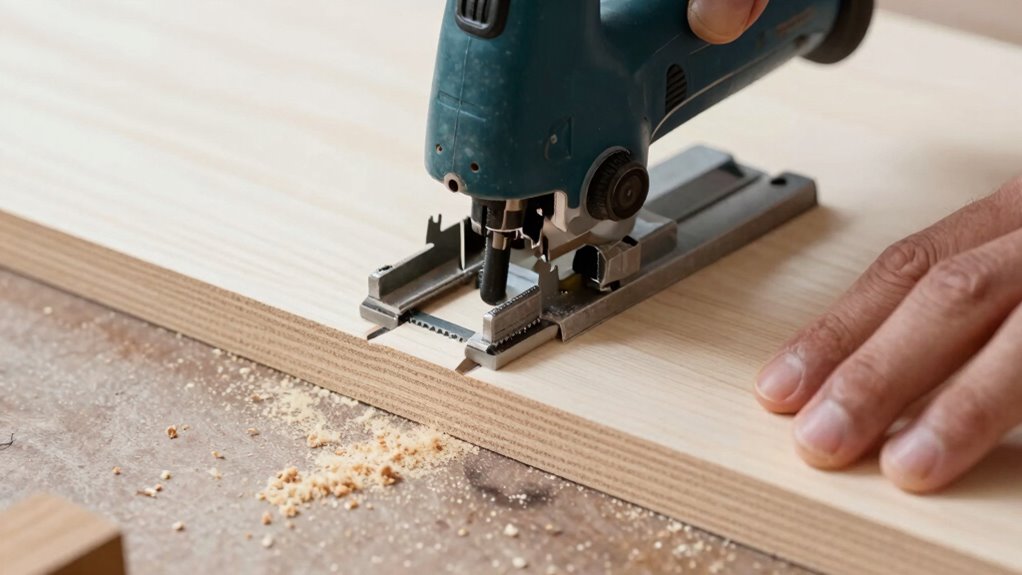
When you need to cut openings in plywood panels, choosing the right method can make the job easier and produce cleaner results. One of the most effective tools for this task is a router, especially when paired with the right router bits. Router bits come in various shapes and sizes, allowing you to customize your cuts for different types of openings, whether it’s a simple hole or intricate design. Selecting the appropriate bit—such as a spiral bit for clean, smooth cuts or a straight bit for precise edges—can significantly improve your work’s quality. Before starting, it’s essential to familiarize yourself with safety precautions. Always wear safety glasses to protect your eyes from flying debris and a dust mask to avoid inhaling sawdust or fine particles. Keep your workspace clean and free of clutter, and ensure the plywood is securely clamped down to prevent slipping or kickback during cutting.
Using a router to cut openings involves setting the router to the correct depth and smoothly guiding it along your marked lines. For more controlled cuts, especially in thicker plywood, make multiple shallow passes rather than trying to cut through all at once. This approach reduces strain on your equipment and minimizes tear-out or splintering. When selecting router bits, consider the type of opening you need—larger holes might require a flush trim bit, while detailed cutouts can be achieved with a pattern bit. Always check the router bits for sharpness and integrity before use, as dull or damaged bits can cause uneven cuts and increase safety risks. Make sure your router is unplugged when changing bits, and tighten the collet securely to prevent wobbling during operation.
Pay close attention to your hand positioning and the direction of the cut. Move the router steadily, applying consistent pressure to avoid gouging or uneven edges. If you’re working with delicate or detailed designs, use templates or jigs to guide your router and achieve precision. Proper planning and understanding of router bit types can help you select the most suitable tool for your project’s specific needs. Additionally, understanding the material properties of plywood can help you anticipate how it reacts during cutting, leading to cleaner results. It is also helpful to familiarize yourself with cutting techniques, which can improve both safety and accuracy. Being aware of dust extraction methods can further enhance your workspace safety and cleanliness. After completing your cut, turn off the router and wait for the bit to come to a complete stop before removing it or making adjustments. Regularly inspecting and maintaining your router bits ensures optimal performance and safety. Clean your bits regularly to maintain their cutting efficiency. By following these safety precautions and choosing the right router bits, you ensure not only a cleaner, more professional-looking opening but also a safer, more efficient workflow. Proper planning, the right tools, and disciplined safety measures will help you achieve the best results in your plywood projects.
As an affiliate, we earn on qualifying purchases.
Frequently Asked Questions
What Safety Gear Should I Wear When Cutting Plywood?
When cutting plywood, you should wear protective gloves to prevent splinters and a dust mask to avoid inhaling harmful dust particles. Safety goggles are also essential to shield your eyes from flying debris. Make sure your clothing is snug and avoid loose jewelry. Using these safety gear items, you reduce the risk of injury and health issues, making your work safer and more comfortable.
Can I Cut Openings in Plywood With a Hand Saw?
Yes, you can cut openings in plywood with a hand saw, especially in thinner panels around 1/4 to 1/2 inch thick. Use proper cutting techniques, like steady, smooth strokes, and make sure to measure and mark accurately before starting. For thicker plywood, a hand saw might be more challenging, so consider using power tools for cleaner, quicker cuts. Always wear safety gear to protect yourself during the process.
How Do I Prevent Splintering During Cutting?
To prevent splintering, always cut with the grain direction, which helps produce cleaner edges. Use a fine-tooth blade or blade suitable for plywood, and cut at a steady, moderate speed—avoiding rushing, which can cause splinters. Applying painter’s tape along the cut line before cutting also minimizes splintering. Keep your saw steady and follow the marked line to guarantee a smooth, clean cut without damaging the surface.
What Is the Best Type of Blade for Cutting Plywood?
When it comes to cutting plywood, you want a blade that gets the job done right the first time. A fine-tooth carbide-tipped blade is your best bet, as it offers clean cuts and reduces splintering. Opt for a high-quality blade designed for plywood or laminate. Use proper cutting techniques, like supporting the panel and cutting with steady, even pressure, to guarantee smooth results—don’t let a good cut go to waste.
How Do I Measure and Mark Accurately for Openings?
To measure and mark accurately for openings, focus on measuring accuracy and precise marking techniques. Use a reliable tape measure and a square or straightedge to guarantee straight, consistent lines. Double-check your measurements before marking, and use a sharp pencil for clear lines. For multiple markings, measure multiple times, and consider taping a template or pattern to guide your cuts. This approach minimizes errors and guarantees precise openings.
woodworking router with spiral bits
As an affiliate, we earn on qualifying purchases.
As an affiliate, we earn on qualifying purchases.
Conclusion
Mastering how to cut openings in plywood panels isn’t just a skill; it’s your key to opening endless creative possibilities. With the right tools and techniques, you turn a simple sheet into a masterpiece waiting to happen. Remember, precision isn’t just a detail—it’s the foundation of quality craftsmanship. So, grab your saws, focus, and cut with confidence—because every perfect opening is a doorway to your next great project. Don’t just cut; create.
jigs for cutting plywood openings
As an affiliate, we earn on qualifying purchases.
As an affiliate, we earn on qualifying purchases.
best router for precise wood cuts
As an affiliate, we earn on qualifying purchases.
As an affiliate, we earn on qualifying purchases.
Fall yard work Picks
leaf blowers
As an affiliate, we earn on qualifying purchases.