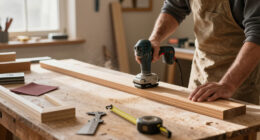
To build a work table that won’t sag, you need to choose sturdy, dense materials like hardwood or thick plywood, and reinforce the frame with strong joints such as mortise-and-tenon or dovetail. Use metal brackets and cross-bracing for extra stability, and incorporate reinforced edges. Consider a design that balances portability with stability, like foldable legs or lockable casters. Keep in mind that focusing on sound construction techniques will guarantee long-lasting, sag-free support—you’ll discover even more tips as you explore further.

Get business pricing on tools and workshop supplies
- Business-only prices and quantity discounts
- Tax-exempt purchasing
- Multiple users, one account, clear invoices
Key Takeaways
- Use thick, dense, and high-quality materials like hardwood or plywood for the tabletop to prevent warping.
- Incorporate reinforced joints such as dovetail or mortise-and-tenon for structural stability.
- Add metal supports, cross-bracing, and load-bearing supports underneath the surface.
- Employ sturdy fastening methods like screws, bolts, and wood glue to enhance joint strength.
- Design with a balanced combination of portability features and a stable frame, including lockable casters or foldable legs.
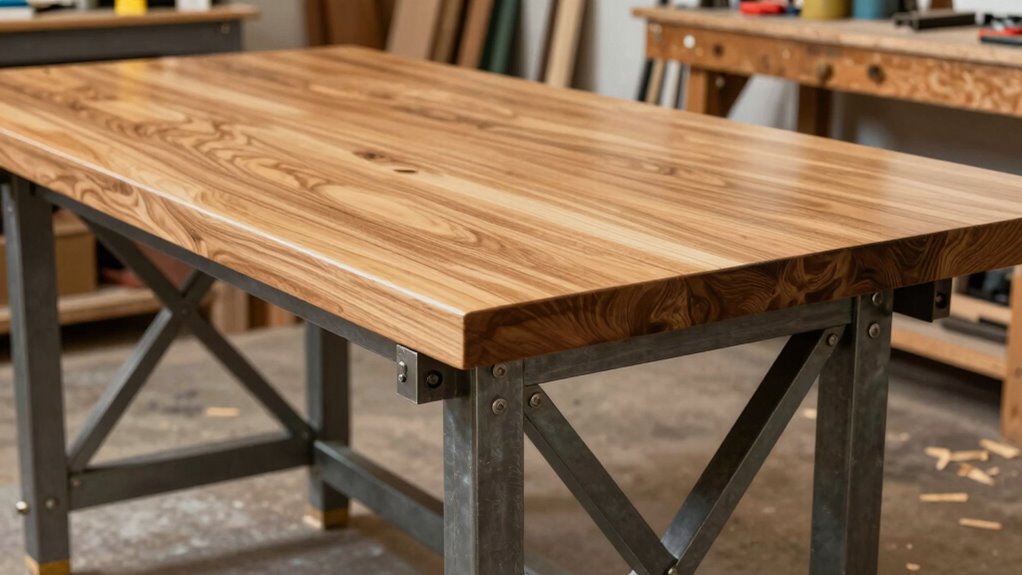
Are you ready to build a work table that can handle your toughest projects? If so, you need to focus on creating a sturdy, reliable surface that won’t sag under pressure. The key is designing a table that’s both functional and durable, which starts with understanding the importance of a portable design and careful material selection. A portable design isn’t just about making the table easy to move; it’s about balancing stability with mobility. You want your work table to be sturdy enough to stay put during heavy tasks but still manageable when you need to reposition it. To achieve this, consider incorporating foldable legs or casters that lock securely in place. These features give you flexibility without sacrificing strength, allowing you to use the table in different locations as needed.
Material selection plays a crucial role in preventing sagging. You’ll want to choose materials that can support weight without bending or warping over time. Solid wood, such as hardwood or plywood with a thick veneer, is an excellent choice because of its durability and resistance to flexing. Metal components, especially steel or aluminum, can add strength to the frame and legs, providing a stable foundation. When selecting surfaces, avoid thin or flimsy materials; instead, opt for thick, dense boards like butcher block or high-grade plywood. These materials distribute weight evenly, reducing stress on any given point. Additionally, consider using reinforced edges or adding cross-bracing underneath the tabletop to prevent sagging from prolonged heavy use. Proper joint reinforcement techniques also contribute significantly to overall stability. Incorporating load distribution strategies, such as placing supports strategically, can further enhance the table’s durability and prevent warping over time.
Choose durable, dense materials like hardwood or plywood with reinforced edges to prevent sagging and ensure long-lasting stability.
You should also pay attention to the joining methods. Strong joints, such as dovetail or mortise-and-tenon, ensure the table maintains its integrity under load. Screws, bolts, and metal brackets can further reinforce these connections, especially when combined with wood glue for added stability. Don’t forget to account for weight distribution—placing heavier items closer to the center and adding support beams underneath can significantly improve longevity. When designing for portability, incorporate handles or lightweight yet tough materials that won’t compromise overall strength. This way, you get a work table that’s easy to move when necessary but remains solid and dependable during use.
Building a work table that won’t sag requires attention to detail in both design and material choice. Focus on creating a portable design that marries convenience with stability, and select materials that can withstand heavy use without warping or bending. When you combine these elements thoughtfully, your work table will become a reliable tool that supports your projects for years to come.
As an affiliate, we earn on qualifying purchases.
Frequently Asked Questions
What Materials Are Best for Preventing Table Sag?
To prevent table sag, you should choose materials with high wood durability like hardwoods—oak, maple, or cherry—as they resist warping and bending. Compared to softer woods like pine or plywood, these materials offer better strength and stability over time. A material comparison shows hardwoods provide superior load-bearing capacity, ensuring your work table remains sturdy, even under heavy use. Investing in quality materials is key to building a long-lasting, sag-resistant table.
How Thick Should the Tabletop Be for Maximum Stability?
Think of your worktable as a sturdy bridge—aim for a tabletop thickness of at least 1.5 to 2 inches for maximum stability. A thick surface acts like solid foundations, supporting weight without bending. Pair it with strong table leg design and smooth surface finishing to guarantee durability and balance. This combination keeps your work steady, like a well-built bridge, ready to handle any task without sagging under pressure.
Can I Reinforce an Existing Work Table Effectively?
Yes, you can reinforce your existing work table effectively. Start with custom reinforcement by adding sturdy support beams or braces underneath, ensuring they’re securely fastened. Consider using alternative materials like steel or plywood for added strength, especially if the current structure sags. You might also upgrade the legs or attach cross supports to distribute weight evenly. These steps will help your table withstand heavier loads without sagging.
What Weight Capacity Should I Aim For?
You should aim for a weight capacity of at least 2,000 pounds to guarantee safety and durability. To achieve this, prioritize table leg stability and use load distribution techniques like thick, solid wood or metal supports. Distributing weight evenly across the surface minimizes sagging and prolongs your table’s lifespan. Remember, a well-constructed table with proper reinforcement can handle more than you think, making your workspace both safer and more reliable.
How Do I Properly Maintain a Sturdy Work Table?
To keep your work table sturdy, regularly inspect the table leg design for looseness or damage, tightening or replacing components as needed. Maintain surface finishing by cleaning it with mild solutions and applying protective sealants to prevent warping or wear. These practices guarantee the structural integrity and longevity of your table, preventing sagging. Proper maintenance keeps your work surface reliable, safe, and ready for any project you undertake.
foldable work table with lockable casters
As an affiliate, we earn on qualifying purchases.
As an affiliate, we earn on qualifying purchases.
Conclusion
A sturdy work table isn’t just about thick legs or strong materials; it’s about the care and attention you put into each joint and support. Just like your craftsmanship, a well-built table withstands the tests of time and use, standing firm through challenges. Remember, what you create reflects your dedication—sometimes, the strongest support comes from the smallest details. Build with purpose, and your workbench will support you, just as you support your projects.
plywood workbench with reinforced edges
As an affiliate, we earn on qualifying purchases.
As an affiliate, we earn on qualifying purchases.
metal support brackets for workbenches
As an affiliate, we earn on qualifying purchases.
As an affiliate, we earn on qualifying purchases.
Fall yard work Picks
leaf blowers
As an affiliate, we earn on qualifying purchases.