
Before drilling into concrete walls, make certain you wear safety goggles, a dust mask, and ear protection. Choose the right equipment, like a hammer drill with carbide-tipped bits, and select the appropriate size for your holes. Before starting, mark your spot, check for utilities, and confirm your workspace is clear and well-ventilated. Use proper technique by starting slow and keeping the drill straight. To learn more tips for safe and effective drilling, keep going.

Get business pricing on tools and workshop supplies
- Business-only prices and quantity discounts
- Tax-exempt purchasing
- Multiple users, one account, clear invoices
Key Takeaways
- Use a hammer drill with a carbide-tipped masonry bit for effective concrete drilling.
- Verify the wall for hidden utilities using a detector before drilling.
- Wear appropriate safety gear: goggles, dust mask, gloves, and ear protection.
- Mark the drilling spot precisely and start at low speed to guide the bit.
- Ensure proper technique and steady pressure to prevent damage and ensure safety.

Drilling into concrete walls can be a straightforward task if you understand what’s involved, but it’s essential to prepare properly to avoid damage or injury. The first step is to prioritize safety precautions. Concrete drilling creates dust and debris, so wearing safety goggles and a dust mask is crucial. Gloves protect your hands from rough surfaces and accidental slips, while ear protection shields you from the loud noise generated by power tools. Make sure the work area is well-ventilated, and clear away any obstacles that could cause tripping or distraction. Never underestimate the force required; a sudden tool slip can lead to injuries or damage to the wall or surrounding areas. Always double-check that your workspace is safe before starting.
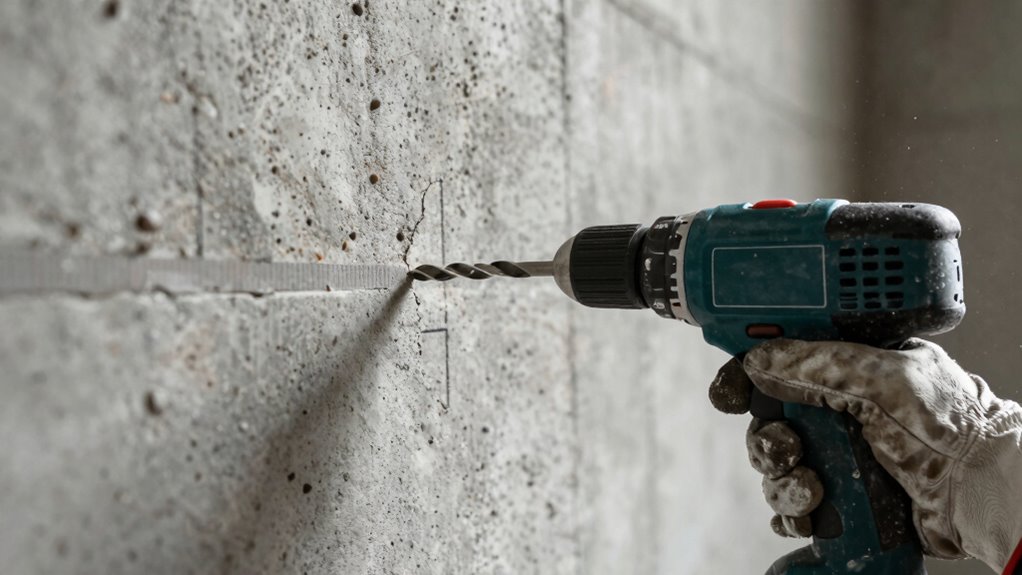
Next, equipment selection plays an important role in guaranteeing your project goes smoothly. Not all drills are suitable for concrete, so choose a hammer drill or a rotary hammer with a hammering function. These tools provide the necessary power and impact to bore through tough surfaces efficiently. When selecting bits, opt for carbide-tipped masonry drill bits, which are designed specifically for concrete and can withstand the high impact forces. The size of the bit depends on the hole diameter you need, but it’s wise to have a variety on hand in case adjustments are required. If your project involves deeper holes, consider using a drill with adjustable depth stops to maintain consistency and precision. Additionally, understanding concrete properties can help you choose the right tools and techniques for your specific wall type. Familiarizing yourself with concrete strength can also prevent overestimating the drill’s capacity and causing unnecessary damage.
Before you start drilling, take a few moments to mark your spot accurately and guarantee it’s free of electrical wiring, pipes, or other hidden utilities. Using a stud finder or wire detector can save you from costly mistakes or dangerous accidents. Once everything is set, start drilling at a low speed to create a guiding hole, then increase the speed gradually. Keep the drill straight and apply steady pressure—forcing it can cause the bit to break or the drill to slip. Periodically withdraw the bit to clear dust and debris, which helps maintain drilling efficiency.
hammer drill with carbide-tipped masonry bits
As an affiliate, we earn on qualifying purchases.
As an affiliate, we earn on qualifying purchases.
Frequently Asked Questions
Can I Drill Into Concrete Without Using a Hammer Drill?
Yes, you can drill into concrete without a hammer drill by using alternative drilling techniques. You’ll need a suitable drill bit, like a masonry bit, designed for concrete. Start with a slow speed and apply steady pressure. For tougher spots, consider using a regular drill with a rotary motion, but keep in mind that a hammer drill makes this task much easier and faster.
What Safety Gear Is Recommended for Drilling Into Concrete?
Imagine sparks flying and dust swirling as you drill into concrete, your safety gear protecting you. You ought to wear personal protective equipment like safety goggles to shield your eyes from debris, a dust mask to prevent inhaling harmful particles, and gloves for a secure grip. Use dust control measures, like a vacuum attachment, to minimize mess and health risks. Prioritizing safety guarantees your work is efficient and injury-free.
How Do I Repair a Damaged Concrete Wall After Drilling?
To repair a damaged concrete wall after drilling, start by cleaning the damaged area thoroughly. Use a concrete patch or epoxy to fill the hole, applying it with a trowel or putty knife. Make sure to blend the patch with the existing concrete surface. Allow it to cure fully before sanding smooth. Proper drilling techniques prevent further damage, so always drill slowly and use the right bit to avoid creating more cracks or chips.
Can I Drill Into Reinforced Concrete?
Yes, you can drill into reinforced concrete, but it requires specific drilling techniques. Reinforced concrete contains steel reinforcement, so use a heavy-duty drill with a carbide-tipped bit designed for concrete. Start with a smaller pilot hole, then gradually increase the size. Be sure to apply steady pressure, use water to cool the bit, and avoid hitting the reinforcement, which can weaken the wall or damage your drill.
What Are the Environmental Impacts of Drilling Into Concrete?
Drilling into concrete can cause environmental concerns like dust and noise pollution, affecting nearby areas. You should implement pollution control measures, such as dust barriers and water suppression, to minimize these impacts. Also, consider the potential for groundwater contamination if chemicals are used. Being mindful of local regulations helps prevent environmental damage, ensuring your drilling process remains eco-friendly and responsible.
As an affiliate, we earn on qualifying purchases.
Conclusion
Before you start drilling into concrete walls, remember that patience and preparation are your best tools. Like an alchemist turning raw materials into gold, your careful planning transforms a formidable task into a successful project. Approach each step with respect for the material and caution, and you’ll avoid pitfalls and damage. Keep this mindset, and you’ll forge ahead confidently—turning what once seemed impossible into a job well done, much like crafting a masterpiece from raw stone.
stud finder and wire detector for concrete walls
As an affiliate, we earn on qualifying purchases.
As an affiliate, we earn on qualifying purchases.
As an affiliate, we earn on qualifying purchases.
Fall yard work Picks
leaf blowers
As an affiliate, we earn on qualifying purchases.