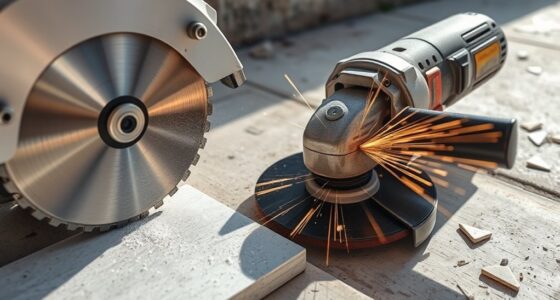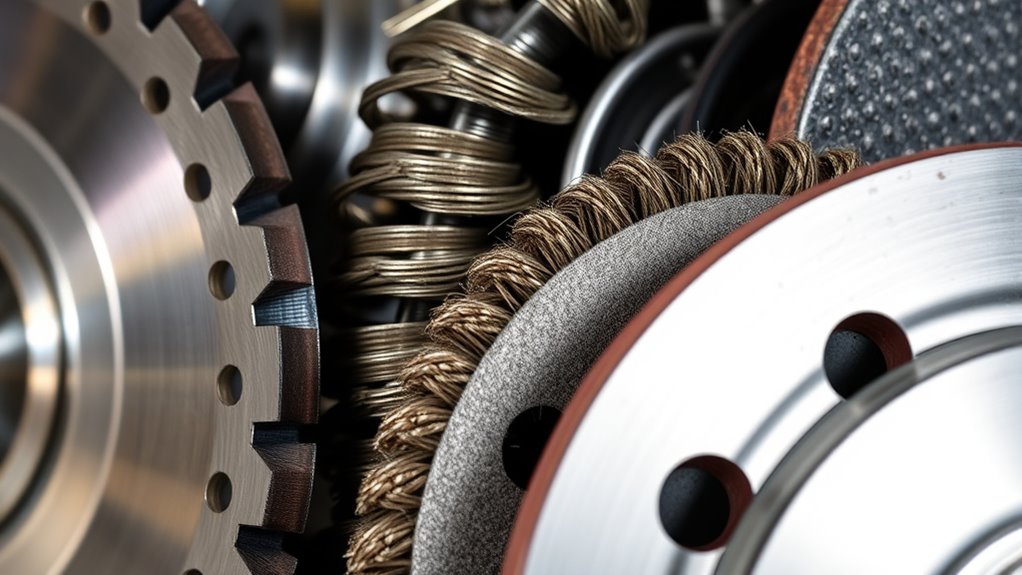

To get the most from your angle grinder, you need to match the right attachment to your task. From cutting discs for precise cuts, grinding wheels to smooth surfaces, wire brushes for rust removal, to polishing pads for finishing, each attachment serves a different purpose. Always handle attachments carefully, follow safety guidelines, and confirm compatibility. Continuing to learn about these tools will help you work safely and achieve professional results every time.

Get business pricing on tools and workshop supplies
- Business-only prices and quantity discounts
- Tax-exempt purchasing
- Multiple users, one account, clear invoices
Key Takeaways
- Attachments such as discs, brushes, and wheels enable various tasks like cutting, grinding, polishing, and cleaning with an angle grinder.
- Always select attachments compatible with your grinder’s size and RPM ratings to ensure safety and optimal performance.
- Properly install and secure attachments before use, following manufacturer guidelines to prevent dislodgement or accidents.
- Use appropriate safety gear—eye protection, gloves, and hearing protection—when operating different attachments.
- Regularly inspect and maintain attachments, replacing worn parts and keeping tools clean for safe, efficient results.
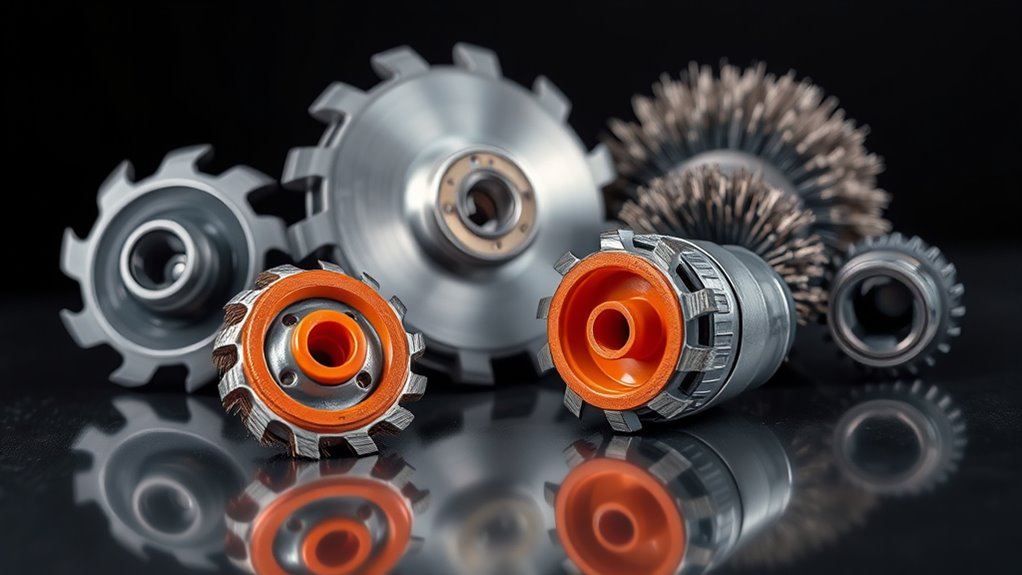
Are you making the most of your angle grinder? If you’re not familiar with its various attachments, you might be missing out on its full potential. Switching between different discs, brushes, or wheels can transform your tool into a versatile machine capable of cutting, grinding, polishing, or even cleaning. But to do this safely and effectively, you need to understand how to choose the right attachment and maintain it properly. Equally important is always wearing proper safety gear—eye protection, gloves, and hearing protection—to stay safe during operation. Proper safety gear isn’t just a recommendation; it’s a necessity when handling different attachments that can generate sparks, debris, or loud noise.
Maximize your angle grinder safely with the right attachments and proper safety gear.
When you’re attaching or changing discs or brushes, always make sure your angle grinder is unplugged or switched off to prevent accidental startups. Regular maintenance tips also come into play here. Keep your attachments clean and free of debris to prolong their lifespan and guarantee maximum performance. Check for any cracks, chips, or signs of wear before each use—using a damaged disc or brush can lead to dangerous failures that might cause injuries. Store attachments in a dry, organized space to avoid rust and damage, and replace worn-out parts promptly. Maintaining your angle grinder itself is equally essential: keep the vents clear, tighten loose components, and lubricate moving parts as recommended by the manufacturer. Additionally, understanding the science behind safety can help inform your choices and prevent accidents.
The variety of attachments available opens up numerous applications, from cutting through metal or tile with a diamond blade to removing rust with wire brushes. Cutting discs are perfect for making precise cuts, but you must guarantee they’re compatible with your grinder’s size and RPM rating. Using a grinding wheel or flap disc can smooth surfaces or shape materials, but always remember to operate at the appropriate speed to prevent overheating or disintegration. Wire brushes are excellent for cleaning and polishing, but they need to be replaced once worn down to avoid damaging your workpiece or risking a brush shattering.
Understanding how to select and maintain your attachments is vital for safety and efficiency. Always adhere to the manufacturer’s guidelines regarding usage and safety precautions. Be cautious with high-speed attachments, and never force a tool beyond its capacity. When you follow these safety tips and conduct regular maintenance, you’ll maximize your angle grinder’s capabilities while minimizing risks. Whether you’re cutting, grinding, or polishing, the right attachment combined with proper care makes all the difference in achieving professional results and keeping yourself safe during every project.
As an affiliate, we earn on qualifying purchases.
Frequently Asked Questions
Are Angle Grinder Attachments Compatible With All Brands?
Not all angle grinder attachments are compatible with every brand. You should check the brand compatibility before purchasing to guarantee a proper fit. Many attachments offer attachment versatility, fitting multiple brands, but some are designed specifically for particular models. Always read the product specifications and user reviews to confirm compatibility. This way, you get the most out of your angle grinder and avoid potential safety risks or damage.
How Do I Safely Change an Attachment on My Grinder?
To safely change an attachment on your grinder, first unplug it and wear gloves for protection. Release the spindle lock and remove the old attachment carefully. Check for attachment compatibility before installing the new one, ensuring it’s the right size and type. Store your attachments properly in a dry, organized space when not in use. Always tighten the new attachment securely before resuming work to prevent accidents.
What Safety Gear Should I Wear When Using Attachments?
Ever seen sparks fly and debris scatter? You should wear protective eyewear to shield your eyes and hearing protection to guard against loud noise. Gloves are essential for grip and hand safety, while a dust mask helps prevent inhalation of particles. Do you want to risk injury? No, so gear up with these safety items before starting your project. Safety isn’t optional when working with powerful attachments.
Can Attachments Be Used for Both Wet and Dry Grinding?
You can use attachments for both wet and dry grinding, but it depends on the specific attachment. Wet grinding involves using water to cool the material and reduce dust, making it ideal for some cutting discs and concrete attachments. Dry grinding, on the other hand, doesn’t require water and is suitable for metal or stone. Always check the manufacturer’s instructions to verify your attachment is designed for wet or dry grinding to stay safe and effective.
How Do I Maintain and Store Different Attachments Properly?
Think of your attachments like delicate tools in a toolbox—proper maintenance and storage keep them sharp and ready. After each use, clean attachments gently with a brush or cloth to remove debris, preventing rust and wear. Store them in a dry, organized container, away from moisture and extreme temperatures. Follow storage tips like labeling and keeping accessories separated to extend their lifespan and guarantee safety during your next project.
angle grinder wire brush attachment
As an affiliate, we earn on qualifying purchases.
As an affiliate, we earn on qualifying purchases.
Conclusion
Now that you’ve explored the world of angle grinder attachments, you’re equipped to tackle any task with confidence. Think of these tools as your trusty sidekicks, each one ready to transform your project from rough to refined. Remember, choosing the right attachment is like finding the perfect key—unlocking new possibilities and making your work easier and more efficient. So go ahead, wield your angle grinder with mastery, and let your creativity shine brighter than ever!
As an affiliate, we earn on qualifying purchases.
As an affiliate, we earn on qualifying purchases.
Fall yard work Picks
leaf blowers
As an affiliate, we earn on qualifying purchases.