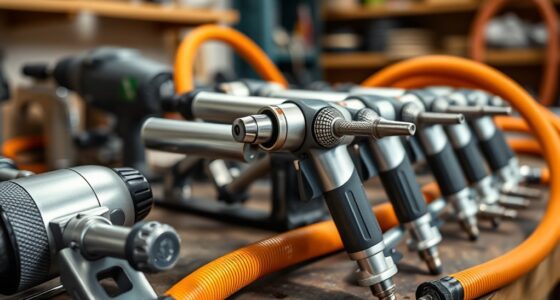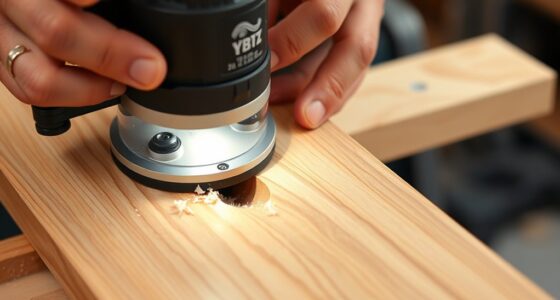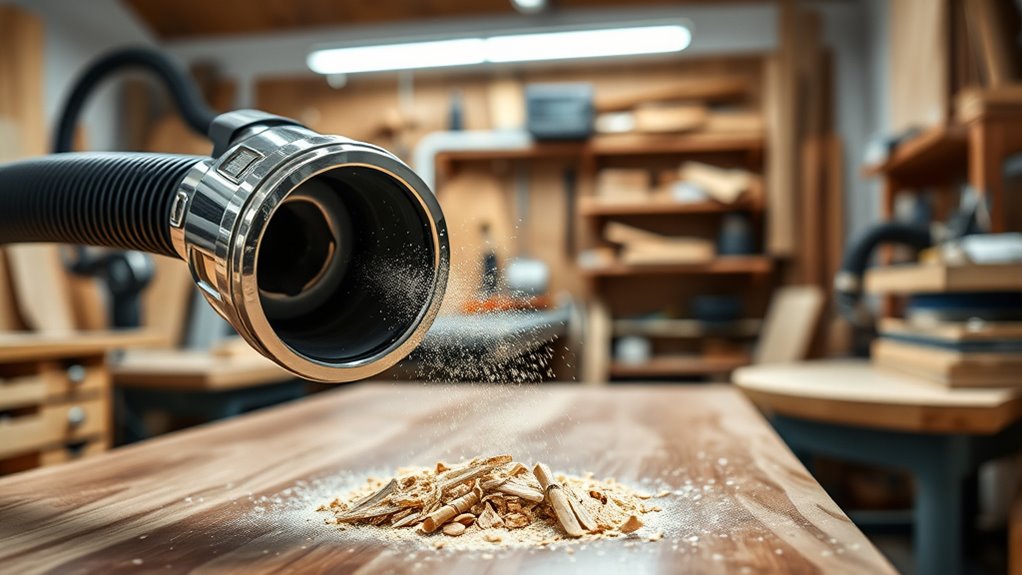

To keep your workshop clean, use effective dust collection with the right vacuum attachments. Attachments should fit securely and be compatible with your tools to capture dust at the source, preventing debris from dispersing into the air. Regular maintenance ensures your system stays efficient and safe. Choosing high-quality filters, like HEPA, can improve air quality and safety. Keep these tips in mind, and you’ll create a cleaner, healthier workspace—learn more to optimize your dust management.
Key Takeaways
- Use compatible vacuum attachments to effectively capture dust at the source and prevent dispersal.
- Regularly maintain and clean attachments and filters to ensure optimal dust collection performance.
- Choose filtration systems with certification standards like HEPA for safety and efficiency.
- Ensure proper sealing and fitting of attachments to maximize suction and dust containment.
- Incorporate air filtration technology to reduce airborne dust and create a healthier workshop environment.
Dust collection is an essential aspect of maintaining a safe and clean workspace, especially when working with woodworking tools or other machinery that generates fine debris. Proper dust management not only keeps your work area tidy but also plays a vital role in protecting your health and making certain your equipment runs smoothly. One of the key components of effective dust collection is air filtration, which involves capturing airborne particles before they can circulate throughout your shop. Good air filtration systems help reduce dust levels in the air, preventing respiratory issues and creating a healthier environment. When selecting dust collection equipment, it’s important to prioritize units that meet or exceed safety standards, which are established guidelines designed to guarantee that your system effectively captures dust and maintains safe operating conditions.
Effective dust collection ensures safety, health, and a cleaner workspace through proper air filtration and adherence to safety standards.
Safety standards for dust collection systems are put in place to guarantee that your workspace remains safe and compliant with regulations. These standards specify the minimum requirements for filtration efficiency, airflow capacity, and containment of hazardous dust. By adhering to these standards, you reduce the risk of dust explosions, fire hazards, and health problems caused by inhaling fine particles. For example, HEPA filters are often recommended because they can trap very small particles, including bacteria and certain toxins, helping you meet or exceed safety requirements. Making sure your system is properly rated and certified by relevant safety organizations means you’re investing in equipment designed to keep your shop safe and compliant. Additionally, understanding the navigation and mapping features of advanced dust collection systems can help optimize airflow and attachment placement for maximum efficiency.
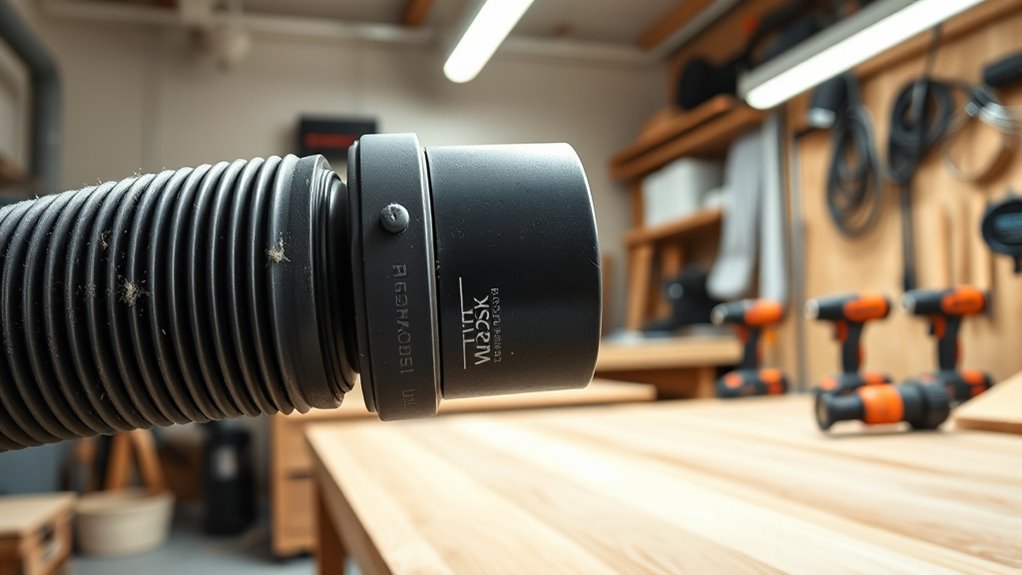
In addition to choosing the right filtration technology, you want to make sure your dust collection system’s vacuum attachments are compatible with your tools and workflow. These attachments play a vital role in capturing dust at the source—right where it’s generated—before it has the chance to disperse into the air. Properly fitted vacuum hoses and attachments ensure maximum suction and containment, making your dust collection more efficient. When you connect your vacuum attachments correctly and maintain your system regularly, you’ll notice less dust lingering in the air and on surfaces, which not only improves safety but also keeps your workspace cleaner and more pleasant to work in.
Ultimately, effective dust collection hinges on understanding and implementing air filtration techniques aligned with safety standards. By investing in high-quality equipment and maintaining it properly, you create a safer, healthier environment for yourself and anyone else working in your shop. Proper filtration and reliable vacuum attachments work together to guarantee dust stays where it belongs—inside your collection system—so you can focus on your craft without worry.
Frequently Asked Questions
How Do I Choose the Right Vacuum Attachment for My Tools?
To choose the right vacuum attachment, consider your tools and their dust types. Look at vacuum attachment types like hose adapters, brush nozzles, and crevice tools to match your equipment. Guarantee tool compatibility by checking your vacuum’s size and connection options. You want attachments that fit securely and are designed for your specific tasks, whether sanding, router work, or cutting. This ensures efficient dust collection and keeps your workspace cleaner.
What Maintenance Is Required for Dust Collection Systems?
Think of your dust collection system as a vigilant guardian. To keep it in top shape, you need to perform regular system inspections, checking for blockages and wear. Replace filters when they become clogged or dirty to guarantee peak airflow and filtration. This routine maintenance prevents buildup, extends your system’s life, and keeps your workshop safe and clean, much like a loyal protector who’s always ready for action.
Can I Use Regular Shop Vacuums for Dust Collection?
You can use a shop vacuum for dust collection, but it’s not always ideal. Regular shop vacuums often lack proper dust filtration, which can lead to health hazards and clogged filters. For better results, look for models with HEPA filters or upgrade your vacuum’s filtration system. Make sure it has enough power and capacity to handle your workshop’s dust, and regularly clean or replace filters to maintain efficiency.
How Do I Prevent Clogs in My Dust Collection System?
Ironically, avoiding clogs is simple—just don’t ignore filter maintenance. Regularly clean or replace filters to guarantee smooth airflow. Also, use a hose with an appropriate diameter; too narrow, and debris gets stuck, causing blockages. Keep an eye on airflow and avoid overloading the system. By maintaining filters and choosing the right hose size, you prevent clogs and keep your dust collection running effortlessly.
Are There Safety Precautions for Dust Collection in Workshops?
You should prioritize respiratory safety by wearing masks and ensuring proper ventilation to avoid inhaling dust particles. Regularly inspect your dust collection system for electrical hazards, like frayed wires or loose connections, to prevent fire risks. Keep filters clean, and follow manufacturer instructions to maintain system efficiency. Always turn off and unplug equipment before maintenance, and use grounded outlets to reduce electrical hazards in your workshop.
Conclusion
Now, with your vacuum attachments ready, imagine your workshop as a pristine haven, free of dust clouds swirling in the air. Every sweep of the hose pulls away tiny particles, leaving your space fresh and inviting. With just a little effort, you create a cleaner, safer environment where your projects can thrive. Keep your tools and workspace spotless — a clean workshop isn’t just tidy, it’s a place where your creativity can truly flourish.