
When choosing between electric and gas leaf blowers, consider your yard size and debris type. Electric blowers are lightweight, quiet, and low-maintenance, perfect for small to medium yards with light debris. Gas blowers offer more power and portability, ideal for larger or tougher cleanup jobs. Each type has its perks, but understanding their differences helps you work smarter. Want tips on maximizing your yard cleanup? Keep going to discover more helpful insights.

Get business pricing on tools and workshop supplies
- Business-only prices and quantity discounts
- Tax-exempt purchasing
- Multiple users, one account, clear invoices
Key Takeaways
- Electric blowers are lightweight, quiet, and low-maintenance, ideal for small to medium yards.
- Gas blowers offer more power and portability, suitable for large or debris-heavy areas.
- For quick yard cleanup, start from edges, blow debris into piles, and work inward to maximize efficiency.
- Regularly clean air intake, filters, and nozzle to keep blowers functioning smoothly.
- Store equipment properly after use, draining fuel for gas models and keeping electric blowers in a dry, cool place.

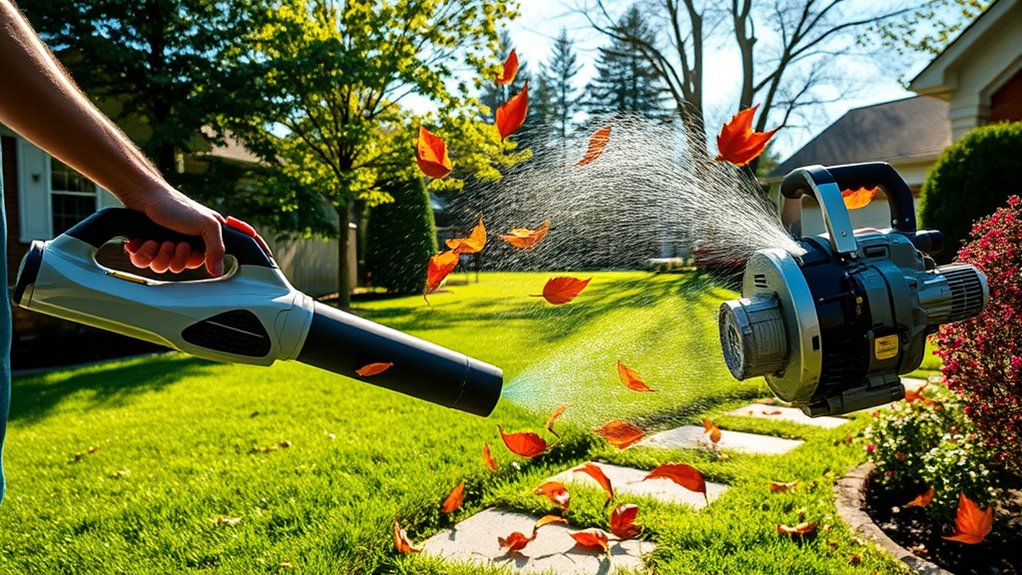
Have you ever wondered what makes a leaf blower an essential tool for yard cleanup? The answer lies in understanding the different leaf blower types available and how to keep them in top shape. Choosing the right leaf blower depends on your yard size, terrain, and personal preferences. There are primarily two types: electric and gas. Electric leaf blowers are lightweight, easy to start, and require minimal maintenance. They’re perfect for small to medium yards because they don’t produce fumes and are quieter. Gas-powered blowers, on the other hand, deliver more power, making them ideal for larger properties with thick leaves and debris. They are more portable since they aren’t tethered to a power cord, but they do need regular maintenance such as checking the spark plug, changing air filters, and ensuring the fuel system stays clean.
Knowing the different leaf blower types helps you pick the best tool for your needs, but maintaining your chosen blower is equally important for quick and efficient yard cleanup. Regular maintenance tips include keeping the air intake free of debris, inspecting and replacing the spark plug annually, and cleaning or replacing the air filter often. If you have an electric blower, ensure the cord isn’t damaged and store it in a dry, cool place when not in use. For gas models, always use fresh fuel and drain the tank if you plan to store it for an extended period. Lubricating moving parts as recommended by the manufacturer also prolongs the life of your blower and ensures it runs smoothly. Additionally, understanding electric vs. gas options can help you select the most efficient and suitable tool for your yard.
When using your leaf blower, proper technique can drastically reduce cleanup time. Start from the edges and work your way toward the center, blowing debris into manageable piles. For larger yards, breaking the task into sections helps maintain efficiency. Keep your blower at a comfortable height and angle, and don’t forget to wear eye protection and a dust mask if necessary. After use, clean off any dirt or leaves from the nozzle and vents, which prevents clogging and overheating. Following these maintenance tips and understanding the different leaf blower types will not only extend your equipment’s lifespan but also make yard cleanup faster and less of a chore.
As an affiliate, we earn on qualifying purchases.
Frequently Asked Questions
How Long Does a Typical Leaf Blower Battery Last?
A typical leaf blower battery lasts about 20 to 30 minutes of continuous use, depending on the model and power level. You’ll find that higher-capacity batteries offer longer battery life but may take 1 to 2 hours to recharge fully. To maximize your yard cleanup, consider having spare batteries on hand so you can swap them out and keep working without long recharge times.
Are Gas Leaf Blowers Louder Than Electric Models?
Gas leaf blowers are like thunderclaps compared to electric models, making them markedly louder. Their noise levels often exceed safe hearing limits and can disturb neighbors. Additionally, they have a greater environmental impact due to emissions. If you prefer a quieter yard cleanup, electric blowers are the better choice. They produce less noise and are eco-friendlier, making your outdoor chores more peaceful for you and your community.
Can Electric Leaf Blowers Handle Heavy, Wet Leaves Effectively?
Electric leaf blowers can handle heavy, wet leaves, but their blower power is often limited by leaf wetness. If the leaves are excessively soaked, you might need a more powerful gas model for efficiency. However, for moderately wet leaves, a good electric blower with a strong motor can work effectively. Keep in mind that wet leaves are denser, so patience and multiple passes may be necessary to clear your yard thoroughly.
What Are the Safety Precautions for Using Gas-Powered Blowers?
Imagine a warrior donning armor before battle—safety gear is your armor when using gas-powered blowers. Always wear protective goggles, ear protection, and gloves to shield against debris and noise. Handle fuel with care, avoiding spills and flames, and store it properly away from heat sources. Check for leaks and follow the manufacturer’s instructions carefully. These precautions keep you safe while making yard work less hazardous.
How Do I Maintain and Store My Leaf Blower Properly?
To maintain and store your leaf blower properly, regularly check and clean the air filters and battery contacts. For battery maintenance, fully charge it before storing and avoid leaving it discharged for long periods. Store your blower in a cool, dry place away from direct sunlight, and keep the battery separate if possible. Use proper storage tips like hanging or placing it on shelves to prevent damage and guarantee longevity.
As an affiliate, we earn on qualifying purchases.
Conclusion
No matter which type of leaf blower you choose, mastering its use can turn yard cleanup from a dreaded chore into a breeze—literally. Electric models offer quiet, eco-friendly power, while gas blowers provide unmatched strength for tough debris. With the right technique, you’ll clear your yard faster than you can say “leaf tornado.” Invest in the right tool, follow these tips, and watch your yard stay pristine effortlessly—your neighbors will swear you have a magic wand!
cordless leaf blower for large yard
As an affiliate, we earn on qualifying purchases.
As an affiliate, we earn on qualifying purchases.
As an affiliate, we earn on qualifying purchases.
Fall yard work Picks
leaf blowers
As an affiliate, we earn on qualifying purchases.