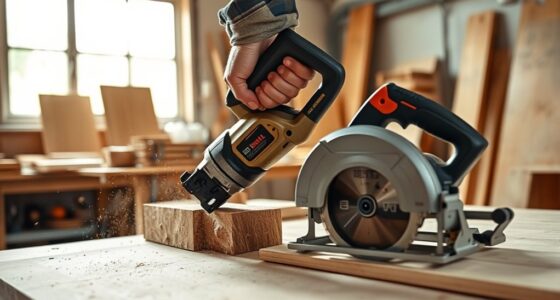
Choosing between a router and a jigsaw depends on your project needs. Use a router for precise, detailed edges and smooth finishes, especially on flat surfaces or for decorative work. Opt for a jigsaw if you need to cut intricate shapes or curves, as it offers more maneuverability. Consider the material and complexity of your design. Keep exploring further to find out how to select the best tool for your specific project.
Key Takeaways
- Use a router for detailed, smooth edges and intricate design work requiring precision.
- Choose a jigsaw for cutting curves, complex shapes, and freehand decorative patterns.
- Consider material thickness and density; routers handle deeper cuts, while jigsaws excel in maneuverability.
- For large, flat surfaces with straight lines, a router provides cleaner, more controlled results.
- Select a jigsaw for tight curves and irregular shapes where maneuverability and flexibility are essential.
Understanding the Functions and Uses of Routers and Jigsaws
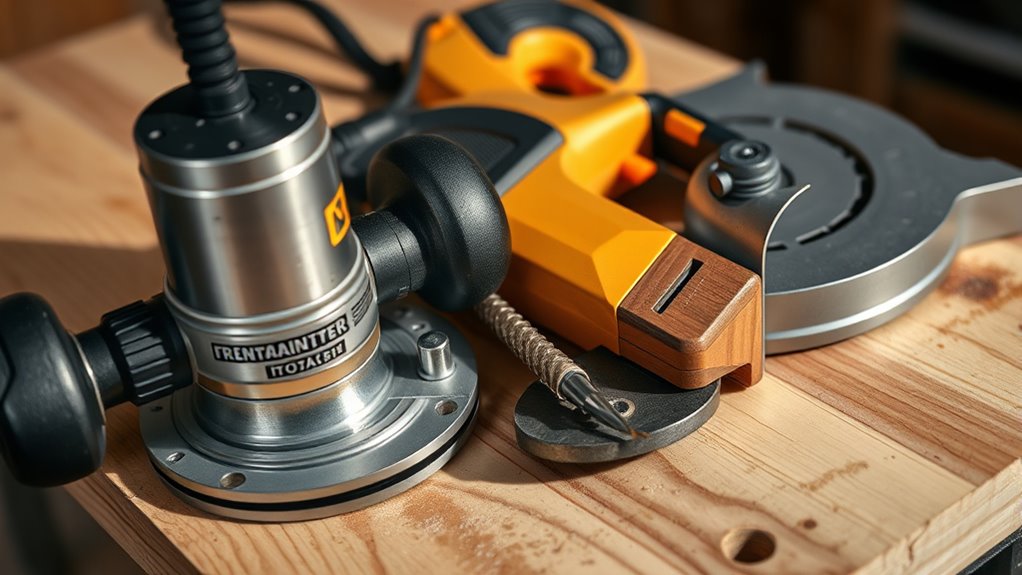
Routers and jigsaws are versatile power tools that serve different purposes in woodworking and carpentry. When using a router, safety is vital—you need to keep a firm grip and guarantee the workpiece is stable to avoid accidents. Routers are ideal for creating decorative edges, hollowing out areas, or making precise grooves. Jigsaws, on the other hand, excel at cutting curves and intricate shapes. Their blades come in various types, so selecting the right jigsaw blades is indispensable for clean cuts. While routers excel at shaping and edging, jigsaws are better suited for detailed, freehand cuts. Understanding these functions helps you determine which tool fits each task, ensuring safe and effective use in your projects. Additionally, considering cutting performance and the material you work with can help you choose the most suitable tool for your specific needs. Furthermore, being aware of tool versatility can enhance your ability to complete diverse projects efficiently. For optimal results, it’s also important to evaluate power and control features to match your skill level and project complexity.
Key Factors to Consider When Choosing a Cutting Tool
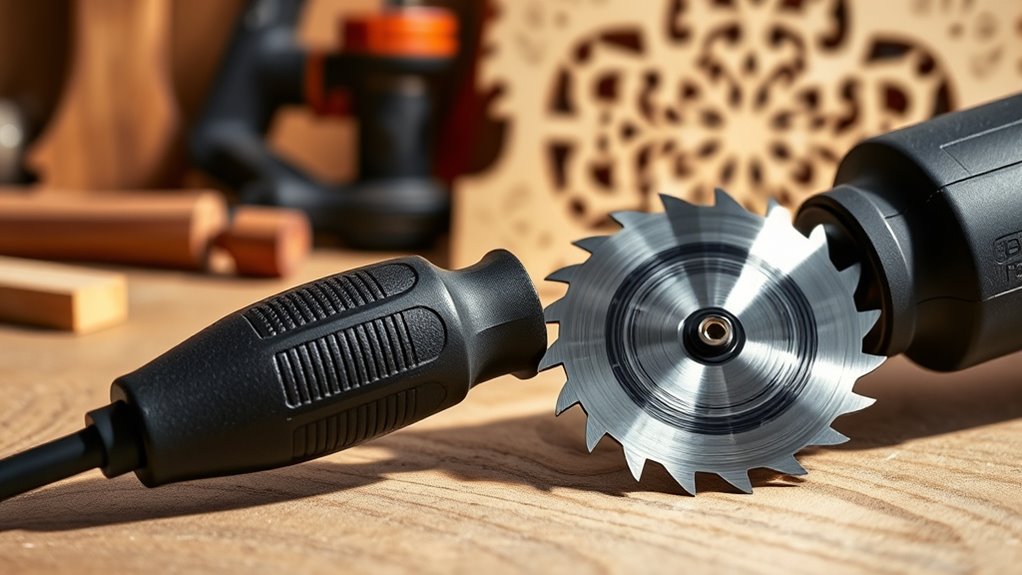
When selecting the right cutting tool for your project, it’s essential to take into account the specific requirements of the task at hand. Blade precision is critical; a tool with high blade accuracy ensures cleaner, more accurate cuts, especially for intricate designs. Consider the power capacity of the tool—more power allows for smoother cuts through tougher materials without stalling or overheating. If you’re working with thicker or denser wood, a tool with higher power capacity will save you time and effort. Conversely, for delicate or detailed work, precision and control are key. Evaluate whether you need a tool that prioritizes exactness or raw power. Making the right choice depends on understanding these factors to match your project’s complexity and material. Additionally, water-based cooling can help prevent overheating and prolong the lifespan of your cutting tool during extended use, and selecting a tool with effective cooling methods can significantly enhance performance and durability. Incorporating cooling techniques is especially important for maintaining consistent quality during prolonged or intensive projects. Moreover, considering blade maintenance can further ensure your tool remains in optimal condition and delivers precise results over time.
Advantages and Limitations of Routers for Design Work
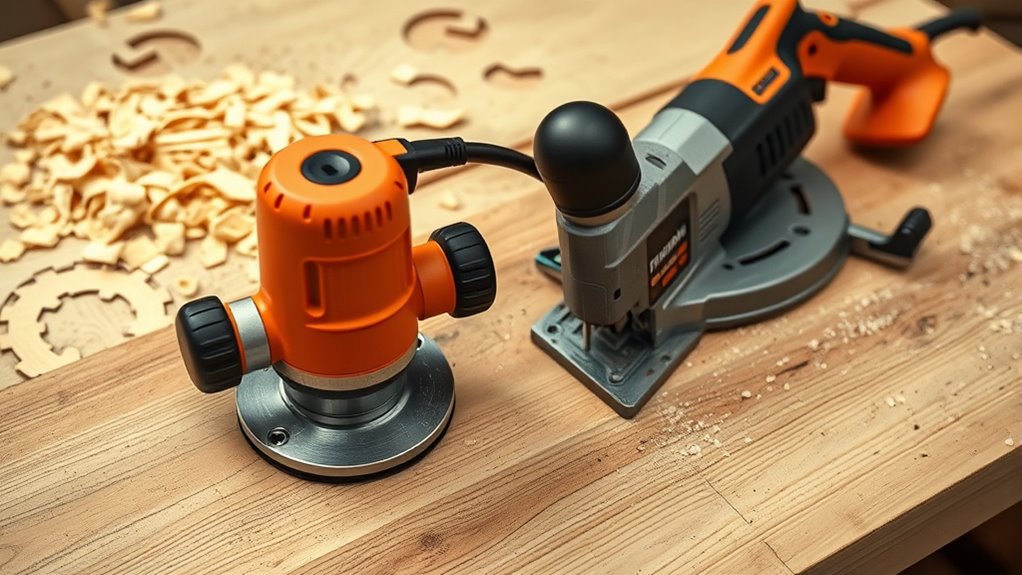
Because routers excel at shaping intricate edges and detailed designs, they are highly valued in woodworking projects that require precision. They allow you to perform precise edge detailing, creating smooth, decorative borders or complex profiles effortlessly. Routers are ideal for precision carving, enabling you to add fine details and clean finishes. However, they do have limitations. Routers can be challenging to control on large, flat surfaces, especially for beginners. They also produce a lot of dust and noise, requiring proper safety measures. Additionally, their overall versatility depends on the specific bits you use, which can be costly. While routers are excellent for detailed work, they may not be suitable for rough cuts or freehand shaping, where a jigsaw might be more flexible. Moreover, understanding the subtopics in auditory processing can help in selecting the right tools and techniques for effective design work. Furthermore, selecting appropriate safety equipment ensures a safer working environment when operating power tools. Proper tool maintenance prolongs the lifespan and ensures optimal performance of your equipment. Additionally, having a clear understanding of tool control techniques can improve safety and precision during intricate projects.
Benefits and Drawbacks of Jigsaws for Crafting and Detailing
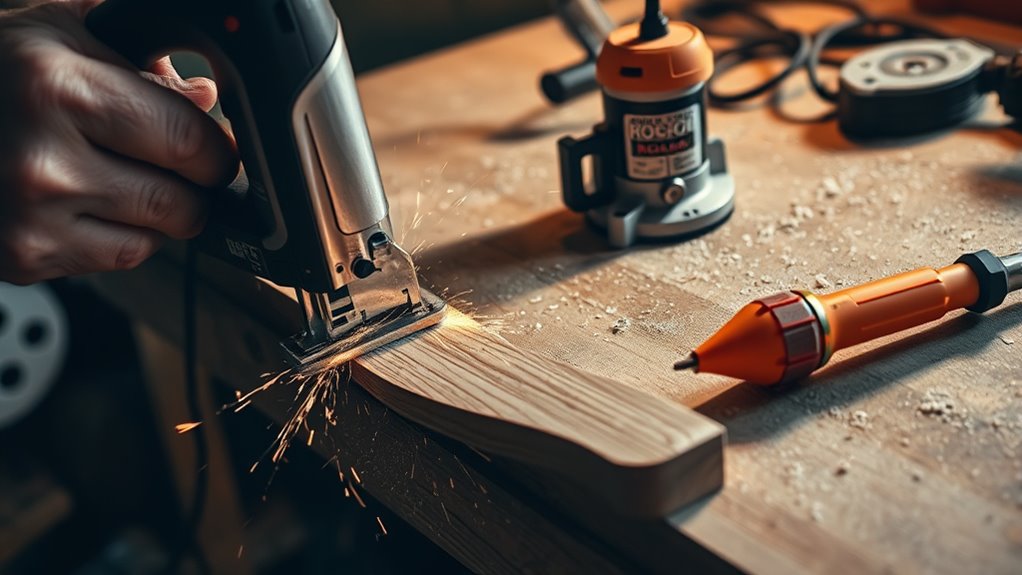
Jigsaws are versatile tools well-suited for crafting and detailed cuts, offering flexibility that complements the precision of routers. Their ability to navigate tight curves makes them ideal for intricate designs. The blade precision varies depending on the blade you choose, allowing for fine or rough cuts. An ergonomic design helps reduce fatigue during extended use, enhancing control and safety. However, jigsaws can be challenging when making straight, precise cuts, and their blades may wander if not held steady. The key benefits include maneuverability and adaptability for complex shapes. Drawbacks involve potential wobble and the need for careful handling to achieve clean results. Use the table below to compare these aspects directly:
| Benefit | Drawback | Best Use Case |
|---|---|---|
| Flexible for curves | Wobble risk | Intricate, detailed cuts |
| Ergonomic design | Not ideal for straight cuts | Craft projects |
| Blade variety for detail | Less precision for straight cuts | Fine craftsmanship |
| Maneuverability | Requires steady hand | Custom, decorative designs |
Tips for Selecting the Right Tool for Your Project Needs
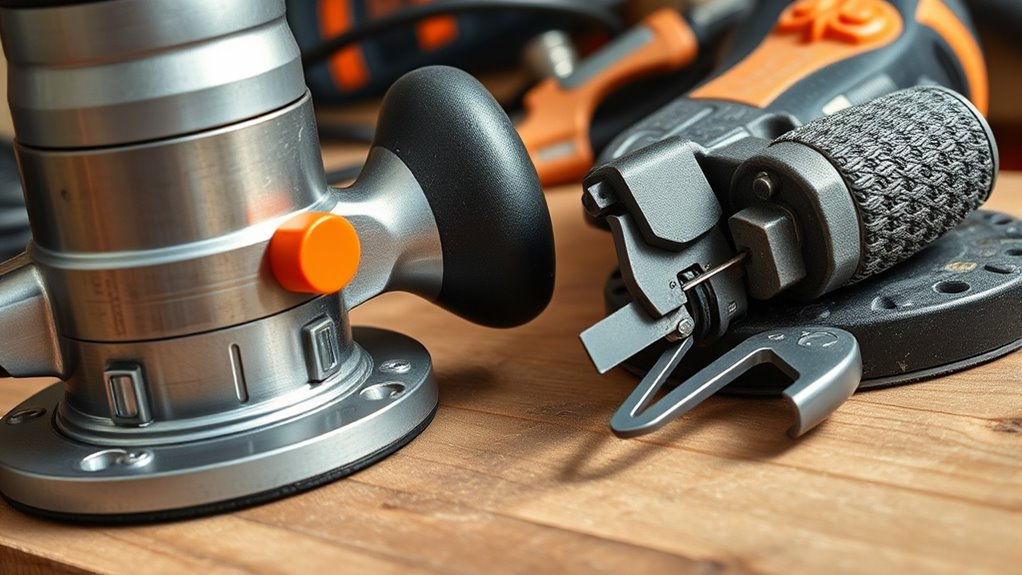
Choosing the right tool for your project starts with understanding your specific needs and the types of cuts you’ll be making. Consider material compatibility—some tools work better with wood, plastic, or metal, so pick one suited to your project. Also, evaluate power requirements; if you’re working on thicker or denser materials, you’ll need a tool with higher power to guarantee clean, efficient cuts. For detailed or intricate designs, a jigsaw offers precision, while a router excels at creating smooth, consistent edges in larger or more complex patterns. Think about the scale of your project and the level of control you need. By matching your material compatibility and power needs with your project scope, you’ll select the most effective tool for the job.
Frequently Asked Questions
Can I Use a Jigsaw for Precise Edge Detailing?
You can use a jigsaw for precise edge detailing, but it’s not always ideal. The edge accuracy depends on your skill and the blade type you choose. A fine, narrow blade offers better control for detailed work, but a router generally provides cleaner, more precise edges. For intricate designs, a jigsaw works well if you take your time and select the right blade, but a router is often the better choice for fine, detailed edges.
Are Routers Suitable for Cutting Non-Wood Materials?
Yes, routers are suitable for cutting non-wood materials like metal and plastic shaping. They provide precise control and clean edges, making them ideal for detailed work. You can use specialized bits designed for metal or plastic to guarantee safety and efficiency. Just remember to adjust your speed and feed rate accordingly, and always wear proper safety gear to handle the different materials effectively.
How Do Noise Levels Compare Between Routers and Jigsaws?
You’ll find that routers generally produce higher noise levels compared to jigsaws, making sound comparison quite noticeable. Routers operate at higher speeds and generate more vibrations, resulting in louder sound levels, especially during extended use. Jigsaws tend to be quieter, with less noise impact on your workspace. If noise is a concern, you might prefer a jigsaw, but always wear hearing protection regardless of the tool you choose.
What Safety Precautions Are Essential for Each Tool?
You should always wear safety gear like goggles and ear protection when using either tool. Keep your workspace clear and follow manufacturer instructions for proper tool maintenance to prevent accidents. Make certain blades are sharp and securely attached, and unplug the tool before changing parts. Stay alert, avoid loose clothing, and maintain a steady grip to stay safe. These precautions help minimize risks and keep your cutting projects safe and efficient.
Which Tool Is Better for Beginner DIY Projects?
For beginner DIY projects, a jigsaw is better because it’s easier to handle and more versatile for various cuts. You’ll find jigsaws generally have good tool durability and are more affordable, making them a practical choice. When comparing prices, jigsaws tend to be less expensive than routers, and their user-friendly design helps you learn basic cutting techniques quickly. Overall, a jigsaw offers a great balance of safety, cost, and functionality for beginners.
Conclusion
Choosing between a router and a jigsaw is like picking the right brush for your masterpiece. Think about your project’s detail, precision, and material. If you need intricate, clean edges, a router’s your best friend. For more versatile, freeform cuts, a jigsaw is your trusty sidekick. By understanding their strengths and limits, you’ll be able to craft with confidence, ensuring your tools are as perfectly matched as a lock and key for your creative journey.