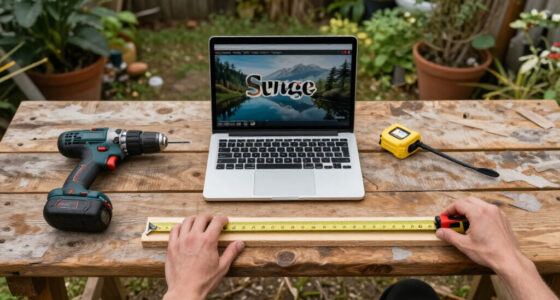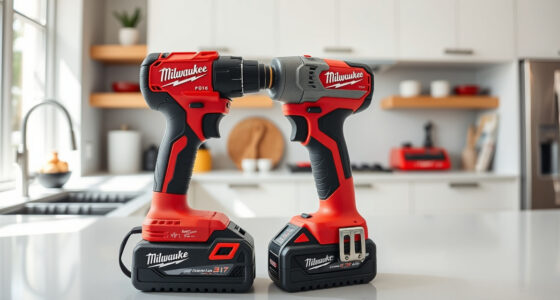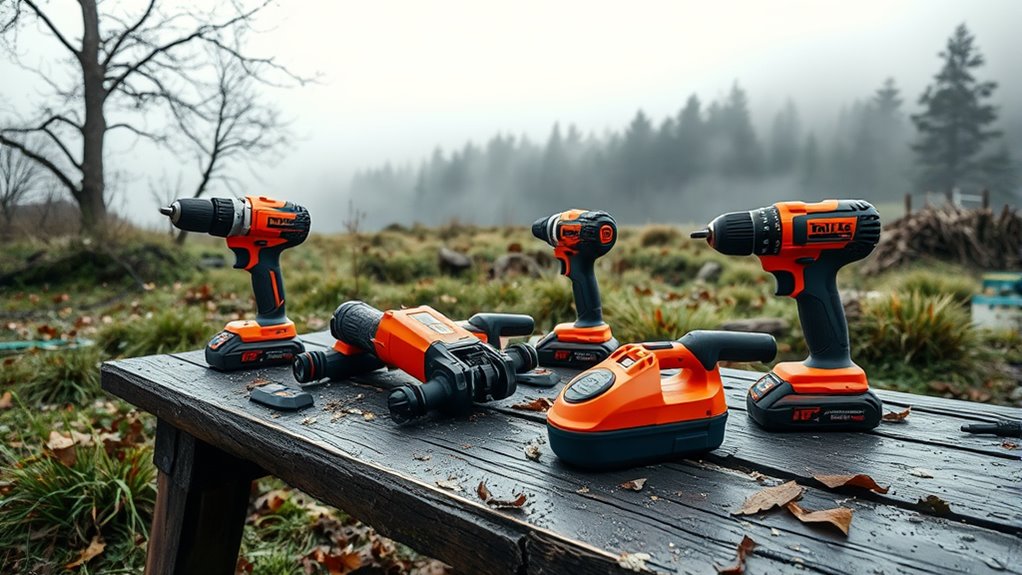

When taking power tools outdoors, it’s essential to use those that are weatherproof or properly protected against moisture, dust, and temperature changes. Look for tools with outdoor ratings, safety certifications, and sealed casings. Regular maintenance and smart storage can also extend their lifespan and safety. If you want to learn how to guarantee your tools are truly weatherproof and safe for outdoor use, there’s more you should consider.

Get tools and workshop supplies delivered free — and shop member deals
- Fast, free delivery on millions of items
- Access to Prime Big Deal Days deals on October 6–7
- Prime Video, Amazon Music and more included
Key Takeaways
- Verify that your power tools are rated for outdoor use with appropriate weatherproofing standards.
- Ensure tools have sealed casings, rubber gaskets, and weather-resistant plugs to prevent water ingress.
- Use outdoor-rated extension cords and keep cords off wet surfaces to prevent electrical hazards.
- Regularly inspect and maintain seals, gaskets, and insulation to ensure ongoing weatherproof protection.
- Store tools in sheltered, dry locations when not in use to prolong their weather resistance and lifespan.
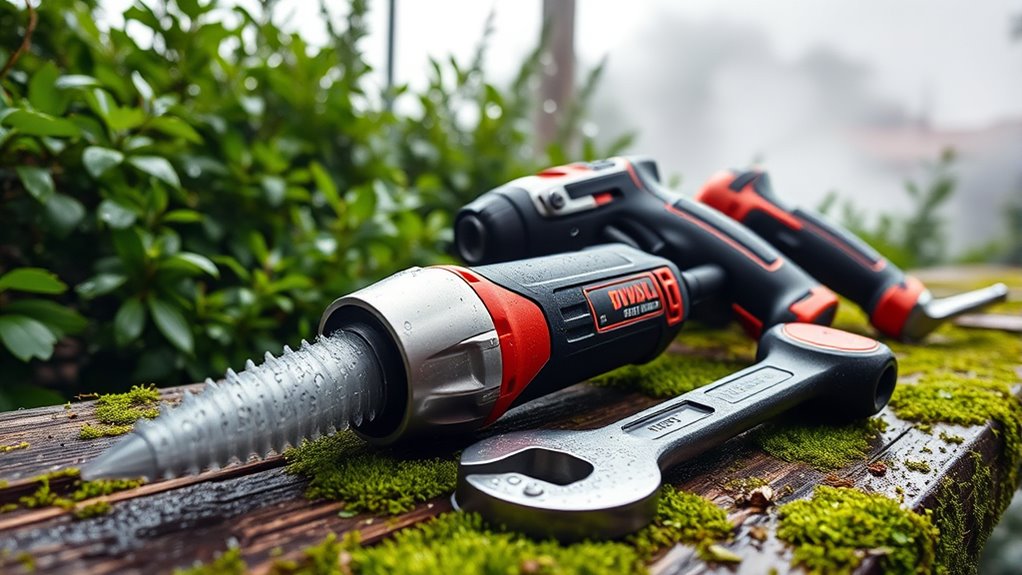
Tools outdoors weatherproof
When working outdoors, you need tools that can withstand the elements, and weatherproof tools deliver just that. These tools are designed to resist moisture, dust, and temperature fluctuations, making them essential for outdoor projects. But just having weatherproof power tools isn’t enough; you also need to prioritize electrical safety and proper tool maintenance to keep your equipment functioning safely and efficiently.
Electrical safety is especially critical when using power tools outside. Exposure to rain or high humidity can cause electrical components to short circuit or malfunction if the tools aren’t properly protected. Always check that your weatherproof tools have the necessary safety certifications, like being rated for outdoor use, and ensure they have grounded plugs and insulated casings. Before you start working, inspect your tools for any damage or wear that could compromise safety, such as frayed cords or loose connections. Never bypass safety features or use damaged equipment, as this heightens the risk of electrocution or fire. When handling power tools outdoors, avoid using extension cords that aren’t rated for outdoor use; a faulty cord can become a conduit for electrical hazards. Keep cords off wet surfaces and avoid connecting multiple extension cords, which can overload circuits.
Tool maintenance plays an essential role in extending the lifespan of your outdoor tools and maintaining electrical safety. Regularly clean your tools to remove dirt, mud, and debris that can cause corrosion or interfere with moving parts. Lubricate moving components as recommended by the manufacturer to prevent rust and ensure smooth operation. Check that weather seals or rubber gaskets are intact to prevent water ingress, which can damage internal electrical parts. If your tools have batteries, keep them charged and store them in a dry, cool place when not in use. Proper storage is important; store your tools in a sheltered area to protect them from prolonged exposure to weather, which can degrade their insulation and seals. Additionally, periodically test your tools to verify they operate correctly, especially after exposure to adverse conditions. This helps catch issues early, reducing the risk of electrical malfunctions during critical tasks. Incorporating knowledge of weatherproofing standards can further ensure your tools’ durability and safety in outdoor environments.
As an affiliate, we earn on qualifying purchases.
Frequently Asked Questions
Can I Use My Power Tools in Heavy Rain Safely?
You shouldn’t use your power tools in heavy rain, as it risks electrical safety. Even if your tools have a waterproof design, heavy rain can still cause water to seep in or create slippery conditions. Always check if your tools are rated for outdoor use and specifically designed to withstand moisture. To stay safe, avoid using power tools in wet weather, and store them properly when not in use.
How Do I Store Tools to Prevent Weather Damage?
Coincidentally, the best way to protect your tools is by using sturdy tool storage solutions and weatherproof tool covers. You should store your power tools in a dry, sheltered place, ideally elevated off the ground to prevent moisture damage. Always cover them with weatherproof covers when outdoors. Regularly inspect and maintain your tools, ensuring they stay dry and rust-free, so they’re ready when you need them.
Are Battery-Powered Tools More Weather-Resistant Than Corded Ones?
Battery-powered tools are generally more moisture-resistant than corded ones, but you still need to prioritize battery safety. Many modern cordless tools feature sealed casings and moisture resistance, making them better suited for outdoor use. However, avoid exposing them to rain or excessive humidity, as moisture can still penetrate and damage the battery or internal components. Always store your tools in a dry place when not in use to guarantee longevity.
What Protective Gear Should I Wear Outdoors?
Think of yourself as a knight venturing into the outdoors battlefield. You need protective gear to stay safe—wear protective eyewear to shield your eyes from debris, gloves to keep your hands protected, and sturdy boots to guard your feet. These essentials help prevent injuries from unexpected hazards, ensuring you can work confidently and safely, no matter the weather or terrain. Suit up like a true warrior and stay protected.
How Often Should I Inspect Tools for Weather-Related Wear?
You should inspect your tools for weather-related wear after each use outdoors. Regular tool maintenance helps identify rust, corrosion, or damage early. Use weatherproofing techniques like applying protective coatings, storing tools in dry places, and checking seals or covers regularly. This approach guarantees your power tools stay in good condition, extend their lifespan, and perform reliably, even after exposure to rain or humidity.
As an affiliate, we earn on qualifying purchases.
Conclusion
Don’t let weather stop you from tackling outdoor projects. While many power tools aren’t fully waterproof, taking simple precautions—like storing them in a dry place and using protective covers—can extend their lifespan. Think it’s too much hassle? Consider investing in weather-resistant models or adding weatherproofing accessories. With a little effort, you can confidently work outside, knowing your tools are protected and ready whenever inspiration strikes. Stay prepared, and enjoy your outdoor projects without worry.
As an affiliate, we earn on qualifying purchases.
As an affiliate, we earn on qualifying purchases.
Halloween Picks
halloween
As an affiliate, we earn on qualifying purchases.