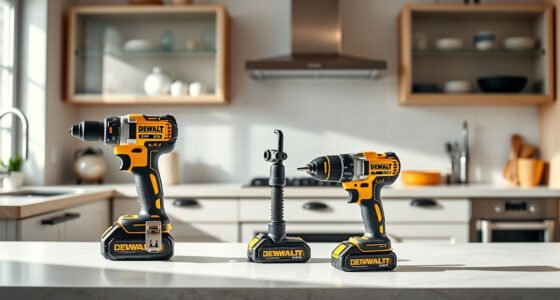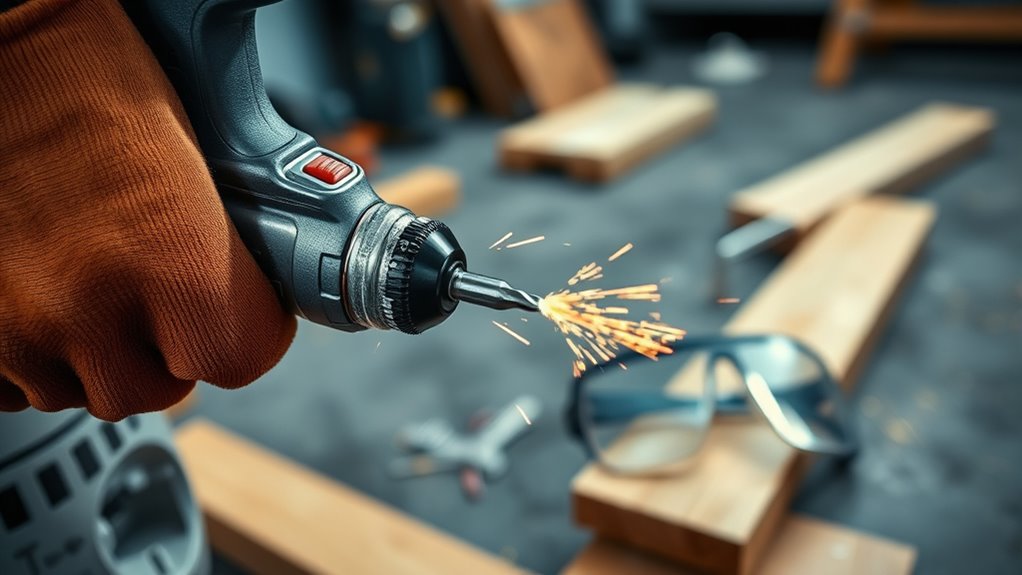

Common power tool injuries include cuts, lacerations, punctures, burns, and eye injuries. To avoid these, always wear safety gear like goggles, gloves, and ear protection, and never rush or operate tools without understanding their functions. Keep your workspace clean and stay alert for hazards. Proper training and following safety protocols markedly reduce risks. Staying vigilant about safety measures helps prevent injuries—continue exploring to learn how to stay safe while using power tools.

Get business pricing on tools and workshop supplies
- Business-only prices and quantity discounts
- Tax-exempt purchasing
- Multiple users, one account, clear invoices
Key Takeaways
- Most injuries occur from contact with moving parts or flying debris; always wear safety goggles and gloves.
- Lack of proper training increases risk; ensure familiarity with tools and safety features before use.
- Rushing or skipping safety gear use can lead to cuts, burns, or eye injuries; always follow safety protocols.
- Using damaged or unmaintained tools can cause malfunctions; regularly inspect and maintain equipment.
- Ignoring hazards like dust or fumes results in respiratory issues; wear masks and ensure proper ventilation.
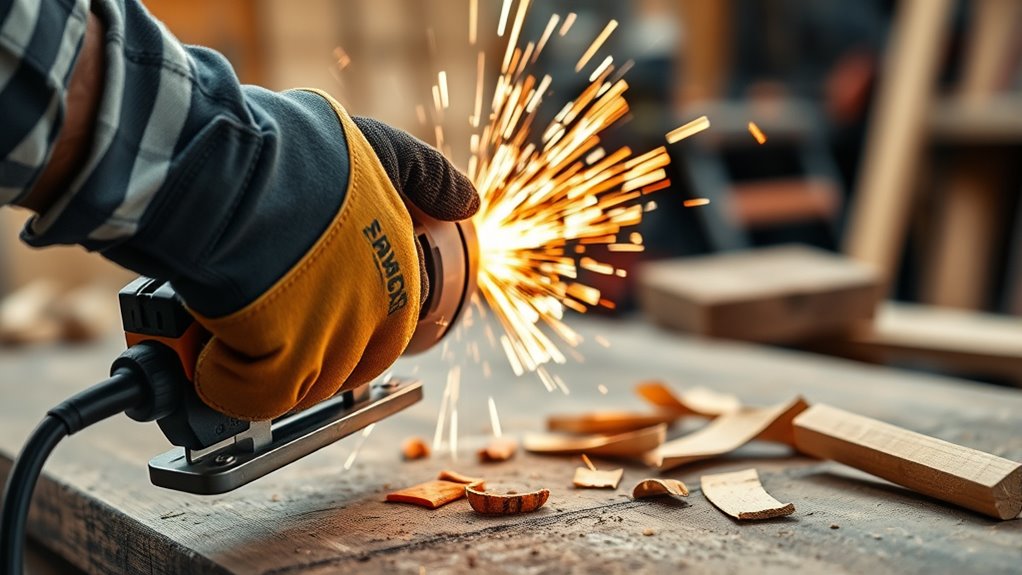
Power tool injuries are a common and often preventable hazard in both professional and home workshops. When you’re working with power tools, safety should always come first. Wearing the right safety gear is essential to protect yourself from cuts, sparks, debris, and other hazards. Safety goggles shield your eyes from flying particles, while ear protection prevents hearing damage from loud noises. Gloves can help protect your hands, but only when used properly, as loose gloves can sometimes get caught in rotating parts. A dust mask or respirator keeps harmful dust and fumes out of your lungs, especially when working with materials like wood or metal. The key is to never overlook safety gear—it’s your first line of defense against injury.
Equally important is proper training. If you’re unfamiliar with a particular tool, take the time to learn how to operate it safely before starting work. Many power tools come with instruction manuals or safety guides; read and understand them thoroughly. Watching tutorials or attending hands-on training sessions can boost your confidence and knowledge, reducing the risk of mishandling. Proper training helps you understand the machine’s functions, safety features, and the correct techniques for cutting, drilling, or sanding. It also teaches you how to recognize potential hazards and respond appropriately if something goes wrong. If you’re working in a professional setting, make sure you follow your employer’s safety protocols and participate in regular safety training updates.
Using safety gear and proper training together creates a solid foundation for safe operation. Never skip wearing safety equipment just because you feel rushed or confident; accidents happen when safety is neglected. Likewise, don’t operate a power tool without understanding how it works. If you’re unsure about a function or safety feature, ask for guidance or consult the manual. Developing good habits, like double-checking your gear and confirming you know how to handle each tool, will markedly reduce your chances of injury. Remember, most injuries are caused by preventable mistakes, such as neglecting safety precautions or rushing through a job. Staying alert, using safety gear consistently, and making sure you’re properly trained are simple steps that can save you from painful, costly accidents. Protect yourself and enjoy your projects by prioritizing safety every time you reach for a power tool.
Additionally, being aware of common hazards associated with power tools can help you stay vigilant and avoid accidents.
As an affiliate, we earn on qualifying purchases.
Frequently Asked Questions
What Are the Most Common Power Tools Causing Injuries?
You’re most at risk of injuries from saws, drills, and grinders, which are common power tools causing accidents. To prevent power tool hazards, always wear protective gear, follow safety instructions, and keep your workspace organized. Injury prevention depends on your awareness and careful handling. Stay alert, secure your tools properly, and avoid distractions. By taking these precautions, you can markedly reduce your chances of power tool injuries.
How Often Should Safety Checks Be Performed on Tools?
You should perform safety checks on your power tools regularly, ideally before each use, to guarantee safe operation. Incorporate tool maintenance into your routine by inspecting for damage, loose parts, or wear. The safety inspection frequency depends on usage, but at minimum, conduct a quick visual check before every session. Regular maintenance keeps your tools in peak condition, reducing injury risks and extending their lifespan.
Are There Age Restrictions for Power Tool Use?
Age restrictions for power tool use vary depending on your location and the specific tool. Generally, youth safety guidelines recommend that children under 16 avoid using most power tools unsupervised, while older teens may operate certain equipment with proper training. Always check local regulations and follow manufacturer instructions to guarantee safe power tool use. Prioritizing age restrictions helps prevent accidents and promotes responsible, safe handling of tools among young users.
What Protective Gear Is Essential for Power Tool Safety?
You need to wear essential protective gear like gloves to safeguard your hands from cuts and abrasions, and hearing protection to prevent damage from loud noise. Always opt for sturdy, fit-tested gloves and earplugs or earmuffs suited to the noise level. By wearing these, you reduce injury risks and guarantee safer power tool use, allowing you to work more comfortably and confidently.
How Can I Recover From a Power Tool Injury?
Think of recovery like tending a wounded plant; you must nurture it with care. Start with first aid to stop bleeding, clean the wound, and apply a bandage. Seek medical treatment promptly for serious injuries. Follow your healthcare provider’s advice, rest, and keep the injury elevated. Proper care accelerates healing, ensuring you get back to full strength. Don’t ignore pain—early action makes all the difference.
As an affiliate, we earn on qualifying purchases.
Conclusion
Being aware of common power tool injuries is key to staying safe. Did you know that hand injuries account for nearly 30% of all power tool accidents? By always wearing protective gear, following instructions, and staying focused, you can considerably reduce your risk. Remember, taking a moment to prioritize safety isn’t just smart — it keeps you out of the emergency room. Stay alert, stay safe, and enjoy your projects without unnecessary harm.
dust mask respirator for woodworking
As an affiliate, we earn on qualifying purchases.
As an affiliate, we earn on qualifying purchases.
As an affiliate, we earn on qualifying purchases.
Fall yard work Picks
leaf blowers
As an affiliate, we earn on qualifying purchases.