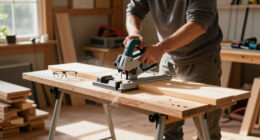
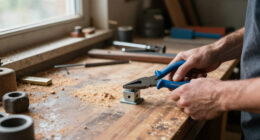
To clamp your material correctly before power cutting, choose the right clamps based on the size and weight of your workpiece, like C-clamps for heavy pieces or spring clamps for thin materials. Position clamps on solid, stable surfaces, spacing them evenly, and tighten securely without over-tightening. Double-check everything is secure and the workpiece won’t shift. Wearing safety gear is essential for protection. If you want to master safe, precise clamping techniques, keep going to discover more tips.

Get tools and workshop supplies delivered free — and shop member deals
- Fast, free delivery on millions of items
- Access to Prime Big Deal Days deals on October 6–7
- Prime Video, Amazon Music and more included
Key Takeaways
- Choose clamps suitable for the material’s size, weight, and fragility, and position them evenly to prevent movement.
- Clamp on stable, solid surfaces like workbenches or cutting tables to ensure safety and control.
- Tighten clamps securely without over-tightening to avoid damaging or distorting the material.
- Double-check clamp placement and firmness before starting to ensure the workpiece remains immobile.
- Wear appropriate safety gear and clear the area to maintain a safe environment during power cutting.

Clamping the material securely before power cutting is vital for safety and precision. When you’re working with power tools, loose or unstable material can lead to accidents or uneven cuts. It’s essential to always prioritize safety considerations by double-checking that your clamps are positioned correctly and are capable of holding the material firmly. Rushing through this step can compromise your safety and the quality of your work, so take your time to set up your clamping system properly.
Using the right clamping techniques is key to maintaining control during cutting. You should select clamps that are appropriate for the material’s size and weight. For example, bar clamps or C-clamps work well for larger, heavier pieces, while smaller spring clamps might suffice for thin or lightweight materials. When you position the clamps, make sure they’re spaced evenly and tightly enough to prevent any movement. Avoid over-tightening, which could damage delicate surfaces or distort the material, but ensure they’re snug enough to hold everything steady. It’s also important to clamp the material on solid, stable surfaces like a workbench or a cutting table to prevent any shifting during the cut. Additionally, understanding proper clamping techniques can significantly enhance both safety and the quality of your work. Properly selecting clamps based on the material type further ensures stability and safety during the cut.
Furthermore, using appropriate clamping tools for the specific job can make a noticeable difference in the outcome and safety. Ensuring that your clamps are properly adjusted before starting the cut helps prevent accidental slips. Before starting the power tool, always check that the clamps are secure and won’t loosen as you work. You should also clear the area of any unnecessary objects or obstructions that could interfere with the clamping process or the operation of the power cutter. Wearing appropriate safety gear, such as eye protection and gloves, further minimizes risk. Remember, your goal is to keep the workpiece immobile so you can focus on making a precise cut without worrying about the material slipping or jumping unexpectedly. Proper clamping techniques not only improve safety but also help you achieve cleaner, more accurate results.
As an affiliate, we earn on qualifying purchases.
Frequently Asked Questions
What Types of Clamps Are Best for Delicate Materials?
For delicate materials, you should use clamp types that prioritize material protection, like soft jaw clamps or rubber-coated clamps. These clamps prevent damage by distributing pressure evenly and avoiding indentations. You might also consider spring clamps or surface-guarded clamps, which hold securely without applying excessive force. Always choose clamps that are gentle yet firm, ensuring your delicate materials stay intact during power cutting.
How Do I Prevent Clamps From Damaging the Material?
Oh, the thrill of clamping—who doesn’t love the risk of marring delicate surfaces? To prevent clamp damage, use gentle clamping techniques and soft pads like rubber or wood to protect the material. Distribute pressure evenly, avoid over-tightening, and choose clamps suited for delicate work. Remember, proper clamping techniques are your best defense for material protection, ensuring your project stays flawless without unintended marks or dents.
What Safety Precautions Should I Take While Clamping?
When clamping, always wear appropriate safety gear like gloves and eye protection to stay safe. Use proper clamping techniques to secure your material firmly without over-tightening, which can cause damage or slips. Make certain your clamps are in good condition and positioned correctly to avoid accidents. Keep your hands clear of cutting areas, and double-check the stability before starting. These precautions help prevent injuries and ensure a safe, efficient work environment.
How Tight Should the Clamps Be Applied?
You should tighten the clamps enough to guarantee a secure material grip without over-compressing it. Proper clamp tension provides stability during power cutting, preventing movement that could cause accidents or inaccuracies. Check that the clamps hold the material firmly, but avoid excessive force that might damage the material or distort its shape. Adjust the tension as needed, aiming for a balance that keeps the material steady without compromising its integrity.
Can Clamps Be Reused for Different Projects?
Yes, you can reuse clamps for different projects, but you should always check their condition first. Proper clamp maintenance, like cleaning and inspecting for damage, guarantees they stay effective. Consider material compatibility too; some clamps work better with specific materials. If clamps show signs of wear or corrosion, replace them to maintain safety and hold strength. Reusing clamps saves money and time, but always prioritize safety and proper functionality.
spring clamps for thin materials
As an affiliate, we earn on qualifying purchases.
As an affiliate, we earn on qualifying purchases.
Conclusion
By binding your material securely before power cutting, you boost both safety and precision. Proper clamping prevents slips, minimizes mistakes, and maximizes your mastery. Remember, a confident clamp creates a controlled cut, avoiding accidents and assuring accuracy. So, stay smart, secure your stuff, and sharpen your skills—because a well-wrapped workpiece is the way to win with work and worry-free results. Clamping correctly keeps cuts clean, continuous, and completely controlled.
As an affiliate, we earn on qualifying purchases.
workbench clamps for power cutting
As an affiliate, we earn on qualifying purchases.
As an affiliate, we earn on qualifying purchases.
Halloween Picks
halloween
As an affiliate, we earn on qualifying purchases.