To avoid tear-out with a jigsaw, choose blades with fine teeth designed for your material and keep them sharp. Support your work firmly, and cut steadily with controlled motions, avoiding rushing or slow, excessive force. Use masking tape along the cut line to hold fibers in place, and cut from the backside whenever possible. Proper blade alignment and support reduce vibrations and splintering. Want to learn more tips for a cleaner cut? Keep exploring for advanced techniques.

Get business pricing on tools and workshop supplies
- Business-only prices and quantity discounts
- Tax-exempt purchasing
- Multiple users, one account, clear invoices
Key Takeaways
- Use blades with high TPI and appropriate for the material to ensure cleaner cuts.
- Support the material properly and cut from the backside to minimize splintering.
- Apply painter’s tape along the cut line to hold fibers in place during cutting.
- Maintain a steady, controlled cutting speed without forcing the jigsaw.
- Make smooth, deliberate cuts and support the material to reduce vibrations and tear-out.
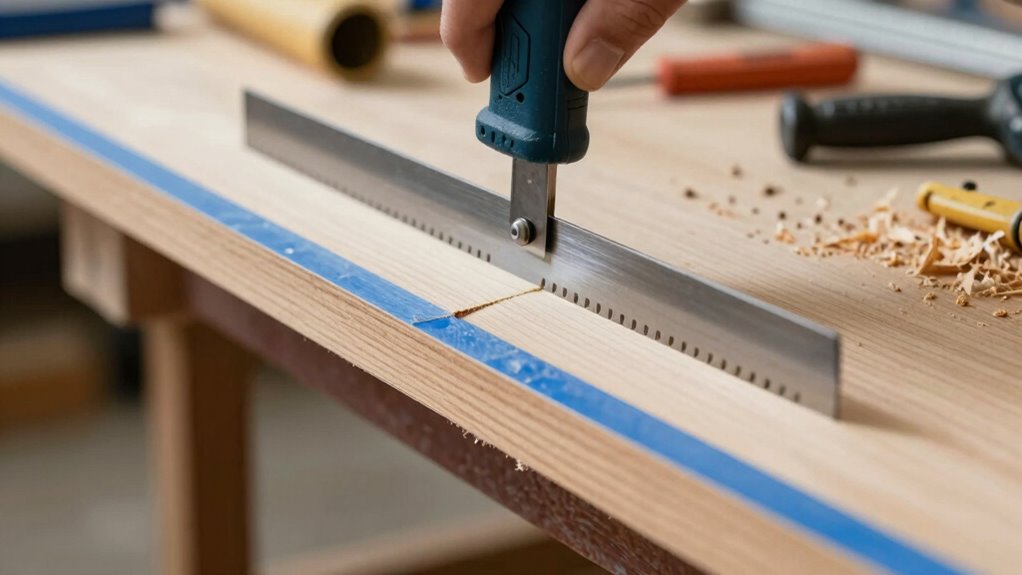
Ever wondered why your jigsaw often leaves ragged edges or tear-out on the material? One common reason is the choice of blade and how you control the cutting process. Blade selection plays a pivotal role in preventing tear-out. Using a blade with a fine tooth or more teeth per inch (TPI) helps produce cleaner cuts, especially on delicate or veneered surfaces. Blades designed specifically for the material you’re working with—such as plywood, MDF, or acrylic—also make a significant difference. A dull or inappropriate blade can cause the saw to grab or tear the material instead of slicing smoothly. Always assure your blade is sharp and suited for your project.
Choosing the right blade with fine teeth and proper material design ensures cleaner, smoother cuts and reduces tear-out.
Cutting speed is another essential factor influencing tear-out. Pushing the jigsaw through the material too quickly increases the risk of ragged edges. When you cut too fast, the blade doesn’t have enough time to make a controlled, clean cut, which results in tearing or splintering. Conversely, moving too slowly might cause overheating and blade binding, which could also damage the material or lead to uneven edges. The key is maintaining a steady, moderate pace—allowing the blade to do its job without forcing it.
Adjusting your cutting speed and blade choice together can dramatically improve your results. Before starting, test on a scrap piece of the same material to find the best speed and blade combination. If you’re working on a veneer or plywood, consider scoring the cut line first with a fine blade or even a utility knife. This scoring creates a shallow groove that guides the blade and reduces tear-out. Additionally, supporting the material properly—using clamps or a stable work surface—helps keep it steady and prevents vibrations that can cause rough edges. Proper support and material stability are critical in achieving cleaner cuts. Using a properly aligned blade can further minimize vibrations and improve cut quality. Ensuring the cutting technique is smooth and deliberate also contributes significantly to avoiding tear-out. Incorporating techniques for controlling vibration can further enhance the cut quality and prevent splintering.
Another tip to avoid tear-out is to cut from the backside of the material if possible. This approach allows the blade to make the most of the support, reducing splintering on the visible surface. Also, consider applying masking tape or painter’s tape along the cut line before cutting. The tape holds the fibers in place, acting as a barrier to tear-out, and can be peeled away after the cut for a clean finish. For optimal results, selecting the right blade and understanding the material properties can make a noticeable difference in the quality of your cuts. Ultimately, choosing the right blade, controlling your cutting speed, and supporting the material correctly work hand in hand to deliver smooth, professional-looking cuts with your jigsaw.
fine tooth jigsaw blades for wood
As an affiliate, we earn on qualifying purchases.
As an affiliate, we earn on qualifying purchases.
Frequently Asked Questions
What Type of Blades Are Best for Preventing Tear-Out?
For preventing tear-out, you should choose blades with high blade durability and fine teeth, such as plywood or fine-tooth blades. These blades provide better cutting accuracy and smoother edges, reducing tear-out. Make certain to match the blade type to your material for the best results. Using sharp, quality blades minimizes vibrations and ensures cleaner cuts, which helps prevent tear-out and gives you a professional finish every time.
How Does Blade Speed Affect Tear-Out Prevention?
Blade speed can make or break your cut, like a superhero saving the day. When you increase blade speed, you reduce tear-out by creating cleaner cuts, but it’s essential to maintain your blade properly. Keep your blade sharp, and adjust the cutting angle to reduce stress on the material. Proper blade maintenance and a well-chosen cutting angle allow higher speeds without sacrificing quality, preventing tear-out and ensuring precise, smooth results.
Can Plywood Tear-Out Be Minimized With Specific Techniques?
You can minimize plywood tear-out by focusing on proper material preparation and edge finishing. Before cutting, sand the cut line lightly to smooth rough edges, reducing tear-out risk. Use painter’s tape along the cut line to support the fibers and prevent splintering. Additionally, cut with the blade facing downward or use a fine-toothed blade for cleaner edges. These techniques help guarantee a smoother finish and less tear-out during your project.
Does the Thickness of the Material Influence Tear-Out Risk?
The thickness of your material dramatically impacts tear-out risk—thicker pieces are like a battleground for your jigsaw, increasing chances of splintering. Weaker materials struggle more, risking jagged edges and rough cuts, while stronger ones keep edges smooth and intact. So, always consider material strength and edge smoothness when choosing thickness. Thinner, sturdy materials cut easier with less tear-out, making your project safer, cleaner, and way more satisfying.
Are There Special Jigs or Guides That Help Prevent Tear-Out?
Yes, using jigs or guides can substantially improve jigsaw safety and cutting precision, helping you prevent tear-out. These tools stabilize the material and guide your blade along the cut line, reducing vibrations and unwanted splintering. Look for edge guides or clamping jigs designed for your specific project. They make your cuts cleaner, safer, and more accurate, especially on delicate or thin materials prone to tear-out.
clamp and support work surface for jigsaw
As an affiliate, we earn on qualifying purchases.
As an affiliate, we earn on qualifying purchases.
Conclusion
By following these tips, you can substantially reduce tear-out when using a jigsaw. Some might think it’s too tricky or time-consuming, but with patience and the right techniques, you’ll achieve cleaner cuts effortlessly. Don’t let fear of tear-out hold you back—practice these methods, and you’ll see how easy it is to get professional-looking results. Once you master these tricks, your projects will turn out neater and more precise every time.
masking tape for woodworking cuts
As an affiliate, we earn on qualifying purchases.
As an affiliate, we earn on qualifying purchases.
As an affiliate, we earn on qualifying purchases.
Fall yard work Picks
leaf blowers
As an affiliate, we earn on qualifying purchases.