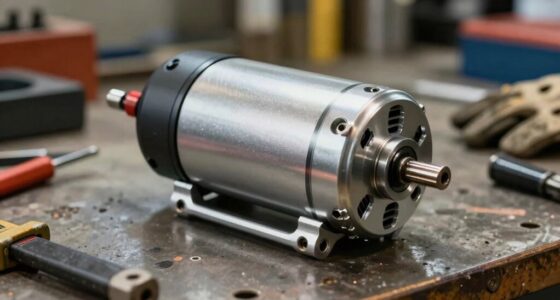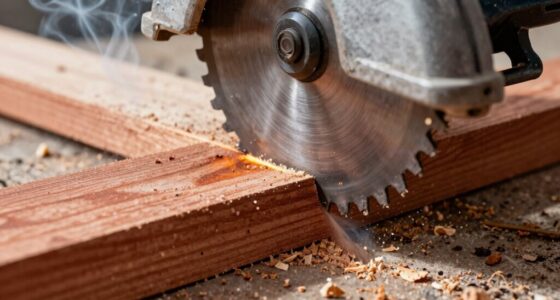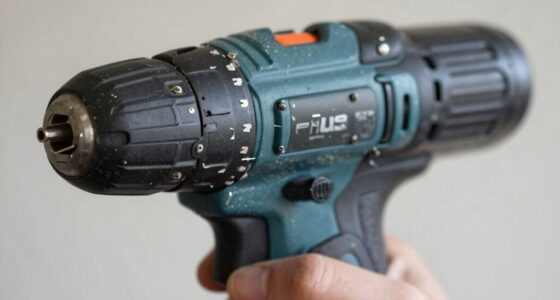

To understand power tool specs clearly, focus on key details like battery life, safety features, power ratings, and RPM. Recognize that longer battery capacity (Ah) means more run time, while higher volts or watts indicate more power. Safety features guarantee protection during use. Be certain to match RPM with your tasks for efficient performance. If you keep exploring, you’ll discover how these specs work together to help you pick the right tool for your projects.
Key Takeaways
- Focus on understanding key specifications like voltage, Ah, RPM, and safety features relevant to your tasks.
- Compare power ratings to determine if a tool can handle your project’s material and workload.
- Recognize that higher battery capacity (Ah) means longer operation without recharging.
- Check safety features to ensure the tool has protections like shut-off, guards, and anti-kick mechanisms.
- Use specs to balance performance, safety, and durability for a suitable, efficient tool choice.

When shopping for power tools, understanding the specifications can seem overwhelming at first, but it’s essential for choosing the right tool for your needs. The specs provide critical details about how the tool performs, how long it lasts, and how safe it is to use, so paying attention to these elements helps you make an informed choice. A good starting point is to look at the battery life—especially if you’re considering cordless models. Battery life indicates how long the tool can operate on a single charge, which directly affects your efficiency and convenience. For tasks requiring extended use, a longer-lasting battery means fewer interruptions and less downtime. Keep in mind that battery capacity, often measured in amp-hours (Ah), influences how long your power tool will run. The higher the Ah, the longer your power tool will operate before needing a recharge. This is particularly important for bigger projects or professional work.
Safety features are just as crucial as battery life when evaluating power tools. They ensure your protection during operation and reduce the risk of accidents. Look for safety features like automatic shut-off, which turns the tool off if it overheats or detects a malfunction. Safety guards and shields are also vital; they prevent debris from flying into your eyes or body, and guard against accidental contact with moving parts. Anti-kickback mechanisms and soft-start technology are additional safety features that can minimize sudden movements or jolts, helping you maintain control. These safety features not only keep you safer but also improve your overall experience by giving you confidence while working. Additionally, understanding power ratings helps you choose a tool that matches your specific projects and workload. Recognizing how these ratings relate to performance capabilities allows you to select a model that balances both power and safety effectively. Knowing about safety standards can further guide you toward tools that meet industry safety requirements and regulations. Moreover, familiarizing yourself with industry safety standards can help you identify tools that adhere to rigorous safety protocols, ensuring compliance and peace of mind.
Beyond battery life and safety features, it’s essential to understand other specs like power (measured in volts or watts), torque, and RPM. Power determines how much work the tool can handle, while torque indicates its ability to turn or drill through tough materials. RPM, or revolutions per minute, tells you how fast the tool spins, which affects cutting or drilling speed. When reading these specs, focus on what matches your typical projects. For example, if you’re doing light tasks, a lower voltage or wattage might suffice, but heavy-duty projects demand higher power.
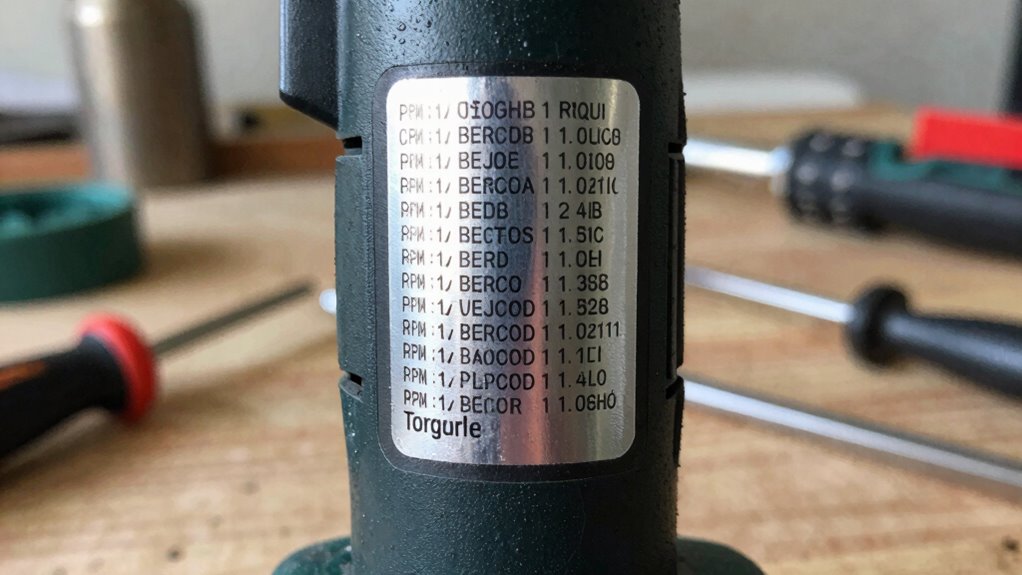
In the end, mastering how to interpret power tool specs means you can compare models effectively and select one that fits your workload and safety requirements. Remember, the numbers and features on the label are there to guide you toward a tool that offers the right balance of performance, durability, and safety, making your work safer and more efficient.
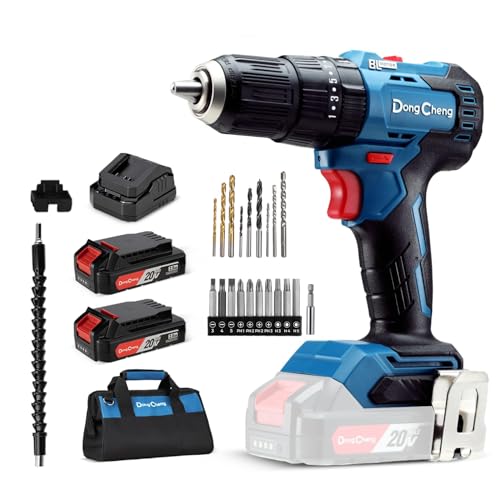
Dong Cheng 20V Brushless Heavy-duty Impact Drill, 443 in-lbs, 27000 IPM, 1/2" Keyless Metal Chuck, 20+1+1 Clutch, Cordless Hammer Drill with 2 Battery Kit for Drilling Brick Wall, Metal, Wood
Heavy-duty Impact Drill: Efficient power through Brushless Motor that delivers 443 in-lbs.(50N.m) of Max torque to run cooler…
As an affiliate, we earn on qualifying purchases.
As an affiliate, we earn on qualifying purchases.
Frequently Asked Questions
What Is the Most Important Power Tool Spec to Consider?
The most important power tool spec to take into account is its power rating, as it directly impacts tool performance and your safety. Look for high tool durability to ensure longevity, and check safety features like overload protection. These specs help you choose a reliable, safe tool that handles your tasks effectively. Prioritizing power, durability, and safety features ensures you get a tool that performs well and keeps you protected during use.
How Do I Compare Different Power Tool Brands?
Ever wondered how to pick the best power tool brand? Start by comparing brand reputation—look for reviews and reliability. Then, do a price comparison to see which offers the best value for your needs. Do the brands have similar warranties and customer support? These factors help you make an informed choice, ensuring you get a durable, high-quality tool without overspending. Trust your research to find the perfect match.
Are Higher Wattage Tools Always Better?
Higher wattage tools aren’t always better because they tend to be heavier, making them less comfortable to use for extended periods. Look for a balance between wattage and tool weight, and consider ergonomic design, which improves comfort and control. A powerful tool with lightweight construction and an ergonomic grip can perform well without causing fatigue, so prioritize overall usability rather than just wattage when choosing the right power tool.
What Does “Amperage” Mean in Power Tools?
Amperage in power tools measures the current draw during operation, which affects how much power the tool uses and its overall performance. A higher amperage usually means more power but can also impact battery life, so choose tools with suitable amperage for your tasks. Look for safety features that protect you during use, ensuring safe handling, especially with higher amperage tools. Always prioritize safety and efficiency together.
How Do Battery Voltage Ratings Affect Tool Performance?
You might notice that higher battery voltage often translates to better tool performance, like more power and efficiency. When you choose a battery with greater capacity, it can handle tougher tasks longer, but it may also take more time to charge. This balance between voltage, capacity, and charging time affects how well your tool performs, making it essential to pick the right battery based on your work needs.
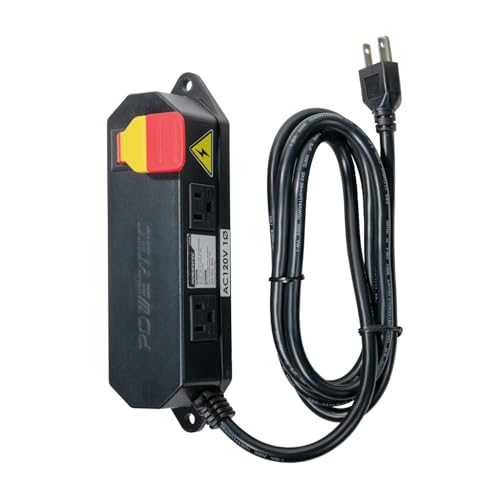
POWERTEC Dual Outlet Power Tool Safety Switch – 120V 15A Paddle Switch with Key Lock, for Router Tables, Table Saw, Drill Press, Disc Sander, Vacuum (72009)
DUAL OUTLET CONTROL: Control two devices simultaneously with this dual outlet power tool switch. Perfect for managing your…
As an affiliate, we earn on qualifying purchases.
As an affiliate, we earn on qualifying purchases.
Conclusion
Now that you’ve mastered reading power tool specs, you’re practically a superhero in the hardware store! No more confusing jargon or mind-boggling numbers can stand in your way. With this knowledge, you’ll wield power tools like a pro, impressing everyone with your skills and confidence. Soon, you’ll be building masterpieces faster than you can say “power tool,” transforming from a rookie into a legendary craftsman. Get ready to conquer every DIY challenge that comes your way!

High Torque Impact Driver
Brushless Impact Gun
As an affiliate, we earn on qualifying purchases.
As an affiliate, we earn on qualifying purchases.

DEWALT 20V Max Cordless Drill Driver Set, 2 Speed, High Performance Motor, Includes 2 XR 1.3Ah Li-Ion Batteries, Charger and Contractor Bag (DCD771C2)
Compact, lightweight design fits into tight areas
As an affiliate, we earn on qualifying purchases.
As an affiliate, we earn on qualifying purchases.