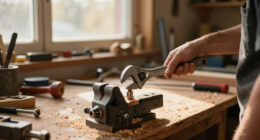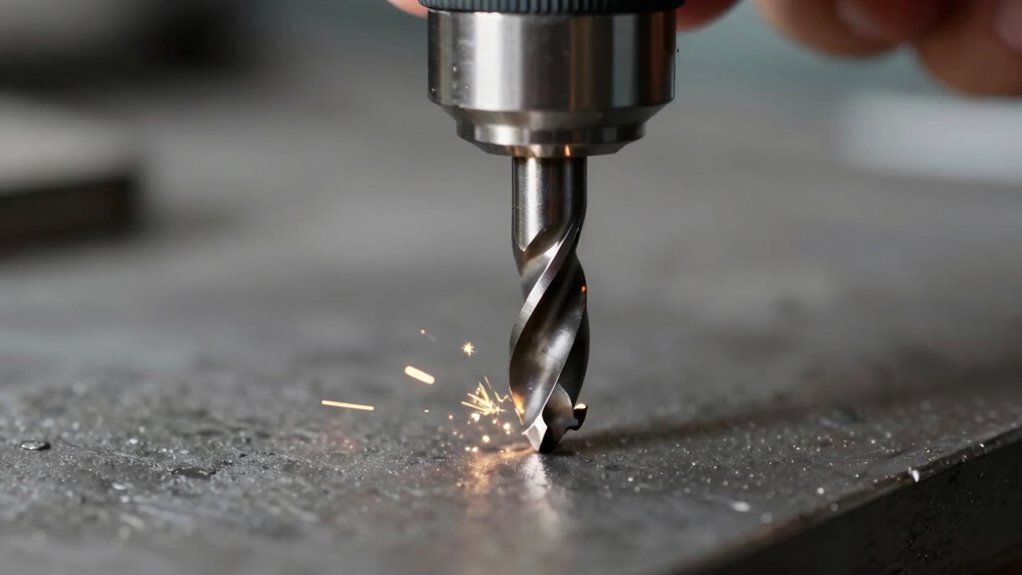
To prevent your drill bit from walking on metal, start by securing the workpiece firmly with clamps or a vise. Mark the spot with a center punch to create a small indent, which acts as a guide. Use a sharp, appropriate drill bit and begin drilling with a slow speed, applying steady, moderate pressure. Starting with a pilot hole improves accuracy, and maintaining control throughout makes a big difference. Keep these tips in mind to stay on track—you’ll find more helpful insights ahead.

Get tools and workshop supplies delivered free — and shop member deals
- Fast, free delivery on millions of items
- Access to Prime Big Deal Days deals on October 6–7
- Prime Video, Amazon Music and more included
Key Takeaways
- Use a center punch to create an indentation, guiding the drill bit and preventing wandering.
- Secure the workpiece firmly with clamps or a vise to maintain stability during drilling.
- Start with a small pilot hole to establish a precise path for the larger drill bit.
- Apply consistent, moderate pressure and use slow speed settings for better control.
- Ensure the drill bit is sharp; dull bits are more prone to slipping and wandering.
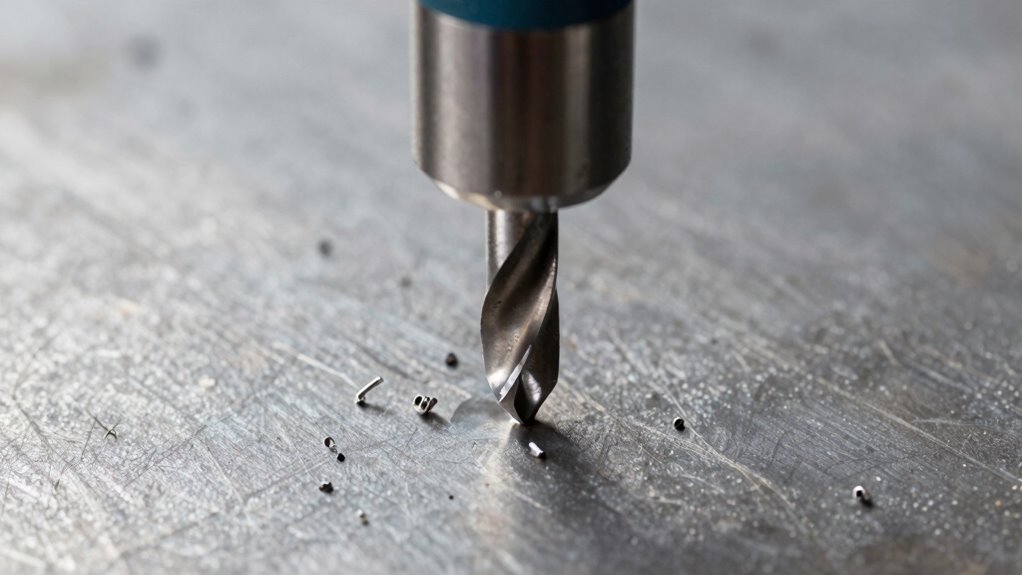
Drill bits tend to wander on metal surfaces, especially when starting a hole, which can lead to imprecise or damaged work. To prevent this, you need to ensure you’re using the right tools and techniques. One key step is choosing the right drill bit for your task. Not all drill bits are suitable for metal, and selecting the correct type—such as high-speed steel (HSS) or cobalt bits—makes a significant difference in stability. When you pick a drill bit designed for metal, it’s less likely to wander because it grips better and cuts smoothly.
Choosing the right drill bit, like HSS or cobalt, improves stability and reduces wandering on metal surfaces.
Another critical aspect is drill bit sharpening. Over time, even the best drill bits dull, which can cause wandering and slipping. Regularly sharpening your drill bits ensures they maintain a sharp point and cutting edges, giving you more control. A sharp drill bit bites into the metal cleanly and accurately, reducing chances of slipping. If you notice your drill bit isn’t drilling straight or seems to skip, it’s probably time for sharpening. You can sharpen drill bits at home using a bench grinder or a dedicated drill bit sharpener, but make sure you follow proper safety procedures and keep the angle consistent. Maintaining sharpness also extends the life of your drill bits and improves overall drilling accuracy.
When starting to drill, it’s essential to create a small indentation or pilot hole. This helps prevent the drill bit from wandering because it gives the bit a guide to follow, especially on shiny or smooth metal surfaces. You can use a center punch to make this indentation. Lightly tap the punch with a hammer to mark the spot, then drill a tiny pilot hole before enlarging it to your desired size. This step makes a big difference in keeping the drill bit stable during the process. Additionally, securing the metal piece firmly in place with clamps or a vise prevents movement while drilling. If the material shifts, your drill bit is more likely to wander off course. Applying consistent, moderate pressure—rather than forcing the drill—also helps maintain control. If you find your drill bit still wandering, consider using a drill with a slower speed setting; higher speeds can cause the bit to slip on the shiny surface. Taking these steps—choosing the right drill bit, keeping it sharp, creating a guide hole, and securing the workpiece—will help you drill accurately and prevent your drill bit from wandering on metal surfaces. Proper drilling techniques are essential for achieving precise results and avoiding damage. Understanding the importance of metal surface preparation can further improve your drilling accuracy and prevent wandering. Additionally, using clamps or a vise to secure your workpiece provides stability, reducing the chances of wandering even further. Properly selecting the right drill bit also contributes significantly to minimizing wandering and achieving cleaner holes.
high-speed steel drill bits for metal
As an affiliate, we earn on qualifying purchases.
As an affiliate, we earn on qualifying purchases.
Frequently Asked Questions
What Types of Drill Bits Are Best for Metal?
For metal, high-speed steel (HSS) drill bits are your best choice, especially when equipped with coatings like titanium or cobalt, which enhance durability and cutting performance. Use proper metal drilling techniques, such as clamping your workpiece securely and starting with a smaller pilot hole. These methods, combined with the right drill bit coatings, help prevent walking and guarantee cleaner, more precise holes.
Can Temperature Affect Drill Bit Stability on Metal?
Yes, temperature can affect drill bit stability on metal. As metal heats up, it expands, which can cause the drill bit to wobble or walk. Thermal conductivity plays a role because metals quickly transfer heat away from the drill site, but if the metal gets too hot, it loosens the grip on the bit. Keeping the workpiece cool with lubrication or intermittent drilling helps maintain stability and prevents walking.
Is Lubrication Necessary When Drilling Into Metal?
Think of drilling like cutting through a thick steak—you need lubrication to prevent sticking and guarantee smooth slicing. Yes, lubrication is necessary when drilling into metal. It offers lubrication benefits, reduces heat, and minimizes tool wear. Using proper metal drilling techniques, like applying cutting oil or wax, helps your drill bit stay stable and cuts more efficiently. Skipping lubrication can cause overheating and dull bits, making your work harder and less precise.
How Do I Sharpen a Dull Drill Bit?
To sharpen a dull drill bit, you should use proper sharpening techniques with a bench grinder or a drill bit sharpener. Secure the bit firmly and maintain the original angles to preserve its cutting edge. Regular drill bit maintenance, like cleaning and inspecting for damage, guarantees longevity and peak performance. Always wear safety gear and work carefully to avoid overheating the bit, which can weaken the metal.
What Safety Gear Should I Wear When Drilling Metal?
Think of safety gear like a shield protecting you from flying sparks and metal shavings. When drilling metal, you should wear personal protective equipment such as safety glasses, gloves, and hearing protection. Proper tool handling is essential to avoid slips or accidents. Don’t forget a dust mask if sparks or debris become airborne. Staying cautious and equipped keeps you safe, just like a knight in shining armor—ready for any challenge.
As an affiliate, we earn on qualifying purchases.
Conclusion
To wrap up, preventing your drill bit from walking on metal is all about preparation and technique. Secure your workpiece, use the right drill bit, and start with a small pilot hole. Don’t rush and keep steady pressure as you drill. After all, isn’t it worth taking a few extra seconds to get a perfect hole? With these tips, you’ll drill confidently and avoid frustrating mistakes every time.
As an affiliate, we earn on qualifying purchases.
clamps and vise for metalworking
As an affiliate, we earn on qualifying purchases.
As an affiliate, we earn on qualifying purchases.
Fall Picks
fall essentials
As an affiliate, we earn on qualifying purchases.