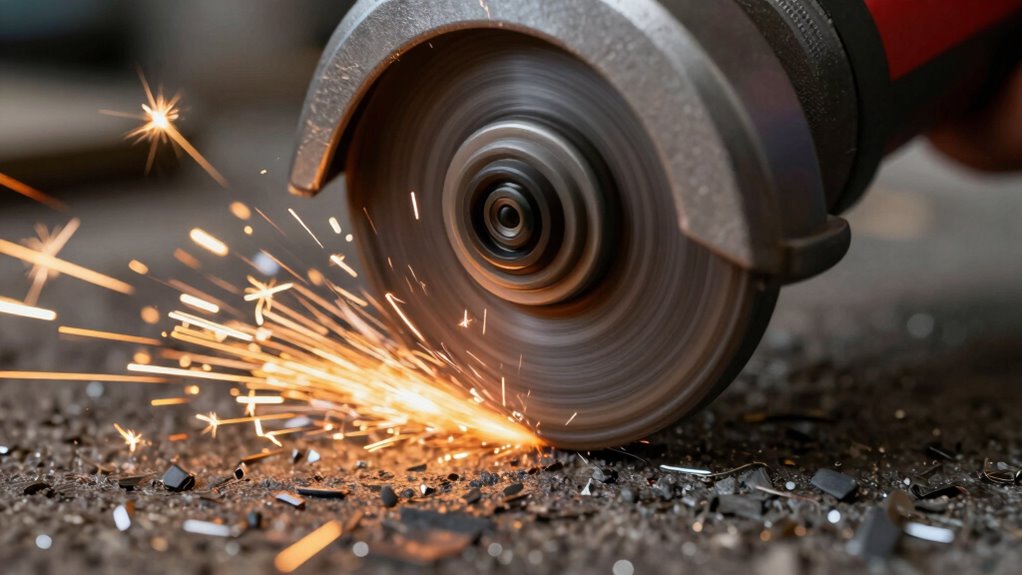

Tool RPM means revolutions per minute, showing how fast your tool’s motor spins. It impacts how efficiently you can cut or grind materials—higher RPM delivers quicker, smoother results, while lower RPM is better for polishing or preventing overheating. Matching the correct RPM to your task guarantees safety, prolongs tool life, and improves quality. Knowing what RPM really signifies helps you work smarter—stay with us to explore how to choose the right settings for every job.

Get tools and workshop supplies delivered free — and shop member deals
- Fast, free delivery on millions of items
- Access to Prime Big Deal Days deals on October 6–7
- Prime Video, Amazon Music and more included
Key Takeaways
- RPM indicates how many times a tool’s motor completes a full rotation per minute, affecting cutting and grinding speed.
- Higher RPM means faster abrasive surface rotation, increasing material removal rate or surface finish quality.
- Correct RPM ensures efficient work, prevents tool damage, and maintains safety during cutting and grinding tasks.
- Using the appropriate RPM for specific materials and tasks optimizes performance and extends tool lifespan.
- Operating tools within their rated RPM limits is crucial for safety and preventing accidents or equipment failure.
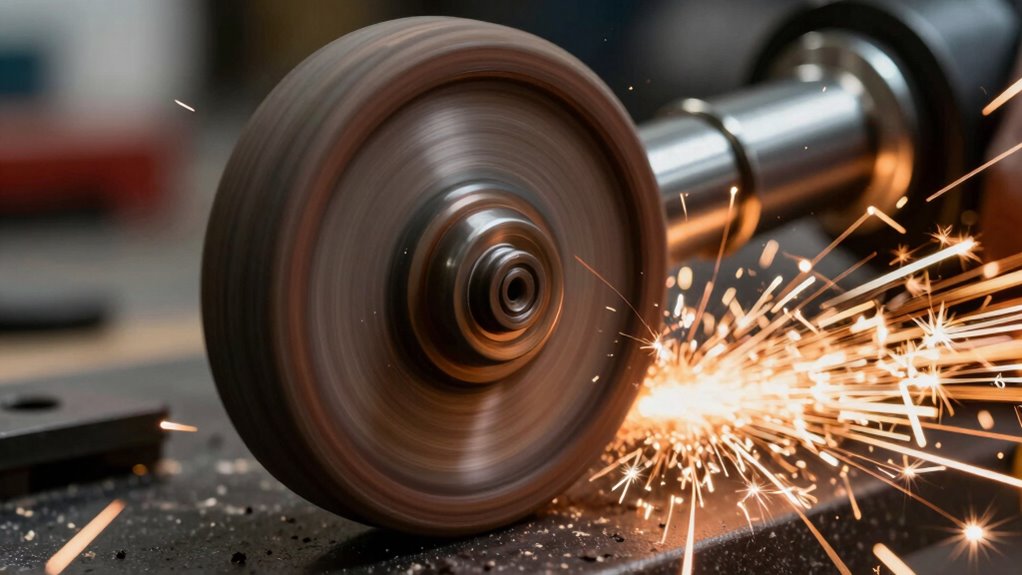
Ever wondered what tool RPM actually means? RPM stands for revolutions per minute, and it’s a key measurement that tells you how fast a power tool’s motor is spinning. When you’re working with cutting or grinding tools, understanding RPM helps you control the abrasive speed and overall performance. The motor’s rotation rate directly influences how quickly the tool cuts or grinds, so knowing this number isn’t just about speed — it’s about safety and efficiency too.
RPM indicates how fast a power tool’s motor spins, affecting performance, safety, and efficiency.
Think of it this way: as the motor rotates, it turns the attachment or disc at a specific rate, which is measured in RPM. Higher RPM means the abrasive surface spins faster, increasing the abrasive speed — that’s the speed at which the abrasive material moves against the surface you’re working on. This abrasive speed determines how effectively you can cut through materials or grind down surfaces. If the RPM is too high for the application, it could damage the tool, cause excessive wear, or even pose safety risks. Conversely, too low, and your work might take longer, or you might not achieve a smooth, precise finish.
In practical terms, when choosing a tool, you want to pay attention to the RPM ratings to match the task at hand. For example, cutting through metal or tough materials often requires a high RPM to provide enough abrasive speed to get the job done efficiently. Grinding or polishing, on the other hand, might need a lower RPM to prevent overheating or reducing material removal rates. The motor’s rotation rate is what makes these adjustments possible, but it’s up to you to select the right speed setting or tool for the specific application. Additionally, understanding tool RPM ratings helps ensure you select equipment that operates safely within its designed limits. Properly managing abrasive speed can also improve overall work quality and reduce tool wear over time. Recognizing the importance of rotational speed can help you make more informed choices about tool usage and maintenance, ultimately extending the lifespan of your equipment.
Another important point is that the RPM isn’t just a number to check off a list; it’s a critical factor in safety. Operating a tool at a higher RPM than it’s rated for can lead to dangerous situations, like dislodged discs or damaged equipment. Always guarantee that your tool’s RPM rating matches the requirements of your task. By understanding how motor rotation influences abrasive speed, you gain better control over your work, ensuring you get the best results while maintaining safety. In addition, proper tool maintenance ensures the motor functions optimally and maintains accurate RPM ratings. So, next time you pick up a power tool, take a moment to check its RPM — it’s the key to mastering cutting and grinding tasks effectively.
angle grinder with adjustable RPM
As an affiliate, we earn on qualifying purchases.
As an affiliate, we earn on qualifying purchases.
Frequently Asked Questions
How Is RPM Measured on Power Tools?
You measure RPM on power tools with a tachometer, which counts the rotations per minute. Regular tool maintenance helps guarantee accurate RPM readings, and RPM calibration might be needed if your tool isn’t operating at its specified speed. To measure, attach the tachometer’s sensor to the tool’s rotating part, turn it on, and read the display. Proper measurement ensures safe and effective cutting or grinding performance.
Can Higher RPM Cause Tool Damage?
Yes, higher RPM can cause tool damage if you don’t use the right tool for the speed. Excessive RPM wears out parts faster, reducing the tool’s lifespan. It also risks operator safety, as the tool may become unstable or break. Always check the manufacturer’s recommended RPM range and avoid exceeding it to protect both your equipment and yourself during cutting or grinding tasks.
What’s the Safest RPM for Different Materials?
The safest RPM for different materials depends on their compatibility with your tool’s speed. Always check RPM safety guidelines for each material, as harder materials like steel require lower RPMs, while softer ones like wood or plastic can handle higher speeds. Using the correct RPM guarantees safety and prevents damage. Remember, matching RPM to material compatibility minimizes risks and maximizes efficiency during cutting and grinding tasks.
How Do I Adjust RPM on My Grinding Tool?
Think of your grinder as a musical instrument—you control its rhythm through RPM. To adjust it, start by unplugging the tool, then locate the RPM calibration knob or dial. Turn it gently to set the desired speed, ensuring tool maintenance is up to date. Always check the manufacturer’s guidelines for safe RPM limits, and test your adjustments on scrap material to fine-tune your tool’s performance safely.
Does RPM Affect Cutting Speed and Efficiency?
Yes, RPM directly affects cutting speed and efficiency. Higher RPMs can increase your work rate, but they also impact tool longevity and safety considerations. Operating at the correct RPM guarantees you cut efficiently without overheating or damaging the tool. Always follow manufacturer guidelines to balance speed and safety. Proper RPM settings help you avoid accidents and extend your tool’s lifespan, making your work safer and more effective.
cutting and grinding power tools
As an affiliate, we earn on qualifying purchases.
As an affiliate, we earn on qualifying purchases.
Conclusion
Think of RPM as the heartbeat of your cutting or grinding tool—pulsing with energy that determines its power and precision. Just as a steady rhythm keeps a dancer in sync, maintaining the right RPM keeps your work smooth and safe. When you respect this essential measure, you’re not just operating a tool—you’re conducting a symphony of craftsmanship. Master it, and your projects will always move to a confident, harmonious beat.
As an affiliate, we earn on qualifying purchases.
As an affiliate, we earn on qualifying purchases.
Fall yard work Picks
leaf blowers
As an affiliate, we earn on qualifying purchases.