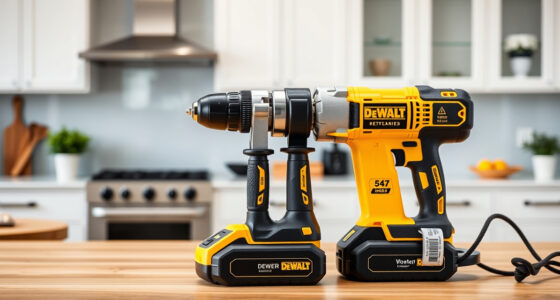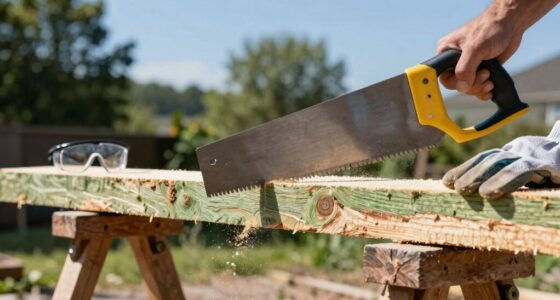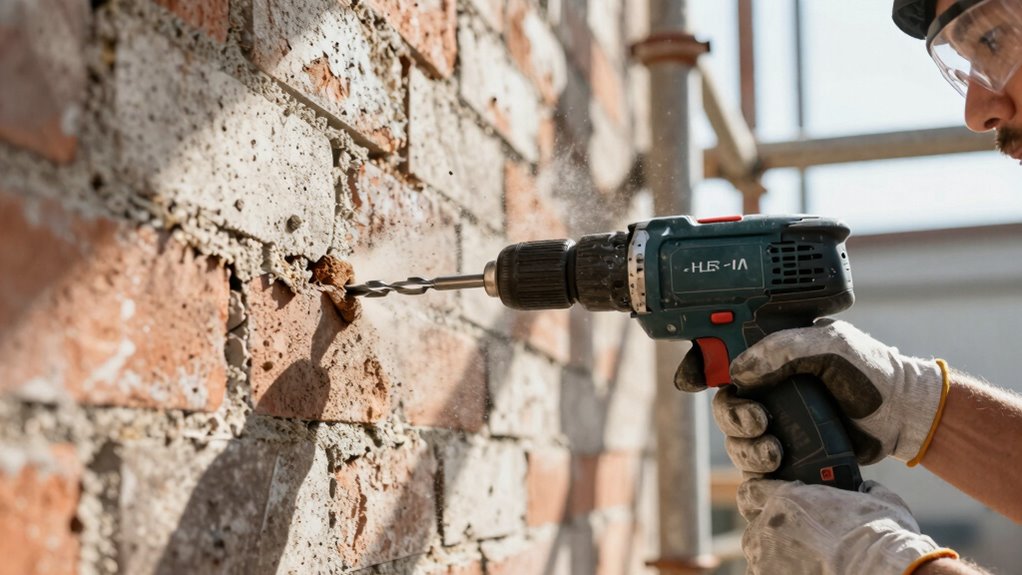
To use a hammer drill on masonry safely and effectively, wear safety glasses, ear protection, and a dust mask if needed. Choose the right carbide-tipped masonry bit and make sure it’s sharp and properly secured. Hold the drill firmly, start at a low speed, and apply steady pressure without forcing it. Keep your work area clear, stay aware of safety features, and regularly inspect your tool. For detailed tips, keep exploring—there’s more to mastering your project.

Get business pricing on tools and workshop supplies
- Business-only prices and quantity discounts
- Tax-exempt purchasing
- Multiple users, one account, clear invoices
Key Takeaways
- Wear safety glasses and ear protection before starting to prevent injuries from debris and loud noise.
- Choose the correct carbide-tipped masonry drill bit matching the hole size and material.
- Securely insert and tighten the drill bit in the chuck for stability during operation.
- Use a steady, controlled pressure and avoid forcing the drill to prevent damage and ensure precision.
- Work in a well-ventilated area, and regularly inspect the drill for proper functioning and safety features.
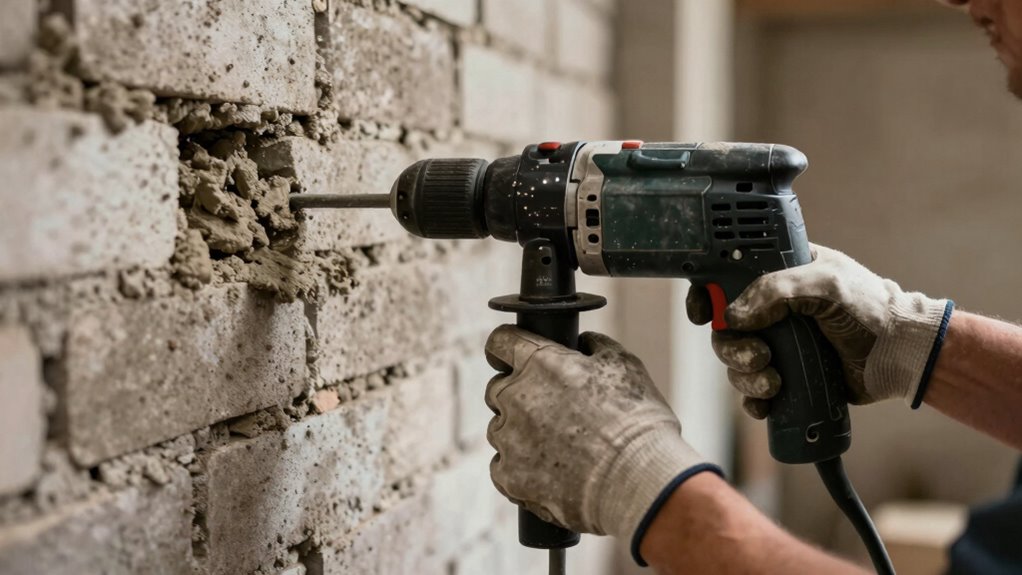
Using a hammer drill on masonry can be highly effective, but only if you know the right techniques. Before you start, it’s vital to prioritize safety precautions. Wear protective gear such as safety glasses to shield your eyes from debris, and use ear protection to guard against loud noise. Consider wearing a dust mask if you’re drilling into dusty surfaces, and always work in a well-ventilated area. Keep your workspace clear of obstacles, and make sure the power cord is out of the way to prevent tripping. Familiarize yourself with the drill’s safety features, like the lock-on button, and avoid forcing the tool beyond its capabilities. Taking these precautions minimizes risk and keeps you safe during the job.
Next, focus on drill bit selection, which plays an essential role in drilling efficiency and effectiveness. For masonry, you should use a carbide-tipped masonry bit, designed specifically to handle concrete, brick, and stone. The right drill bit will make your work smoother and reduce wear on the tool. When choosing a drill bit, consider the size of the hole you need and match it to the appropriate bit diameter. Make sure the bit is sharp; dull bits require more pressure and can cause the drill to overheat or slip, increasing safety risks. Before drilling, verify that the bit is securely installed in the chuck to prevent wobbling or accidental release during operation. Additionally, understanding biodiversity and sustainable practices can help you appreciate the importance of preserving natural resources even during DIY projects. Being mindful of environmental impact can promote more eco-friendly work habits and resource conservation. Understanding proper technique is also crucial for avoiding damage to your tools and materials. Moreover, taking the time to learn about tool maintenance can extend the lifespan of your equipment and ensure consistent performance. Remember that using eco-friendly practices, such as proper disposal of debris, can also contribute to a more sustainable work environment.
carbide-tipped masonry drill bits
As an affiliate, we earn on qualifying purchases.
As an affiliate, we earn on qualifying purchases.
Frequently Asked Questions
Can I Use a Hammer Drill for Concrete and Brick Interchangeably?
Yes, you can use a hammer drill for both concrete and brick, but focus on proper drill bit selection to match the material. Use a masonry drill bit designed for tough surfaces. Adjust the drill speed for each material—higher for brick, lower for concrete—to prevent damage. This guarantees efficient drilling and extends your tool’s lifespan, making your project smoother and safer.
What Safety Gear Should I Wear When Drilling Masonry?
When drilling masonry, you should wear protective eyewear to shield your eyes from debris and dust, and a dust mask to avoid inhaling harmful particles. Safety gloves are also recommended to protect your hands. Make certain your work area is well-ventilated, and keep loose clothing or jewelry away from the drill. Prioritizing safety gear helps prevent injuries and ensures a smoother, safer drilling experience.
How Do I Maintain the Hammer Drill’s Battery Life?
Like a trusty steed in a medieval quest, your hammer drill’s battery needs proper care. To maintain its life, always fully charge the battery before heavy use and avoid letting it sit drained. Use power management features if available, and store the battery in a cool, dry place when idle. Regularly clean the contacts and avoid overworking the battery, ensuring your drill stays ready for action when you need it most.
Is It Necessary to Pre-Drill Holes Before Using a Hammer Drill?
Yes, pre-drilling holes can be helpful, especially with different drill bit types suited for masonry. It makes the process easier and prevents the drill from slipping. When pre-drilling, consider the appropriate drilling depth for your project. This step reduces stress on the hammer drill, guarantees accuracy, and helps you work more efficiently. Use a smaller bit initially, then switch to the correct size for your final hole.
What Are Common Mistakes to Avoid When Using a Hammer Drill?
When using a hammer drill, avoid common mistakes like poor drill bit selection—use the right bit for masonry to prevent damage. Also, control drill speed to match the task; going too fast can cause overheating or bit breakage. Don’t press too hard; let the drill do the work. Keep the drill steady and aligned, and always wear safety gear to prevent accidents. Proper technique guarantees efficient, safe drilling.
As an affiliate, we earn on qualifying purchases.
Conclusion
Using a hammer drill correctly not only makes your masonry projects smoother but also extends the tool’s lifespan. Remember, over 60% of DIYers report damaging their drills due to improper use, so following proper techniques is essential. By maintaining steady pressure, choosing the right bit, and using the hammer function wisely, you’ll complete your tasks efficiently and safely. Mastering these steps ensures your masonry work is solid, saving you time and money in the long run.
As an affiliate, we earn on qualifying purchases.
masonry drill bit set for concrete
As an affiliate, we earn on qualifying purchases.
As an affiliate, we earn on qualifying purchases.
Fall Picks
fall essentials
As an affiliate, we earn on qualifying purchases.