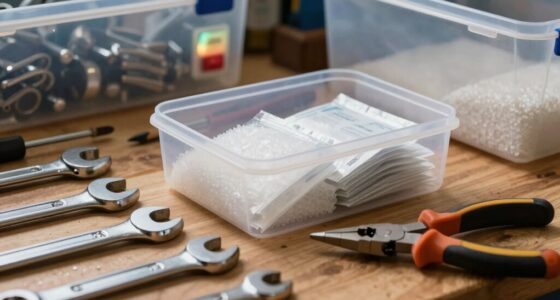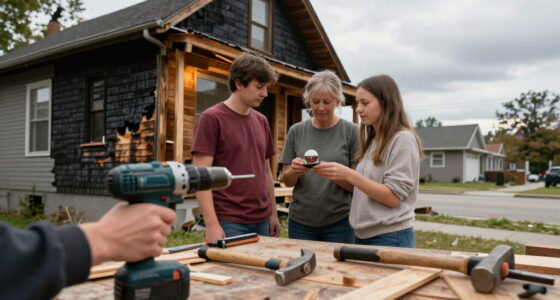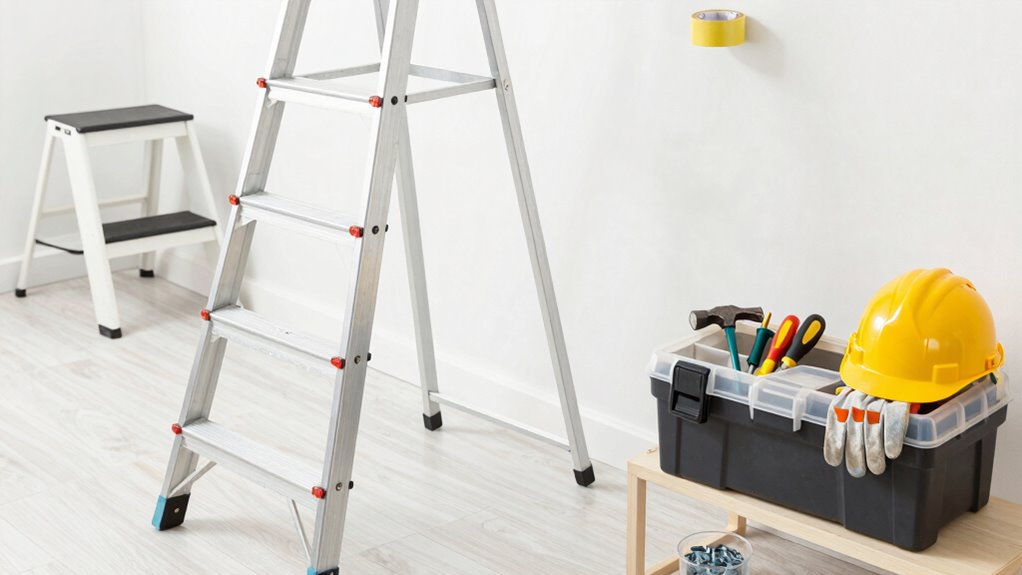

To keep your ladder work zone safe, gather essential safety gear nearby, like sturdy gloves, proper footwear, and a first-aid kit to handle potential injuries. Tools like levels, tape measures, and screwdrivers should be organized on trays or buckets to prevent slips or falls. Good lighting, especially portable work lamps or headlamps, helps you see hazards clearly. Properly preparing your ground and being aware of your environment can prevent common accidents. Keep these essentials close—discover more tips to stay safe.
Listen free for 30 days with Audible
Thousands of audiobooks and originals — cancel anytime.
As an affiliate, we earn on qualifying purchases.
Key Takeaways
- Keep a first-aid kit nearby for quick response to injuries.
- Store sturdy gloves to protect hands during work.
- Have measurement tools like levels or tape within easy reach.
- Ensure proper lighting tools, such as flashlights or headlamps, are accessible.
- Organize tools on trays or buckets to prevent instability and falls.
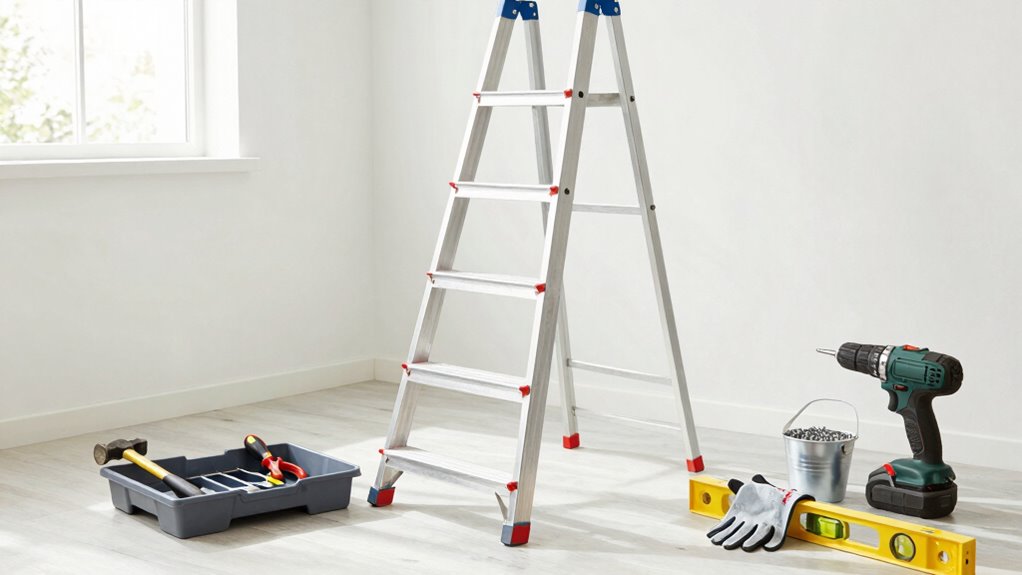
When working on a ladder, safety should always come first, and having the right tools and safety equipment nearby can make a big difference. One of the most important considerations is ensuring you wear proper footwear. Slip-resistant shoes with good grip are essential, so you don’t risk slipping off the ladder or losing your footing. Avoid sandals, flip-flops, or any footwear that lacks traction. Proper footwear not only helps prevent falls but also keeps you stable as you work at height. When you’re on a ladder, your focus should be on maintaining balance, and the right shoes give you that confidence, especially on smooth or uneven surfaces.
Wearing slip-resistant shoes ensures stability and safety when working on a ladder.
Alongside footwear, adequate lighting is crucial to work safely and efficiently. Proper lighting helps you see clearly what you’re doing, reducing the chances of mistakes or accidents. If you’re working indoors, make sure the area is well-lit with overhead lights or portable work lamps. Outdoors, ensure the work zone is illuminated enough, especially if you’re working in the evening or in shaded areas. Insufficient lighting can cause you to misjudge distances or miss hazards, increasing the risk of falls or injuries. Keeping a portable flashlight or headlamp nearby can be a lifesaver if you need extra illumination in tight spots or shadowed corners. Additionally, Proper lighting can help you identify potential hazards early, preventing mishaps before they happen. Incorporating safety awareness into your preparation can further reduce risks and improve your overall safety during DIY projects. Being aware of common ladder hazards can also help you anticipate and avoid accidents before they occur. Understanding the biodiversity of your environment can also be beneficial, especially when working outdoors, as it helps you identify and avoid disrupting local wildlife or plant life.
In addition to footwear and lighting, you should keep other safety essentials close at hand. A sturdy pair of gloves can protect your hands from splinters, sharp tools, or rough surfaces. A level or measurement tape ensures your work is precise, preventing the need for repeated adjustments that could compromise your safety. Also, having a first-aid kit nearby can be critical if an accident occurs, no matter how cautious you are. It’s better to be prepared than to scramble for supplies when you’re in the middle of a task.
Lastly, ensure you have a stable platform or a non-slip mat beneath the ladder if you’re working on uneven ground. This adds extra stability and prevents the ladder from shifting unexpectedly. Keep your tools organized on a nearby tray or bucket, so you don’t have to reach or stretch awkwardly, which can destabilize your position. By keeping these essentials close—proper footwear, adequate lighting, gloves, measurement tools, and safety gear—you create a safer environment that minimizes risks and allows you to focus on your task with confidence. Your safety depends on thoughtful preparation, and having the right items nearby makes all the difference. A good understanding of ladder safety is essential for preventing accidents and ensuring successful DIY projects.
slip-resistant work shoes for ladder safety
As an affiliate, we earn on qualifying purchases.
As an affiliate, we earn on qualifying purchases.
Frequently Asked Questions
How High Should a Ladder Be for Safe Use?
You should choose a ladder that extends at least three feet above the highest point you need to reach for proper extension and safety. This guarantees ladder stability when working at height. Always maintain a 4-to-1 ratio—place the base one foot away from the wall for every four feet of ladder height. This setup helps prevent accidents and keeps you stable during your DIY tasks.
What Is the Best Type of Footwear for Ladder Work?
Just like a knight needs trusty armor, your best footwear for ladder work is slip-resistant shoes with strong grip. These shoes prevent slips and falls, giving you stability and confidence. Look for footwear with a good tread pattern and non-slip soles, especially when working on slick or uneven surfaces. Wearing slip-resistant shoes keeps you secure, so you can focus on your task without worry, making your DIY project safer and smoother.
Are Gloves Necessary When Working on a Ladder?
Yes, gloves are necessary when working on a ladder because they enhance protective gear and improve hand safety. Wearing gloves helps you grip tools securely, prevents blisters, and shields your hands from sharp edges or rough surfaces. Prioritizing hand safety reduces the risk of injuries, especially when handling materials or tools at height. Always choose gloves that fit well and are appropriate for the task to guarantee maximum protection and dexterity.
How Do Weather Conditions Affect Ladder Safety?
Weather is like an unpredictable weather vane, shifting your safety with each gust. Wind considerations can turn a stable ladder into a dangerous sway. Weather hazards such as rain, ice, or strong winds weaken ladder footing and reduce grip, making falls more likely. Always check the forecast before starting, and avoid working during severe weather. Clear, calm days are best, ensuring your ladder remains a sturdy extension of your safety.
What Are Common Mistakes to Avoid When Setting up a Ladder?
When setting up a ladder, avoid common mistakes like not securing the base properly or overreaching, which compromise ladder stability. Make certain the ladder is on a flat, stable surface and angle it correctly. Keep your tools organized nearby to prevent clutter that could cause accidents. Always double-check the ladder’s stability before climbing, and don’t lean too far to maintain balance. These steps help guarantee your safety during DIY projects.
portable work light LED headlamp
As an affiliate, we earn on qualifying purchases.
As an affiliate, we earn on qualifying purchases.
Conclusion
Keeping essentials close to your ladder work zone boosts safety and efficiency. Remember to have your tools, a sturdy work surface, and a spotter nearby. Did you know that falls from ladders account for nearly 300 deaths annually? Staying prepared and cautious can greatly reduce this risk. So, always plan ahead and keep safety gear within reach—your well-being depends on it. Stay smart, stay safe, and enjoy your DIY projects!
As an affiliate, we earn on qualifying purchases.
tool organizer tray for ladder work
As an affiliate, we earn on qualifying purchases.
As an affiliate, we earn on qualifying purchases.
Flea & tick season Picks
flea and tick prevention
As an affiliate, we earn on qualifying purchases.