TL;DR
A home-maintenance guide recommends disconnecting all hoses and attachments, shutting off and draining standard outdoor faucet lines, and adding an insulated cover before the first hard freeze. Frost-free faucets can still be damaged if a hose remains attached or installation and pipe conditions prevent proper drainage.
A seasonal home-maintenance guide advises homeowners to remove hoses and attachments, shut off and drain standard outdoor faucet lines, and fit an insulated cover before freezing temperatures arrive. The guide says these steps can reduce the risk of hidden pipe damage, which may not become apparent until water is turned back on.

Get business pricing on tools and workshop supplies
- Business-only prices and quantity discounts
- Tax-exempt purchasing
- Multiple users, one account, clear invoices
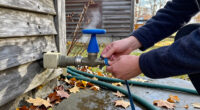
The home-maintenance guide says to disconnect garden hoses, splitters, timers, and quick-connect fittings from every outdoor faucet. It notes that attachments can hold water against the spigot, including on some frost-free faucets. The guide also recommends draining hoses separately and storing them out of the weather.
For a standard faucet with a dedicated indoor shutoff, the guide recommends closing the valve and then opening the outdoor faucet to let remaining water drain. It says shutoff valves are often in a basement, crawl space, or utility room near the pipe’s route to the exterior. If a valve has a bleeder cap, the guide advises leaving the faucet open, placing a bucket below the cap, and loosening it slowly to release trapped water.
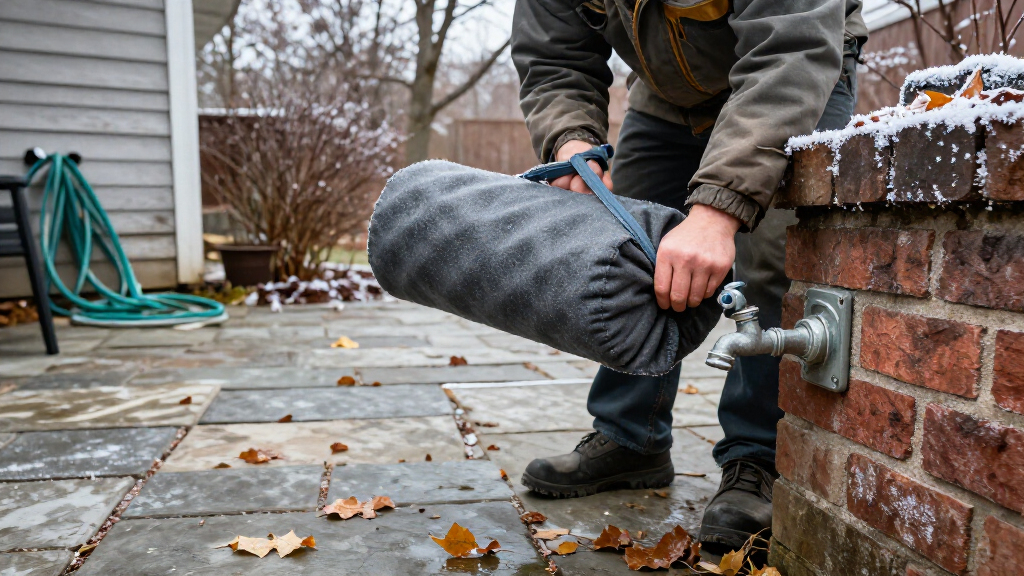
The guide describes an insulated faucet cover as extra protection, not a replacement for removing attachments and draining the line. It recommends fitting the cover snugly against the wall and checking it after windy weather. If the correct shutoff valve is unclear, the guide advises against operating an unidentified valve.
Winterize outdoor faucets <span class=”hz-grad>Before the first hard freeze
Remove trapped water before freezing weather to reduce the risk of hidden pipe damage. Covers add protection, but do not replace draining the line.
Start with every attachment
Hoses and fittings can trap water at the spigot and interfere with drainage.
Remove hoses, splitters, timers, and quick-connect fittings from every faucet.
Close the dedicated indoor shutoff, then open the outdoor faucet to release remaining water.
Secure it snugly against the wall and recheck it after windy weather.
Standard and frost-free faucets
Frost-free designs still need attention, and their drainage depends on installation and pipe conditions.
| Faucet type | Winter care | What can affect it |
|---|---|---|
| Standard | Shut off and drain the line | Find the dedicated indoor valve |
| Frost-free | Remove the hose; follow maker instructions | Level or damaged faucet, or unheated piping |
Check before freezing weather
Make the inspection part of fall garden and sprinkler winterization.
- Identify the correct shutoff; do not operate an unidentified valve.
- Drain the line where required and store hoses out of the weather.
- Check that the cover fits firmly against the wall.
Preventing Damage Behind the Wall
The home-maintenance guide warns that a faucet can look intact outdoors even when a pipe has split inside a wall or another concealed space. It says the damage may only become visible when the water supply is restored, potentially turning a small seasonal task into a plumbing repair.
The guide explains that water left in a faucet or pipe can freeze and expand. Removing trapped water is the central preventive step it describes; a cover alone cannot guarantee that the line is drained. The guide also recommends checking faucets before a hard freeze so homeowners have time to identify a missing shutoff or ask a plumber for help.
Products Worth Considering

Roborock Qrevo S Pro Robot Vacuum and Mop with 18,500 Pa Suction

Levoit Eleva 300X Air Purifier with Fully Sealed HEPA Filtration and Smart Control

Dyson V15 Detect Cordless Vacuum
As an affiliate, we earn on qualifying purchases.
How Faucet Types Differ
The guide explains that a frost-free faucet uses a long stem to place its shutoff point farther inside the building, where it is warmer. When properly installed with a slight downward slope toward the exterior, water in the stem can drain after the faucet is closed. It says these models generally do not require the same supply shutoff and draining routine as standard faucets, but the hose must still be removed.
According to the guide, drainage may fail if the faucet is level, damaged, or connected to a pipe in an unheated crawl space. It recommends following the manufacturer’s instructions for a specific model. For homes without a dedicated indoor shutoff, the guide mentions a freeze-protection device that releases a small amount of water below a stated temperature; that approach requires leaving the supply on and the outdoor faucet fully open. The guide advises following the device’s instructions rather than combining methods without checking compatibility.
Installation and Valve Details Vary
The home-maintenance guide cannot establish whether a particular home has a dedicated shutoff, whether an outdoor faucet is frost-free, or whether its pipe drains correctly. Those details depend on the home’s plumbing and installation. Product performance and compatibility also cannot be determined from general guidance alone; the guide recommends consulting the faucet or device maker’s instructions.
The guide also notes that it is not possible to tell from the exterior whether a pipe has already cracked. If water continues running after a shutoff is closed, or a leak appears when the system is used, the cause may need professional inspection. It advises shutting off water to the affected line—or the home’s main supply if there is no separate valve—and contacting a plumber when a leak is suspected.
Check Faucets Before Freezing Weather
The home-maintenance guide recommends making the inspection part of fall garden and sprinkler winterization, before the first hard freeze in the forecast. It advises removing attachments, identifying the correct shutoff, draining the line where required, and installing a cover that fits firmly against the wall. It also recommends rechecking covers after strong winds.
If a faucet appears frozen or will not run, the guide warns against using a torch or another intense heat source. It says a hair dryer may be used cautiously on the faucet and nearby wall, with its electrical cord kept away from water. If a leak is suspected, the guide advises shutting off the water and contacting a licensed plumber rather than waiting for the damage to become more visible.
Key Questions
What is the first step in winterizing an outdoor faucet?
The home-maintenance guide says to remove the hose and every attachment, including splitters, timers, and quick-connect fittings. They can trap water at the faucet and interfere with drainage.
Do frost-free faucets need winterizing?
The guide says they still need attention: remove the hose and check the manufacturer’s instructions. A frost-free faucet can remain vulnerable if it does not slope outward, is damaged, or connects to piping in an unheated area.
Should I close the outdoor faucet after draining it?
The guide says instructions can vary by shutoff valve and faucet. Some valve makers recommend closing it, while some plumbers leave it open. Follow the instructions for the equipment in your home.
What should I do if an outdoor faucet is frozen?
The guide says not to use a torch or another intense heat source. It suggests cautious use of a hair dryer on the faucet and surrounding wall, with the cord kept away from water. If you suspect a leak, shut off the water and call a plumber.
Source: gardeningknowhow.com