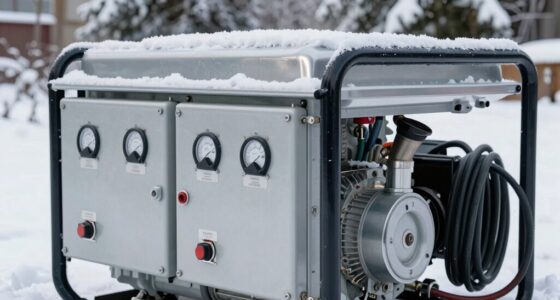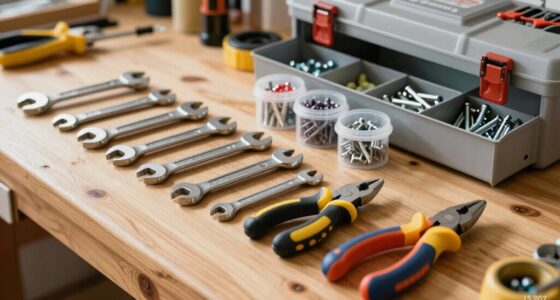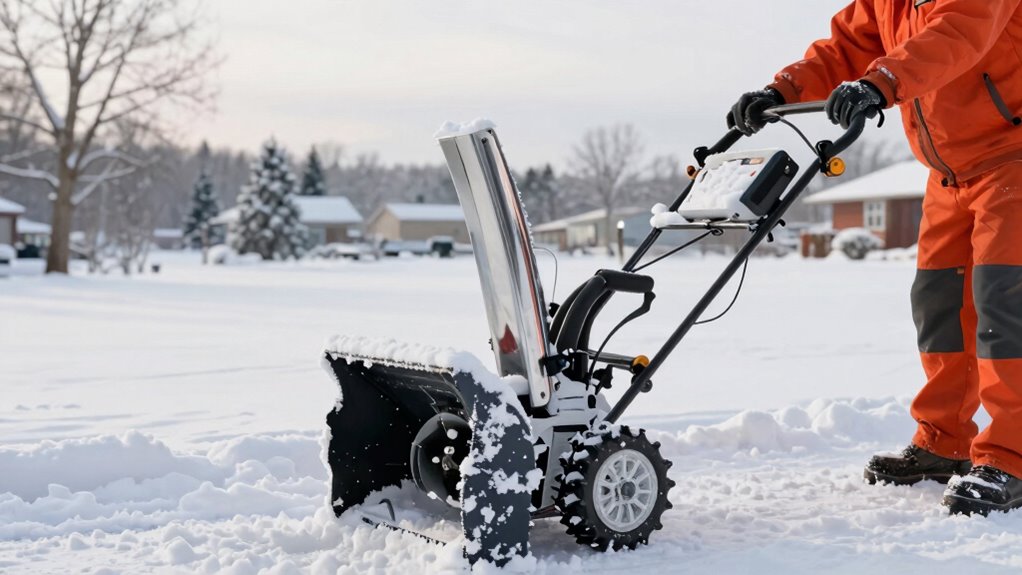

Before using your snow removal equipment for the first time, thoroughly inspect all moving parts, belts, blades, and safety features for wear, damage, or loose fittings. Lubricate necessary components, check fuel and oil levels, and replace any worn or damaged parts. Confirm tires, tracks, and drivetrains are in good condition and properly tensioned. Conduct a complete pre-season checkup to guarantee reliable performance. Keep in mind, following these steps now helps prevent breakdowns and guarantees smooth operation during winter.

Get business pricing on tools and workshop supplies
- Business-only prices and quantity discounts
- Tax-exempt purchasing
- Multiple users, one account, clear invoices
Key Takeaways
- Conduct a comprehensive pre-season inspection of all moving parts, blades, belts, and safety features.
- Lubricate components requiring lubrication to ensure smooth operation and prevent rust.
- Replace any worn or damaged parts to ensure equipment reliability from the start.
- Check fuel and oil levels, and top off with fresh fuel and clean oil to prevent starting issues.
- Inspect tires, tracks, and drivetrain for proper tension and condition for optimal traction.
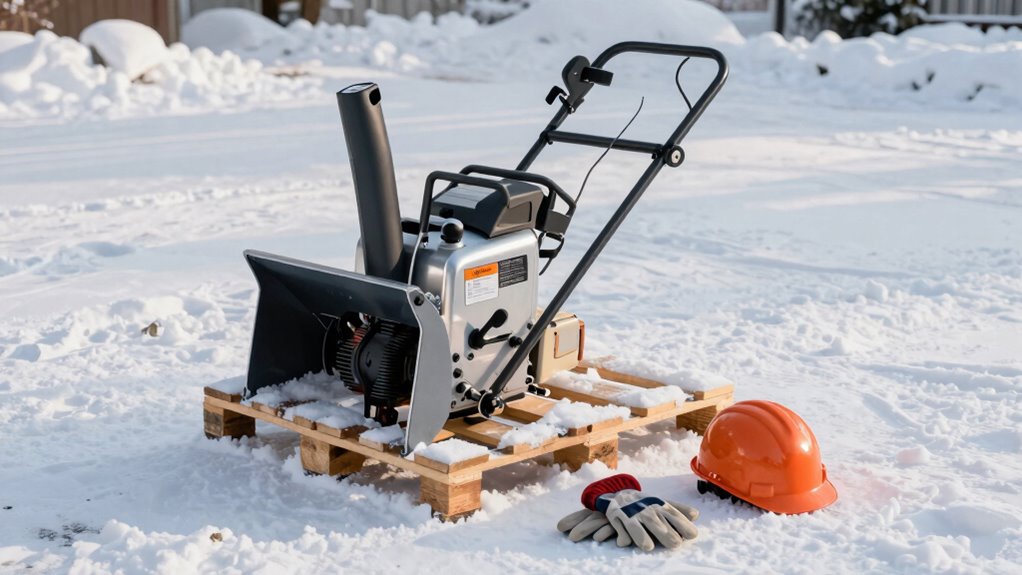
Before firing up your snow removal equipment for the first time, performing a thorough inspection and proper setup is vital. Your goal is to guarantee everything functions smoothly and safely, preventing breakdowns when you need it most. Start by checking all moving parts, belts, and blades for wear, damage, or loose fittings. Lubricate any components that require it, and replace worn or damaged parts before use. This initial step helps avoid unexpected failures during snow events and extends the lifespan of your equipment.
Perform a thorough inspection and maintenance to ensure your snow removal equipment runs smoothly and safely.
Next, pay close attention to your snow storage practices. Proper snow storage is essential to avoid clutter and ensure safe, efficient removal. Clear a designated area where snow can be temporarily stored without obstructing pathways, driveways, or entrances. Consider the landscape and drainage patterns to prevent snow from refreezing or causing ice buildup. If possible, plan your snow storage to facilitate easy access for ongoing snow removal, reducing the risk of pile-ups that could compromise your equipment’s performance. Additionally, maintaining proper storage practices can significantly prolong the lifespan of your equipment by preventing unnecessary stress and corrosion. Regularly inspecting storage areas for debris or hazards is also important to keep your workspace safe and efficient.
Equipment maintenance doesn’t end with inspection. Before the first use, check the fuel levels and top off with fresh fuel if needed. Old or stale fuel can cause starting issues or poor engine performance. Also, verify that the oil levels are adequate and change the oil if it’s been a while since your last oil change. Clean or replace air filters to ensure the engine breathes properly during operation. For electric models, ensure batteries are fully charged and terminals are clean and secure. Taking these maintenance steps upfront helps your equipment run more efficiently and reduces the chances of breakdowns during critical snowstorms. Additionally, inspecting the tire or track condition is crucial, as proper inflation or tension provides better traction and maneuverability, which is especially important when snow and ice make surfaces slippery. Regularly inspecting the drivetrain components can also prevent unexpected failures and improve overall performance. Performing a comprehensive pre-season checkup can further ensure your equipment is ready for the demanding winter months.
As an affiliate, we earn on qualifying purchases.
Frequently Asked Questions
How Often Should I Perform Maintenance on My Snow Removal Equipment?
You should perform maintenance on your snow removal equipment at least once a season or after heavy use. During equipment storage, guarantee it’s clean and properly stored to prevent rust. Check and manage the fuel, adding stabilizer if storing for long periods, and inspect for worn parts. Regular maintenance keeps your equipment reliable, extends its lifespan, and ensures it’s ready for the next snowstorm when needed.
Can I Use Regular Engine Oil in Snow Removal Equipment?
Imagine your snow removal equipment as a powerful engine horse, needing the right nourishment to run smoothly. You shouldn’t use regular engine oil; instead, opt for specialized engine oil designed for cold conditions. Fuel additives help prevent fuel gelling in winter’s chill, ensuring your machine starts reliably. Using the proper engine oil and fuel additives keeps your equipment ready for action, preventing breakdowns and extending its lifespan during snowy seasons.
What Safety Gear Is Recommended When Operating Snow Removal Equipment?
When operating snow removal equipment, you should wear personal protective gear like sturdy gloves, safety goggles, and ear protection to keep yourself safe from debris and loud noise. Always prioritize emergency preparedness by having a first aid kit nearby and knowing how to shut down the machine quickly. Wearing appropriate gear minimizes injury risks, ensuring you stay safe while efficiently clearing snow.
How Do I Store Snow Removal Equipment During Off-Season?
During the off-season, you should store your snow removal equipment in a sheltered, dry space for winter storage, like a shed or garage. Clean and dry the equipment thoroughly to prevent rust and corrosion. Add fuel stabilizer to prevent fuel degradation, and consider covering it with a tarp for extra protection. Proper equipment protection guarantees it stays in good condition and is ready for effective use when winter returns.
Are There Eco-Friendly Options for Snow Removal Equipment Maintenance?
Yes, you can opt for eco-friendly snow removal equipment maintenance by using biodegradable lubricants, which reduce environmental impact and keep your gear running smoothly. Consider investing in recycled snow gear made from sustainable materials to lessen waste. Regularly maintain your equipment with eco-conscious products, and store it properly to extend its lifespan. These choices help protect the environment while ensuring your snow removal tools stay effective.
As an affiliate, we earn on qualifying purchases.
Conclusion
Before you fire up your snow removal equipment for the season, guarantee it’s properly prepared to avoid costly repairs. Regular maintenance and thorough inspections can extend your equipment’s lifespan and improve efficiency. Did you know that improperly maintained snow blowers can lose up to 70% of their performance? Taking these simple steps not only saves you time and money but also guarantees safer, more effective snow removal when you need it most. Stay proactive, and you’ll be ready for whatever winter throws at you.
As an affiliate, we earn on qualifying purchases.
As an affiliate, we earn on qualifying purchases.
Columbus Day / Indigenous Peoples' Day Picks
long weekend sales
As an affiliate, we earn on qualifying purchases.