
Before putting your summer equipment away, make sure you clean and inspect everything thoroughly. Remove dirt, grass clippings, and debris from lawnmowers, trimmers, and tools using brushes or compressed air. Wipe down surfaces, sharpen or replace blades, and check handles for damage. Dry all items completely and apply a light coat of oil to metal parts to prevent rust. Proper cleaning now helps avoid issues later—keep going to discover more tips for storing your gear well.

Get business pricing on tools and workshop supplies
- Business-only prices and quantity discounts
- Tax-exempt purchasing
- Multiple users, one account, clear invoices
Key Takeaways
- Remove dirt, grass clippings, and debris from tools, blades, vents, and power equipment surfaces.
- Clean soil, sap, and residues from garden tools with warm water and a stiff brush.
- Wipe equipment surfaces with a damp cloth to prevent residue buildup.
- Drain or clean oil and fuel residues to avoid corrosion and leaks.
- Dry all tools and equipment thoroughly to prevent rust and mold during storage.
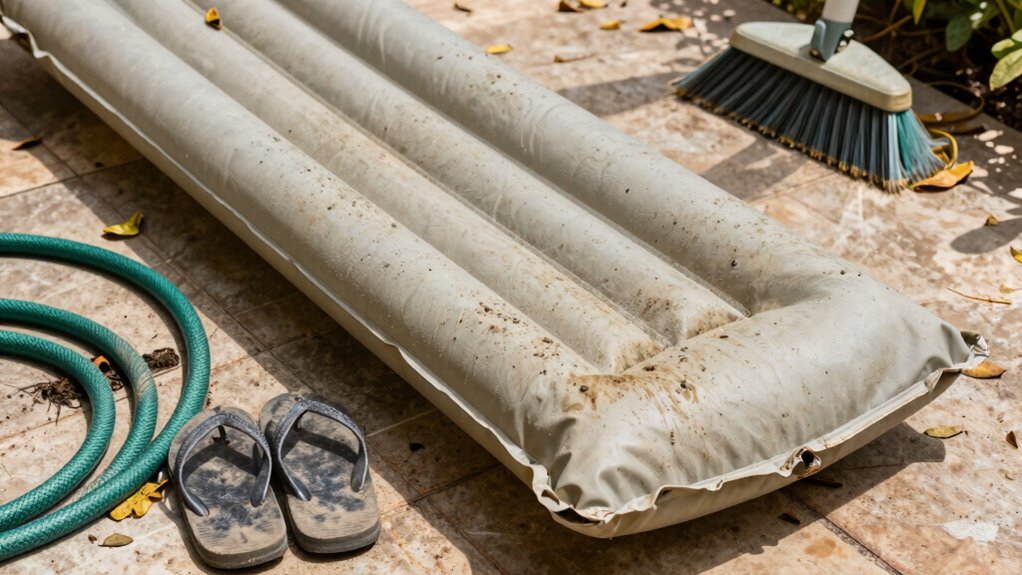
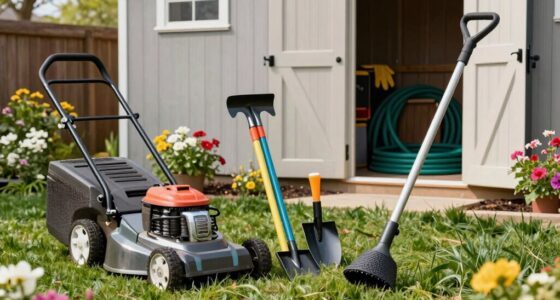
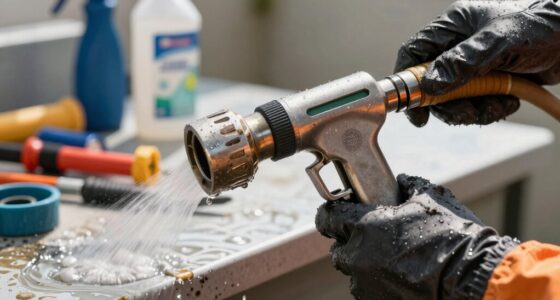
As summer comes to an end, it is vital to properly clean your equipment before storing it away for the season. Taking the time to do a thorough clean now prevents damage, extends the lifespan of your tools, and guarantees they’re ready for next year’s garden maintenance. Start by inspecting your lawnmower, trimmers, and other power tools. Remove grass clippings, dirt, and debris from blades and vents. Use a brush or compressed air to clear hard-to-reach areas, and wipe down surfaces with a damp cloth. If your equipment has oil or fuel residues, drain or clean these parts to prevent corrosion or leaks during storage. Sharp blades should be sharpened or replaced to keep equipment in top shape for the following season. Proper equipment maintenance is essential for longevity and optimal performance, especially when it involves removing residues that could cause corrosion over time.
Properly clean and inspect your garden tools to prevent damage and ensure they’re ready for next season.
Next, turn your attention to your garden tools—shovels, rakes, hoes, and pruners. Clean off soil and sap with warm water and a stiff brush. For metal tools, applying a light coat of oil helps prevent rust during storage. Make sure handles are intact and free of splinters; sand and treat wooden handles if needed. Proper cleaning of your garden maintenance tools not only prolongs their durability but also keeps your garden safe from potential contamination or pests. After cleaning, dry everything thoroughly to prevent corrosion, ensuring no moisture remains in crevices or joints.
When it’s time to pack away smaller items, such as gloves or plant supports, consider using storage containers. These containers keep your garden accessories organized and protect them from dust, pests, and moisture. If you’re storing items that are prone to rust or corrosion, opt for airtight or moisture-resistant storage containers. Label each container clearly so you can easily find what you need next season. Additionally, for power equipment, store batteries separately in a cool, dry place, or remove them entirely to prevent leakage and damage. Proper storage organization can make spring setup much more efficient and less frustrating.
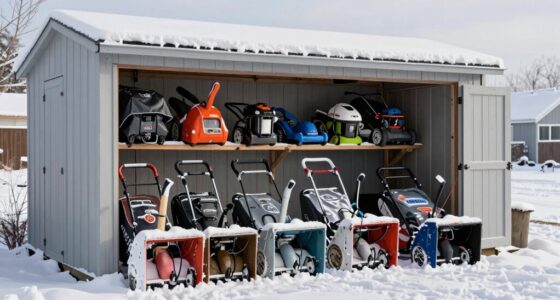
Finally, make certain your storage area is clean, dry, and well-ventilated. This environment helps prevent mold, mildew, and pests from taking hold. Store your equipment off the ground, on shelves or hooks, to avoid contact with damp surfaces. Regularly check your storage containers and equipment during the off-season to catch any issues early. Properly cleaning and organizing your summer equipment before putting it away not only preserves their condition but also makes your spring setup much easier. With these steps, you’ll guarantee your tools and garden maintenance gear stay in excellent shape, ready for another productive season when the weather warms again.
As an affiliate, we earn on qualifying purchases.
Frequently Asked Questions
How Do I Prevent Mold Growth on My Summer Gear?
To prevent mold growth on your summer gear, guarantee thorough seasonal maintenance by cleaning and drying everything completely before storage. Use mold prevention sprays or solutions on fabric and surfaces, and store items in a cool, dry place with good airflow. Regularly inspect your gear during off-season periods, and avoid storing in humid environments. These steps help keep mold at bay, prolonging your equipment’s lifespan and maintaining hygiene.
What Cleaning Products Are Safest for Delicate Equipment?
Think of it as “less is more.” You should opt for gentle cleansers and eco-friendly solutions when cleaning delicate equipment. These products effectively remove dirt without risking damage, harming the environment, or leaving harsh residues. Always read labels carefully, test a small area first, and avoid abrasive brushes or strong chemicals. By choosing safe, gentle options, you preserve your gear’s integrity and keep it ready for next summer’s adventures.
How Often Should I Clean My Summer Equipment During the Season?
You should clean your summer equipment at least once every few uses or weekly, depending on how often you use it. Following a regular cleaning schedule helps prevent dirt buildup and extends equipment life. Proper equipment maintenance includes quick rinses after each use and deep cleaning at regular intervals. Staying consistent guarantees your gear stays in top shape and ready for your next adventure, reducing the risk of damage or wear.
Can I Store Summer Equipment Outdoors After Cleaning?
Yes, you can store summer equipment outdoors after cleaning, but it’s important to use outdoor storage solutions that protect your gear. Make sure everything is thoroughly cleaned and dried to prevent rust and mold. Use waterproof covers or storage sheds to shield your equipment from weather elements, which helps with equipment protection. Proper outdoor storage extends the life of your summer gear and keeps it in good condition for next season.
What Are the Signs My Equipment Needs Repair Before Storage?
Don’t ignore the writing on the wall—your equipment might need repair before storage. Look for signs like rust, cracks, or worn parts during your equipment inspection. Use a repair checklist to identify issues such as loose bolts, frayed cords, or leaks. Address these problems now, so you prevent further damage over the winter. Fixing small issues early keeps your gear in top shape and ready for summer fun.
As an affiliate, we earn on qualifying purchases.
Conclusion
Now that you’ve cleaned and stored away your summer gear, imagine the surprises waiting when you unearth them next year. Did you catch every hidden nook and cranny? Are those neglected spots ready to cause surprises? Take a moment to double-check everything—you’ll thank yourself later. Proper cleaning now means your equipment will be in top shape when summer rolls around again, and you’ll avoid unexpected setbacks. Ready to find out what’s lurking beneath the surface? The next season will thank you!
As an affiliate, we earn on qualifying purchases.
As an affiliate, we earn on qualifying purchases.
Fall yard work Picks
leaf blowers
As an affiliate, we earn on qualifying purchases.