
Before spring jobs, you should inspect your pressure washer thoroughly. Check that trigger gun locks are secure, hoses are free of cracks or leaks, and the power cord is intact if electric. Make certain the pump, engine, and filters are clean and in good shape, and verify that no leaks or corrosion are present. Test the spray wand and nozzle for obstructions or damage. Take care of stability and tightening bolts—if you keep going, you’ll discover even more tips to keep your pressure washer in top shape.

Get business pricing on tools and workshop supplies
- Business-only prices and quantity discounts
- Tax-exempt purchasing
- Multiple users, one account, clear invoices
Key Takeaways
- Verify trigger gun locks and test spray pattern for smooth operation.
- Inspect hoses for cracks, leaks, and replace damaged ones immediately.
- Check oil levels, fuel system (for gas models), and confirm no leaks or corrosion.
- Examine spray wand and nozzle for obstructions, corrosion, or wear; replace seals if needed.
- Ensure frame, wheels, and fittings are secure, stable, and free of damage for safe mobility.
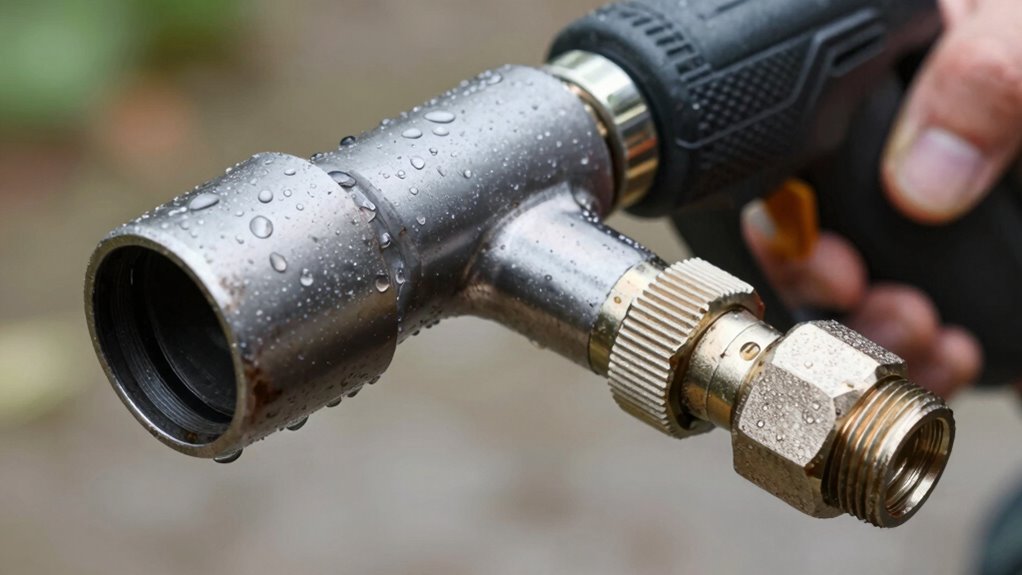
Regularly inspecting your pressure washer is essential to guarantee it runs efficiently and safely. As you prepare for spring cleaning projects, taking a few moments to examine your equipment can prevent breakdowns and ensure peak performance. Starting with equipment safety, you want to confirm that all safety features are intact and functioning. Check that the trigger gun locks properly, and inspect the high-pressure hose for any cracks, leaks, or signs of wear. A damaged hose can be dangerous, so replacing it immediately helps protect you and others around you. Also, verify that the power cord (if electric) is free of cuts or frays, and that connections are secure. If you’re using a gas-powered model, confirm that the fuel system is clean, and there are no leaks or corrosion that could cause malfunctions or safety hazards.
Regularly inspect safety features and hoses to ensure your pressure washer operates safely and efficiently.
Next, inspecting the pump and engine components is a key step. Look for leaks around the pump and fittings, which could indicate a need for tightening or replacement parts. Check the oil level if your pressure washer has an engine; low or dirty oil can cause overheating or damage. Changing the oil before heavy use is a simple troubleshooting technique that extends the life of your equipment. For gas models, inspect the spark plug for wear or buildup, and replace it if necessary. Clean air filters to ensure proper airflow—clogged filters reduce engine efficiency and increase the risk of overheating. A well-maintained engine not only performs better but also ensures safety by preventing sudden failures during use. Additionally, maintaining proper biodiversity of your equipment parts, such as filters and hoses, can help prolong their lifespan and sustain optimal performance. Regular maintenance also involves understanding the importance of preventive care, which can significantly reduce the likelihood of unexpected breakdowns. Incorporating routine inspections into your maintenance schedule is vital for catching issues early before they escalate. Conducting thorough visual checks can reveal hidden problems that might otherwise go unnoticed until they cause more serious damage. An effective way to ensure long-term reliability is to adhere to manufacturer-recommended maintenance intervals, helping you stay ahead of potential issues.
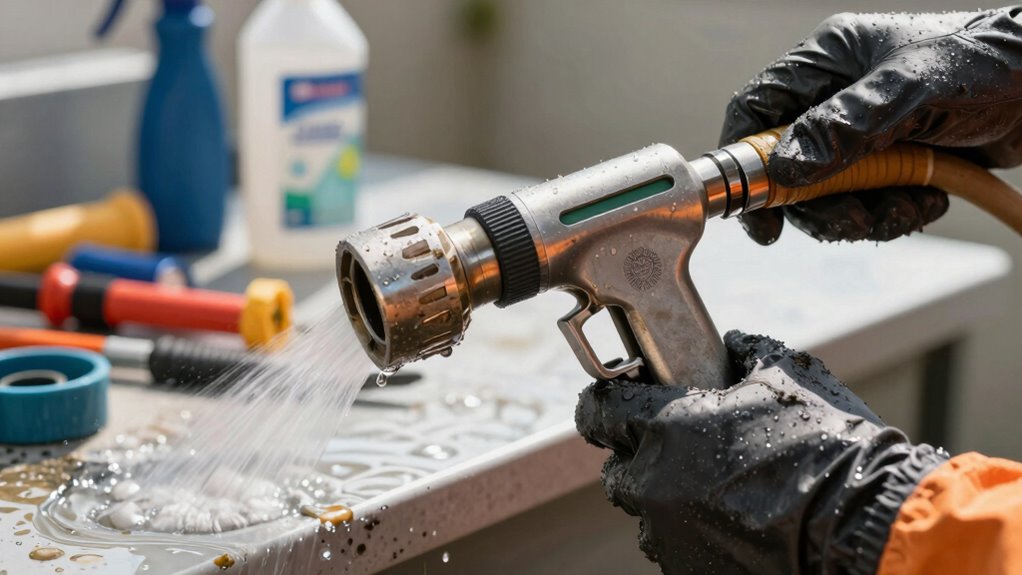
Don’t forget to examine the spray wand and nozzle. Make sure they’re free of obstructions and corrosion, and that the nozzle tip is the correct size for your cleaning tasks. Using the wrong nozzle can damage surfaces or cause dangerous pressure buildup. Test the spray gun to see if it releases water smoothly without leaks or irregular spray patterns, which could indicate internal blockages or worn seals. Troubleshooting techniques, like flushing out the system with clean water or replacing damaged seals, can resolve many common issues before starting your job.
Finally, check the overall condition of the pressure washer’s frame and wheels for stability and ease of movement. Tighten any loose bolts or fittings, and ensure the unit is secure. By systematically inspecting these key components, you’re not only prioritizing equipment safety but also setting the stage for trouble-free operation. Performing these inspections before spring jobs allows you to catch potential problems early, saving you time and money, and giving you peace of mind that your pressure washer is ready to handle any cleaning challenge you face.
pressure washer hose replacement
As an affiliate, we earn on qualifying purchases.
As an affiliate, we earn on qualifying purchases.
Frequently Asked Questions
How Often Should I Perform a Pressure Washer Inspection?
You should perform a pressure washer inspection before each major job and regularly during the season, ideally monthly. Use a maintenance checklist to guarantee all parts are in good condition, such as hoses, nozzles, and the motor. Regular inspections help catch issues early, which extends equipment longevity and prevents costly repairs. Staying proactive keeps your pressure washer running efficiently and ensures you’re always ready for spring jobs.
Can I Use Any Type of Detergent With My Pressure Washer?
You can’t use any detergent with your pressure washer; it’s essential to check detergent compatibility first. Always choose cleaners specifically designed for pressure washers to avoid damage. Consider the chemical resistance of your equipment, ensuring the detergent won’t corrode or harm parts. Using incompatible detergents can lead to poor cleaning results or equipment failure, so always read the manufacturer’s guidelines and select the right product for your specific pressure washer model.
What Safety Precautions Should I Take During Inspection?
Think of safety gear as your shield against unseen dangers. During inspection, you should wear gloves, goggles, and sturdy footwear to protect yourself. Follow your inspection checklist meticulously, checking hoses, connections, and electrical components. Make sure the pressure washer is unplugged and depressurized before inspecting or repairing. By prioritizing safety gear and adhering to your checklist, you safeguard yourself from potential hazards and ensure your equipment’s readiness for spring jobs.
Are Specific Tools Required for Pressure Washer Maintenance?
You don’t need many special tools for pressure washer maintenance, but a few essentials help. Use a wrench to check hose connections, a screwdriver for adjusting nozzles, and a brush for cleaning filters. Pay attention to detergent compatibility to avoid damage, and select the right nozzle for each job to guarantee effective cleaning. Regular inspections with these tools keep your pressure washer running smoothly and ready for spring jobs.
How Do I Identify Signs of Imminent Pressure Washer Failure?
Like a vigilant guardian, you spot signs of imminent pressure washer failure by closely monitoring pump maintenance and hose inspection. If you notice leaks, cracks, or inconsistent pressure, these are red flags indicating trouble ahead. Unusual noises or vibrations also hint at internal issues. Regularly checking these elements helps you catch problems early, ensuring your equipment stays reliable and ready for spring jobs, much like a watchful sentinel guarding its domain.
pressure washer spray wand and nozzle
As an affiliate, we earn on qualifying purchases.
As an affiliate, we earn on qualifying purchases.
Conclusion
Before diving into spring cleaning with your pressure washer, take a few moments to inspect it thoroughly. Check hoses, nozzles, and connections for wear or damage, and verify the water inlet isn’t clogged. Think of your pressure washer like a trusty steed—regular care keeps it ready for the road. Remember, an ounce of prevention is worth a pound of cure; a quick inspection now can save you headaches later and keep your tools running smoothly all season long.
electric pressure washer extension cord
As an affiliate, we earn on qualifying purchases.
As an affiliate, we earn on qualifying purchases.
As an affiliate, we earn on qualifying purchases.
Halloween Picks
halloween
As an affiliate, we earn on qualifying purchases.