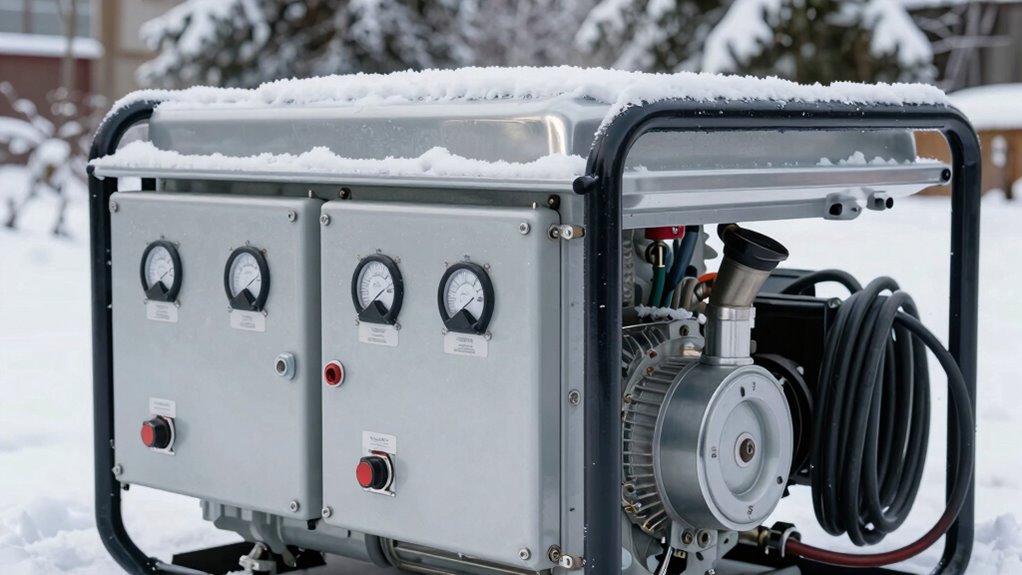

Before winter storm season, check your generator’s fuel system, making certain the fuel is fresh and free of contaminants, and inspect for leaks or damage. Test the battery to guarantee it holds a charge and clean the terminals. Examine the oil, air filters, and spark plugs, replacing anything worn or dirty. Make sure the generator is stored in a sheltered spot and clean from debris. Staying on top of these steps helps prevent surprises—keep going to learn more essential tips.

Get business pricing on tools and workshop supplies
- Business-only prices and quantity discounts
- Tax-exempt purchasing
- Multiple users, one account, clear invoices
Key Takeaways
- Inspect and replace old or contaminated fuel, and ensure fuel lines are free of cracks or leaks.
- Test and maintain the battery, replacing it if weak or over several years old.
- Check oil, air filters, and spark plugs for wear, replacing as needed for optimal performance.
- Ensure the generator is stored in a sheltered area, clean, and free of debris for proper operation.
- Regularly inspect for leaks, corrosion, and damage to maintain reliability during winter storms.
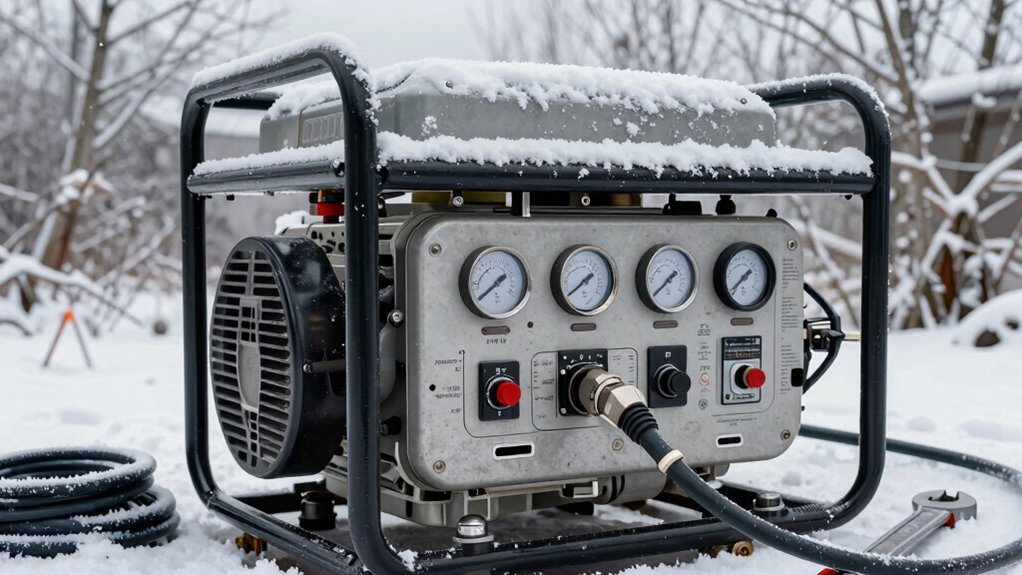
As winter storm season approaches, it’s essential to verify your generator is ready to handle power outages. You don’t want to be caught unprepared when the weather takes a turn for the worse. Start by inspecting the fuel system. Fuel stability is critical; old or contaminated fuel can clog your generator’s carburetor or fuel lines, leading to malfunction or failure. If you haven’t used your generator in a while, drain the old fuel and replace it with fresh fuel, ideally one with a stabilizer added. This guarantees your generator runs smoothly when you need it most. It’s also wise to check for any leaks or damage in the fuel tank and fuel lines, as cracks or corrosion can cause leaks, which are hazardous and compromise the generator’s performance. Regularly monitoring fuel quality can help prevent issues caused by poor fuel storage.
Next, focus on your battery health. If your generator relies on a battery for starting, you should test its charge and overall condition. A weak or dead battery can prevent your generator from starting during a power outage, which defeats the purpose of having one. Use a multimeter or a battery tester to assess voltage; a healthy battery typically reads around 12.6 volts or higher. If the battery shows signs of weakness or is more than a few years old, consider replacing it before winter storms hit. Make sure the battery terminals are clean, tight, and free of corrosion, which can impede electrical flow. Maintaining good battery health is fundamental for reliable startup, especially when you face freezing temperatures that can further strain weak batteries. Additionally, checking the generator manual ensures you follow specific procedures for your model, which can help extend its lifespan and reliability. Proper generator maintenance also includes keeping the unit clean and free of debris, which can affect airflow and cooling.
Beyond fuel and batteries, check the oil level and quality. Cold weather can cause oil to thicken, making it harder for your generator to run efficiently. Top off or change the oil if necessary, using the manufacturer-recommended type. Also, examine the air filters and spark plugs, replacing or cleaning them to ensure efficient combustion. A well-maintained generator runs more reliably and consumes less fuel, which is especially important when fuel supplies are limited during storms. Regular inspecting and maintaining essential components can also prevent unexpected breakdowns during critical times. Keeping your generator in a sheltered, frost-free location can also help preserve its components and ensure it’s ready to operate when needed.
As an affiliate, we earn on qualifying purchases.
Frequently Asked Questions
How Often Should I Perform Generator Maintenance During Winter?
You should perform generator maintenance at least monthly during winter. Check the fuel quality to prevent freezing or gelling, and verify the fuel tank is full to avoid condensation. Also, inspect and clean the battery, making sure terminals are free of corrosion and the charge is sufficient. Regular maintenance keeps your generator reliable, ready to start when you need it most, especially during harsh winter storms.
Can I Use Any Type of Fuel for My Generator?
You can’t use any type of fuel for your generator without risking damage or inefficiency. Fuel compatibility is essential; always check the manufacturer’s guidelines. While some generators can run on alternative energy sources like propane or natural gas, many are designed specifically for gasoline or diesel. Using the wrong fuel might seem convenient but can compromise performance and safety. Stick to recommended fuels to guarantee reliable operation during winter storms.
What Safety Precautions Are Necessary When Testing the Generator?
When testing your generator, you should wear safety gear like gloves and eye protection to prevent injury. Confirm fuel quality is good, using fresh or properly stored fuel to avoid engine issues. Test it in a well-ventilated area to prevent carbon monoxide buildup. Keep a fire extinguisher nearby, and never operate the generator indoors. Regularly check for leaks or damaged parts to maintain safe and reliable operation.
How Do I Store My Generator for Winter Months?
You should store your generator in a dry, sheltered area away from direct weather exposure. Drain or stabilize the fuel to prevent gumming during cold weather operation, and consider using fuel stabilizer. Keep the generator clean and covered with a breathable cover to protect it from dust and moisture. Also, check the oil and perform any necessary maintenance before storing it for winter, ensuring it’s ready to run efficiently when needed.
What Are Common Signs My Generator Needs Repairs?
You might notice your generator struggles to start, runs unevenly, or makes unusual noises, signaling it needs repairs. Poor fuel quality can cause misfires, and a shortened generator lifespan often results from neglecting maintenance. If your generator emits excessive smoke, experiences frequent shutdowns, or shows corrosion, it’s time for a professional check. Addressing these signs early prevents breakdowns during winter storms and extends your generator’s lifespan.
As an affiliate, we earn on qualifying purchases.
Conclusion
Think of your generator as a sturdy lighthouse, guiding you safely through a winter storm. When you check it before the season, you’re lighting the way, ensuring it stands tall against the harsh winds and snow. By giving your generator the proper attention now, you’re planting a beacon of reassurance that will shine bright when the storm hits. Stay prepared, keep it maintained, and let your generator be the steady lighthouse in your winter journey.
generator oil filter replacement
As an affiliate, we earn on qualifying purchases.
As an affiliate, we earn on qualifying purchases.
generator spark plug replacement
As an affiliate, we earn on qualifying purchases.
As an affiliate, we earn on qualifying purchases.
Fall Picks
fall essentials
As an affiliate, we earn on qualifying purchases.