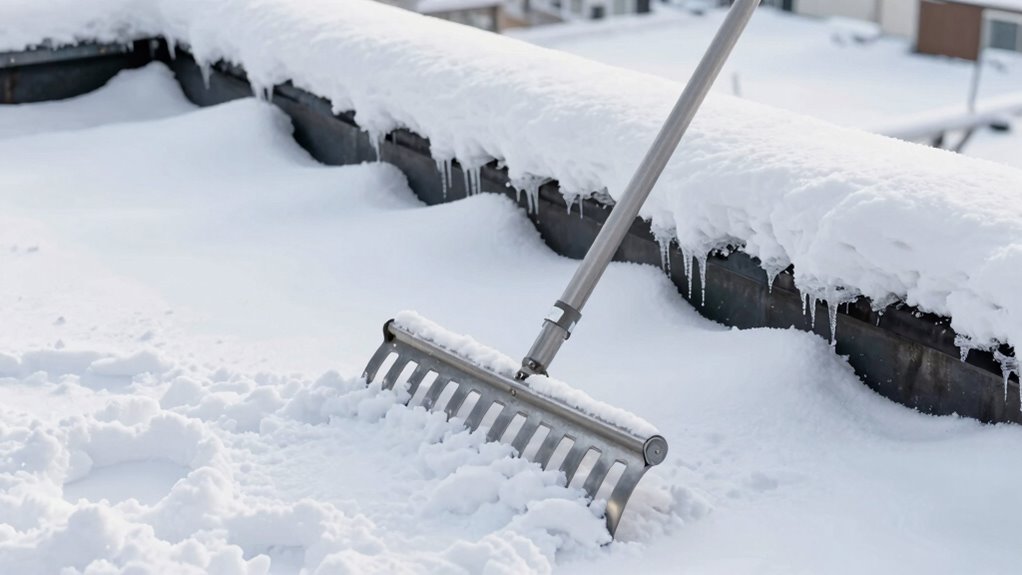

Roof rakes help you safely remove snow from the ground, prevent ice dams, and reduce roof weight during winter. However, they can’t clear ice buildup inside gutters, remove blockages, or fix gutter damage. Use them gently to avoid damaging shingles, and only within your reach. External factors like icy or heavy snow, wind, and freezing rain can make snow removal riskier. Want to know how to use your roof rake effectively and stay safe? Keep going to find out more.

Get business pricing on tools and workshop supplies
- Business-only prices and quantity discounts
- Tax-exempt purchasing
- Multiple users, one account, clear invoices
Key Takeaways
- Roof rakes effectively remove snow from ground level, preventing ice dams and reducing roof weight.
- They cannot clear ice buildup, blockages, or snow inside gutters and downspouts.
- Use gentle, controlled motions to avoid damaging shingles and avoid yanking snow aggressively.
- External weather conditions like wind and freezing rain can limit safety and effectiveness.
- Proper safety precautions are essential to prevent falls, injuries, and roof damage during snow removal.
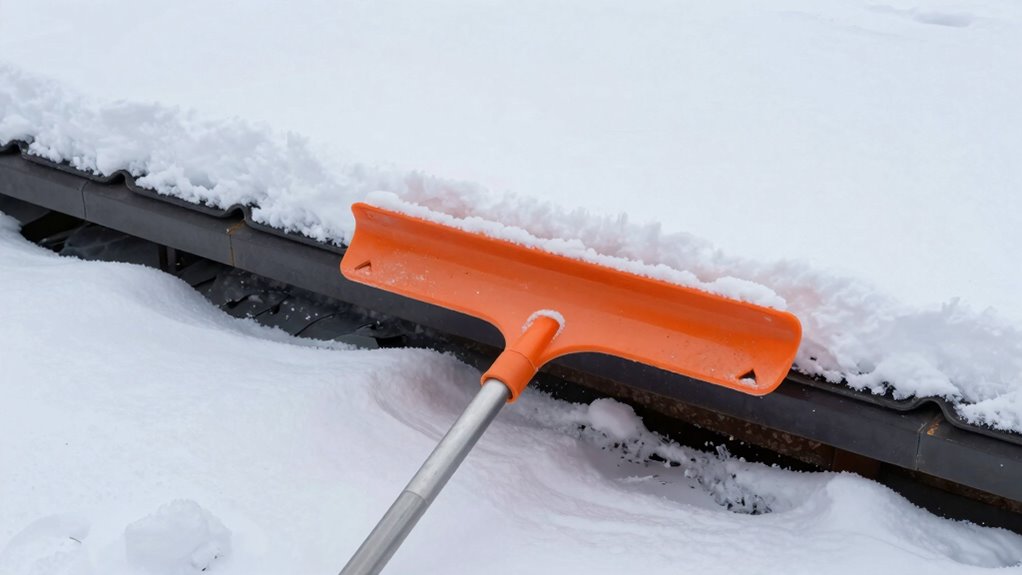
When snow piles up on your roof, it’s essential to remove it safely to prevent damage or accidents. Roof rakes are a handy tool for this task, but understanding what they can and cannot do will help you use them effectively during snow season. These rakes are designed to allow you to clear snow from the roof while standing safely on the ground, which reduces the risk of falling from a ladder or risking injury. By removing snow early, you can help prevent ice dams from forming, a common problem that occurs when melting snow refreezes at the roof’s edge. Ice dam prevention often depends on keeping the roof cold enough so meltwater can drain properly, and regular use of a roof rake can assist in this process by removing snow before it becomes too heavy or icy.
However, roof rakes aren’t magic tools that eliminate all snow-related issues. They have limitations, especially when it comes to gutter maintenance. While a roof rake can help clear snow from the roof’s surface, it’s unlikely to be effective for removing snow or ice that has already accumulated inside your gutters or downspouts. Gutter maintenance during winter requires checking for blockages, ensuring water can flow freely, and sometimes manually clearing ice buildup that roof rakes can’t reach or dislodge. If gutters are clogged or frozen, you might need to use other tools or methods, such as a gutter scoop or heating cables, to prevent water backup and potential ice dam formation. Additionally, understanding the proper roof maintenance techniques can help extend the lifespan of your roofing system and prevent costly repairs. It’s also important to recognize that weather conditions, such as wind or freezing rain, can influence how effective a roof rake is and how safely you can operate it. Proper knowledge of snow removal safety can help prevent accidents and ensure the task is done correctly. Improperly using a roof rake can do more harm than good. If you yank on the snow too aggressively or at the wrong angle, you risk damaging shingles or loosening the roof’s protective layer. Also, trying to clear all the snow in one go might lead to falling or slipping, especially if the snow is heavy or the roof surface is icy. It’s best to use gentle, controlled motions and only remove snow that’s within reach of your extension tool.
Being aware of weather conditions can also help you plan the safest approach to snow removal and avoid potential hazards. Recognizing the importance of proper safety precautions when using a roof rake is essential for avoiding injuries and ensuring effective snow removal during the winter months.
As an affiliate, we earn on qualifying purchases.
Frequently Asked Questions
Can Roof Rakes Prevent Ice Dams Entirely?
Roof rakes can help with ice dam prevention, but they can’t prevent ice dams entirely. By removing snow early, you reduce the risk of ice buildup, yet roof raking has limitations—such as not addressing underlying insulation or ventilation issues. Regularly raking your roof aids in snow removal, but for complete ice dam prevention, consider thorough insulation, ventilation, and professional assessments alongside roof raking.
Are Roof Rakes Safe for All Roof Types?
You might be surprised, but roof rakes aren’t safe for all roof types. Your roof’s material compatibility and seasonal usage considerations matter. For example, asphalt shingles usually handle raking well, but delicate tiles or metal roofs need extra caution. Always check your roof’s specifications before using a roof rake. Using the right rake correctly during the season can protect your roof without causing damage, keeping your home safe and sound.
How Often Should I Use a Roof Rake During Snow Season?
You should use a roof rake for snow removal whenever you notice a significant buildup, ideally after each snowfall or when snow starts to become heavy. Regular use helps prevent ice dams and roof damage, but always prioritize roof safety. Don’t overreach or apply excessive force, as that can harm your roof or cause injury. Frequent, cautious snow removal guarantees your roof stays in good condition throughout the season.
Can Roof Rakes Damage Shingles or Roofing Materials?
Think of your roof like a delicate tapestry – improper use can cause tears. Roof rakes can damage shingles or roofing materials if you use a tool that’s incompatible with your roof’s material or apply excessive force. Always prioritize shingle safety by choosing a rake with soft, wide blades and gentle techniques. This way, you protect your roof’s integrity and avoid costly repairs, keeping your home safe and secure.
Do Roof Rakes Work on Steep or Complex Roof Designs?
Roof rakes can work on steep or complex roof designs if you choose the right tool. Look for a roof rake design that offers adjustable angles to reach tricky areas safely. Also, consider roof material compatibility; some rakes work better with asphalt shingles, while others suit metal or tile roofs. Always prioritize safety, and avoid overreaching to prevent damage or accidents on challenging roof structures.
As an affiliate, we earn on qualifying purchases.
Conclusion
Roof rakes are great for safely removing snow and preventing ice dams, saving you from costly repairs. Some worry they might damage shingles, but when used correctly, they’re gentle and effective. Don’t let that fear stop you—just choose the right rake and use it carefully. With a little effort, you can protect your roof and keep your home safe all season long, making snow removal less stressful and more manageable.
As an affiliate, we earn on qualifying purchases.
gutter cleaning tools for winter
As an affiliate, we earn on qualifying purchases.
As an affiliate, we earn on qualifying purchases.
Fall Picks
fall essentials
As an affiliate, we earn on qualifying purchases.