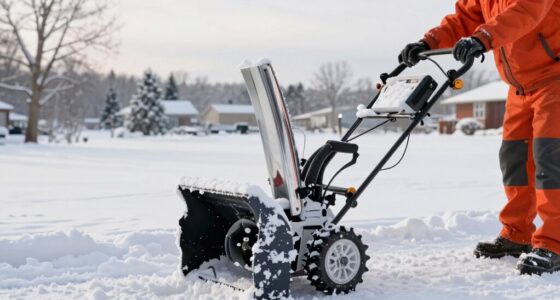
To prepare your snow blower before bad weather hits, start by draining old fuel and refilling with fresh gasoline to prevent engine issues. Check and change the oil, and inspect or replace the spark plug for reliable starts. Clear debris from around the machine, lubricate moving parts, and examine shear pins and belts, replacing worn ones. Also, inspect tires and the area around your workspace for obstacles. Keep your equipment in top shape now, and you’ll be ready when snow begins to fall.

Get business pricing on tools and workshop supplies
- Business-only prices and quantity discounts
- Tax-exempt purchasing
- Multiple users, one account, clear invoices
Key Takeaways
- Drain old fuel, refill with fresh gasoline, and ensure the fuel cap seals tightly to prevent moisture entry.
- Check and change the oil, and inspect the spark plug for reliable engine starts.
- Examine and lubricate auger, impeller, belts, and controls; replace worn shear pins.
- Inspect tires, remove obstacles, and clean the work area for safe operation.
- Wear proper safety gear and perform a thorough overall inspection to ensure readiness.
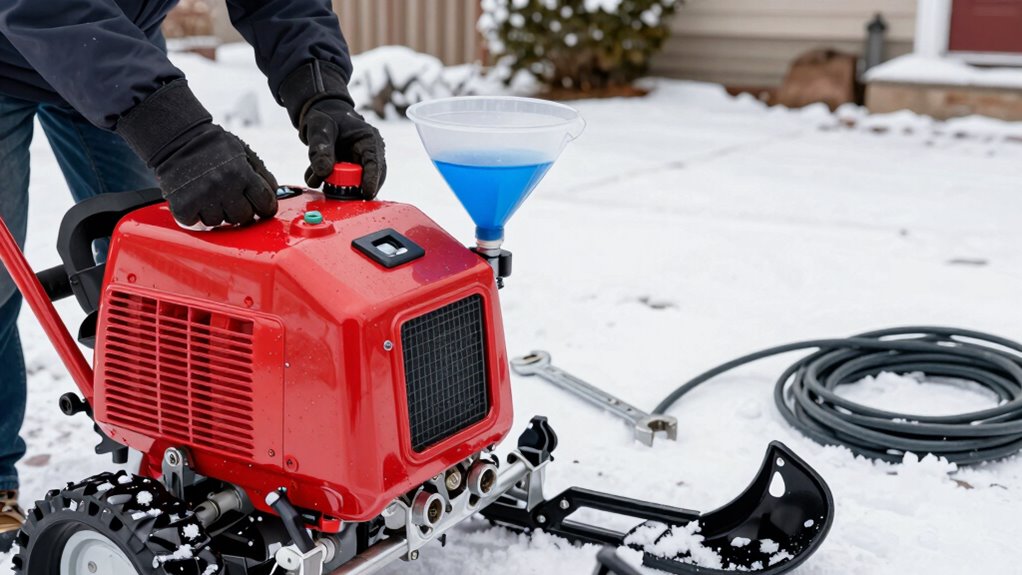
Are you ready to tackle the next winter storm? Before the snow begins to fall heavily, it’s essential to prepare your snow blower to ensure it works efficiently when you need it most. Proper snow blower maintenance now can save you from frustrating breakdowns in the middle of a storm. First, check the fuel system. If you stored fuel over the summer, drain it and refill with fresh gasoline. Old fuel can gum up the carburetor and cause starting issues. Make sure your fuel cap seals tightly to prevent moisture from entering the tank, which can freeze and clog the system. Inspect the oil level and change it if necessary, following your manufacturer’s recommendations. Clean or replace the spark plug to ensure reliable starts and smooth operation. These steps are crucial for snow blower maintenance and can extend your machine’s lifespan.
Next, examine the auger and impeller. Clear any debris or obstructions that could hinder snow removal. Lubricate moving parts, such as the drive and chute controls, to keep everything functioning smoothly. Check the shear pins; these are designed to break if the auger hits a hard object, preventing more severe damage. Replacing worn or broken shear pins now avoids delays when the snow really starts piling up. Also, test the drive mechanism and belts, adjusting or replacing them as needed. When you’re finished, give the entire machine a visual inspection to spot any loose bolts, frayed cables, or damaged parts. Additionally, inspecting the fuel system and ensuring proper storage can prevent issues caused by stale fuel or moisture. Regular maintenance, including checking the tire pressure, can improve traction and ease of maneuvering your snow blower during heavy snowfall. Moreover, understanding the importance of biodiversity in your local environment reminds us to keep outdoor equipment like snow blowers in good condition to minimize environmental impact.
Doing this snow blower maintenance now aligns with winter safety tips — a proactive step to avoid accidents or machine failures when you’re pressed for time. Remember, a well-maintained snow blower reduces the risk of injury by working reliably and efficiently. When you’re ready to clear snow, always wear proper winter safety gear, including sturdy boots, gloves, and eye protection. Keep a clear path around your work area, free of obstacles and ice, to prevent slips and falls. Never run the engine in enclosed spaces to avoid carbon monoxide buildup. Also, avoid overexertion — take breaks and stay warm.
As an affiliate, we earn on qualifying purchases.
Frequently Asked Questions
How Often Should I Check the Snow Blower’s Oil Levels?
You should check your snow blower’s oil levels at least once a season or before heavy use. Regular checks guarantee smooth operation, especially if you’re using fuel additives to prevent fuel issues. When storing your snow blower long-term, follow storage tips like draining fuel and oil. These steps help maintain ideal oil levels, preventing engine damage and ensuring your snow blower is ready when winter hits unexpectedly.
Can I Use Regular Gasoline in My Snow Blower?
Using regular gasoline in your snow blower isn’t recommended, especially during the winter months. Fuel additives can help prevent engine issues caused by ethanol-blended fuels, which may harm your equipment. For reliable engine maintenance, choose fresh, high-quality fuel and consider using fuel stabilizers. This not only guarantees your snow blower runs smoothly when you need it most but also extends its lifespan, saving you time and money in the long run.
What Type of Spark Plug Is Best for My Snow Blower?
The best spark plug for your snow blower has a proper spark plug gap, typically between 0.030 and 0.040 inches, depending on your model. Make sure it’s compatible with your ignition coil for reliable starts. A high-quality plug with good heat range will improve performance, especially in cold weather. Regularly check and replace the spark plug to prevent misfires and keep your snow blower running smoothly during winter storms.
How Do I Troubleshoot Starting Issues?
If your snow blower hesitates to start, don’t overlook the small signs. First, check the fuel stabilization—old or contaminated fuel can cause issues. Make sure your battery maintenance is up to date, as a weak battery often leads to starting problems. Clear any debris or spark plug fouling, and ensure the choke is functioning properly. These simple steps can help your snow blower run smoothly when you need it most.
Is It Necessary to Change the Spark Plug Annually?
Yes, it’s necessary to change the spark plug annually for ideal snow blower performance. Regular spark plug maintenance guarantees your engine runs smoothly and efficiently. Over time, spark plugs wear out, leading to starting issues or poor combustion. By replacing the spark plug annually, you prevent buildup and corrosion that can hinder performance. This simple maintenance step helps avoid unexpected breakdowns and keeps your snow blower ready when you need it most.
snow blower spark plug replacement kit
As an affiliate, we earn on qualifying purchases.
As an affiliate, we earn on qualifying purchases.
Conclusion
Think of your snow blower as a trusty steed, ready to carry you through winter’s stormy ride. By preparing it now, you’re saddling up before the storm clouds gather—ensuring smooth riding once the snow starts falling. When you take these steps, you’re not just ready for winter; you’re the rider steering through it with confidence. So, gear up today, and let your snow blower be your loyal companion on snowy adventures ahead.
snow blower shear pin replacement
As an affiliate, we earn on qualifying purchases.
As an affiliate, we earn on qualifying purchases.
winter snow blower maintenance kit
As an affiliate, we earn on qualifying purchases.
As an affiliate, we earn on qualifying purchases.
Fall yard work Picks
leaf blowers
As an affiliate, we earn on qualifying purchases.