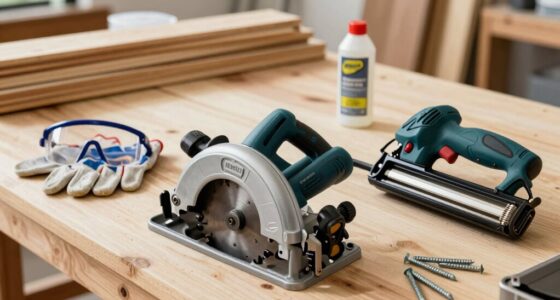
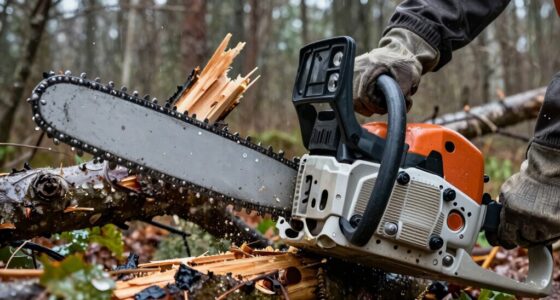
Before firewood season starts, you should sharpen your chainsaw chain, axes, and hatchets to guarantee safe, efficient cutting. A sharp chain reduces engine strain and improves cut quality, while sharp axes and hatchets make chopping easier and safer. Regular sharpening also prevents accidents and saves time during wood collection. Keeping your tools in top condition is key to a smooth, productive season—keep going to discover more tips on proper maintenance and safety!
Listen free for 30 days with Audible
Thousands of audiobooks and originals — cancel anytime.
As an affiliate, we earn on qualifying purchases.
Key Takeaways
- Sharpen chainsaw chains for smoother cuts and reduced engine strain.
- Sharpen axes and hatchets to improve control and safety during wood chopping.
- Check and sharpen hand tools like saws and scrapers for efficient firewood processing.
- Inspect and sharpen any other cutting tools used in firewood preparation.
- Ensure all tools are properly lubricated, clean, and in good working condition before season begins.
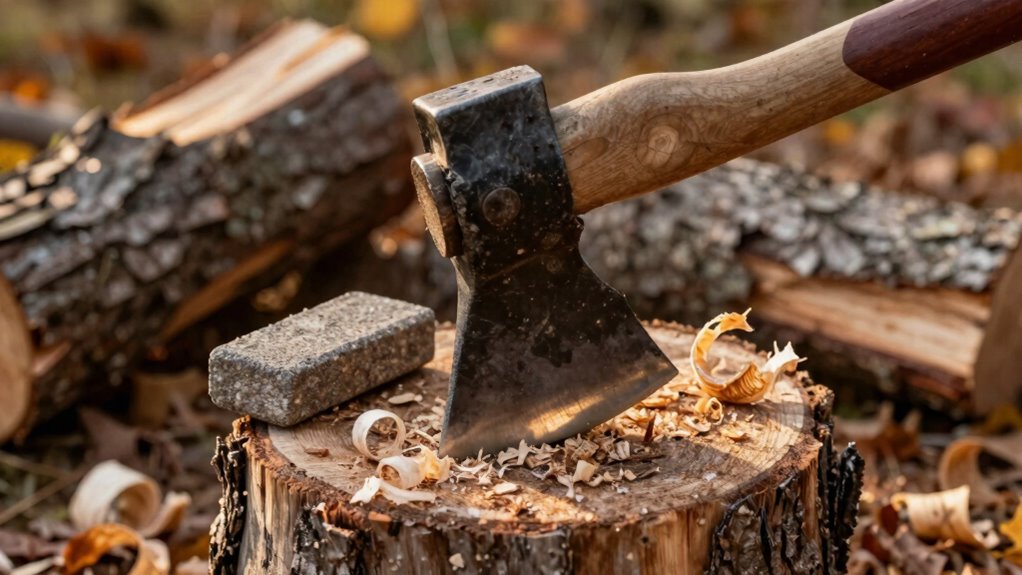
As firewood season approaches, it’s essential to guarantee your tools are in top shape to make the cutting process safer and more efficient. Dull tools not only slow you down but also increase the risk of accidents, so sharpening your equipment beforehand is a wise move. Start with your chainsaw, which is likely your most important tool. A sharp chain cuts more smoothly, reducing strain on the engine and improving fuel efficiency. When your chain is properly sharpened, it requires less power to make each cut, helping you conserve fuel and cut down on unnecessary emissions. Make sure to wear your safety gear—gloves, eye protection, and ear muffs—before handling the chainsaw. Proper safety gear is non-negotiable; it protects you from flying debris, loud noise, and potential injuries, especially when working with sharp, powerful tools.
Next, turn your attention to hand tools like axes and hatchets. A dull axe makes chopping more laborious and dangerous because you tend to apply more force, increasing the chance of slips or missed strikes. Sharpen the blade with a file or sharpening stone until it’s razor-sharp. Not only does this make splitting firewood easier, but it also helps you maintain better control, reducing the risk of accidents. As with chainsaws, don’t forget your safety gear—gloves to protect your hands from cuts and eye protection against flying chips. Properly sharpened tools also boost your efficiency, allowing you to split more wood in less time with less effort. Regularly inspecting your tools for wear and tear can prevent unexpected failures during work. Additionally, keeping your tools properly lubricated reduces friction and prolongs their lifespan. Maintaining your tools with proper storage can also help prevent rust and damage, ensuring they stay in good condition season after season. Being mindful of tool maintenance practices can further improve your safety and efficiency, especially during busy times. Incorporating a routine sharpening schedule can ensure your tools are always ready when you need them most.
While sharpening, check your sharpening tools for wear and replace them if needed. Keep your work area clean and organized so you can work safely and efficiently. Regular maintenance ensures your tools stay in optimal condition, which translates to safer operation and better fuel efficiency for powered equipment. Remember, dull tools aren’t just frustrating—they’re hazardous. Taking the time to sharpen and maintain your equipment before firewood season starts pays off by making your work safer, faster, and more cost-effective. Ensuring your safety gear is in good condition and your tools are sharp sets the stage for a smooth, productive firewood season, letting you focus on the task at hand without unnecessary interruptions or risks.
As an affiliate, we earn on qualifying purchases.
Frequently Asked Questions
How Often Should I Sharpen My Tools During Firewood Season?
You should sharpen your tools as often as needed during firewood season, usually every few uses or when you notice a decline in cutting performance. Regular tool maintenance, including frequent sharpening, keeps your axe or saw effective and safe. Pay attention to the blade’s condition—if it feels dull or makes more effort to cut, it’s time to hone. Consistent sharpening frequency ensures your tools stay in top shape throughout the season.
Can I Sharpen Tools With Household Items Instead of Specialized Tools?
You can try DIY alternatives with household items, but they’re like trying to tame a wild beast with a butter knife. Household items like a ceramic mug or a sharpening stone substitute can work in a pinch, but their effectiveness is limited and inconsistent. For sharp, reliable edges, specialized tools are like a fine-tuned orchestra, transforming rough blades into razor-sharp instruments ready to conquer firewood.
What Safety Precautions Should I Take When Sharpening Tools?
When sharpening tools, you should prioritize safety gear like gloves and eye protection to prevent injuries. Always work in a well-ventilated area and secure your tools to avoid slipping. Keep your workspace clean to prevent accidents. Regular tool maintenance helps keep blades sharp and safe to use. Remember, sharpening can produce sparks or debris, so wearing the right safety gear minimizes risks and guarantees a safer, more effective process.
How Do I Know if My Tools Need Sharpening or Replacement?
You’ll know your tools need sharpening if they struggle to cut smoothly or require more effort. Dull tools can be unsafe and less effective, so regular tool maintenance is essential. Use proper sharpening techniques, like honing with a sharpening stone or file, to restore sharpness. If tools are chipped, cracked, or don’t hold an edge after sharpening, it’s time to replace them. Sharp tools improve safety and efficiency during firewood season.
Is It Better to Sharpen Tools Before or After Use?
It’s better to sharpen tools before use to guarantee ideal tool maintenance and performance. Sharp tools cut more efficiently, reducing strain and increasing safety. Use proper sharpening techniques, like honing or grinding, to maintain the correct edge angle. Regularly sharpening your tools before work prevents dull blades, making your chopping easier and safer. Keeping tools sharp before use ultimately prolongs their life and improves your overall efficiency.
As an affiliate, we earn on qualifying purchases.
Conclusion
Before firewood season kicks off, make sure your axes, saws, and chisels are sharp and ready. A well-sharpened tool makes chopping wood easier and safer, saving you time and effort. Just like a well-oiled machine, your tools will perform better, and you’ll enjoy the cozy warmth of your fire even more. So, sharpen up now—before your backyard turns into a lumberjack’s paradise, or you find yourself stuck in a Dickensian winter without the right tools.
As an affiliate, we earn on qualifying purchases.
As an affiliate, we earn on qualifying purchases.
NFL season / tailgating Picks
team gear
As an affiliate, we earn on qualifying purchases.