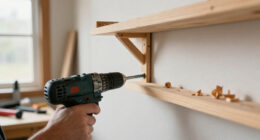

TL;DR
A cordless oscillating multi-tool moves a blade or other accessory rapidly through a short arc, letting you cut, sand, scrape, or remove grout in tight spaces. It excels at short cuts and detail work, but dedicated saws and sanders are faster for large jobs; match the accessory to the material, check battery compatibility, and wear suitable protection.
A door jamb sits proud of the new flooring by a few millimeters, and the circular saw cannot reach it cleanly. That small, awkward cut is where a cordless oscillating multi-tool can save the day.

Get business pricing on tools and workshop supplies
- Business-only prices and quantity discounts
- Tax-exempt purchasing
- Multiple users, one account, clear invoices
This compact tool drives a blade or other accessory rapidly through a short arc. You can use it for plunge cuts, corner sanding, scraping, and grout removal. Here’s how it works, which jobs suit it, what to look for before buying, and how to use it without damaging nearby surfaces or putting yourself at risk.
Use a cordless oscillating multi-tool for short cuts, flush trimming, corners, scraping, and grout removal where access matters.
Choose blades and attachments for the specific material; a worn or unsuitable blade can slow work and add heat.
Check battery-platform and accessory-mount compatibility, plus grip, vibration, and speed control before buying.
Use eye and hearing protection, control hazardous dust, remove the battery before accessory changes, and check for hidden services before cutting.
Pick a dedicated saw or sander for long, straight cuts and large surfaces.
What a cordless oscillating multi-tool can do in tight spaces
A cordless oscillating multi-tool is a compact power tool that moves an attachment back and forth through a small angle, rather than spinning it continuously like a drill. Fit the right blade or pad, and you can cut, sand, scrape, or remove grout where a larger tool feels clumsy. Its strongest advantage is access and control on small jobs.
Think of its movement like a tiny, fast hand saw: the accessory chatters through a short arc, letting you guide it close to a wall, floor, or trim edge. For example, when you replace a door, a flush-cut blade can trim the jamb at floor level so the new flooring slides underneath.
These tools are compact, versatile power tools because one motor accepts a range of attachments. The accessory rapidly moves across the work, but the tool’s performance depends on more than speed: motor power, oscillation angle, blade design, material, and pressure all play a part. Push too hard and you can add heat and vibration instead of cutting faster.
Think access, not speed: this tool earns its place when a larger saw or sander cannot comfortably reach the work.
Products Worth Considering

Arlo Pro Wireless Security Camera, 2K HDR, 6th Generation, 4-Camera Set

Philips Hue Festavia Permanent Outdoor String Lights, 80 Lights, 150 ft

Google Nest Learning Thermostat (4th Gen) with Nest Temperature Sensor (2nd Gen), Obsidian
As an affiliate, we earn on qualifying purchases.
Which repair jobs this tool handles best
A cordless oscillating multi-tool is best for short cuts, tight corners, scraping, and detail work, where maneuvering matters more than covering ground quickly. It can plunge into drywall, trim a pipe or fastener, sand a sharp corner, lift old adhesive, or remove grout with a purpose-made blade.
Say you are fitting a cabinet against a wall with a small notch around a pipe. A plunge-cut blade can remove the narrow section without hauling out a larger saw. For a patch of stubborn flooring adhesive, swap to a scraper attachment and work carefully across the residue.
- Cutting: trim door jambs, make plunge cuts, and shorten small pipes or fasteners.
- Sanding: reach inside corners and along edges a rectangular sander misses.
- Scraping: remove caulk, paint, adhesive, and flooring residue with a suitable attachment.
- Grout removal: clear grout between tiles using a grout-specific blade.
For a long, straight cut through a sheet of plywood, a circular saw is usually faster and easier to guide. A broad floor-sanding job also calls for a dedicated sander. The multi-tool is the careful craft knife in your kit, not the machine you use to cover a whole wall.
How to choose a model that fits your work
Choose a cordless oscillating multi-tool by matching its battery platform, handling, speed control, and accessory mount to the jobs you actually do. Battery voltage alone does not reliably tell you how well a tool will cut, and a big accessory bundle is poor value if most pieces will sit unused.
If you already own cordless tools, a model on the same battery system can save money and simplify charging. A homeowner who needs occasional flush cuts may prefer a bare tool; someone starting from scratch may get better value from a kit with a battery and charger. In either case, compare the included blades with your planned work.
| Feature | Why it matters | What to check |
|---|---|---|
| Battery platform | Can reduce cost and simplify charging | Compatibility with batteries you own |
| Speed control | Helps match motion to material and accessory | Variable settings or automatic adjustment under load |
| Grip and vibration | Affects comfort and control over longer sessions | Balance, grip shape, trigger, and vibration features |
| Accessory mount | Determines which blades and attachments fit | Direct fit, quick release, or an adapter requirement |
| Dust handling | Can help control dust during cutting or sanding | Extraction compatibility and suitable respiratory protection |
For instance, if you mainly sand corners and occasionally trim molding, comfortable handling and the right sanding pad may matter more than a high headline speed. Product ranges and compatibility change, so check current manufacturer specifications before you buy. Brushless motors and electronic controls have improved many cordless models, but those features do not make every tool equally comfortable or capable.
How to work cleanly and safely
For a cleaner cut, select an attachment made for the material, secure it firmly, and let the blade work at a controlled pace. A fresh, suitable blade often cuts better than a worn one you try to force through the job.
- Check the work area. Look for wiring, plumbing, or other hidden services before cutting into a wall or floor. If you cannot confirm what is behind the surface, stop and investigate first.
- Fit the right accessory. Check the tool and accessory instructions, then attach the blade or pad securely.
- Put on protection. Wear eye and hearing protection. Use dust extraction and suitable respiratory protection when the task or material creates hazardous dust.
- Start gently. Use a speed suited to the material, keep the tool steady, and avoid excessive pressure.
- Stop before changing accessories. Remove the battery before handling the blade, and check the tool and accessory manuals.
Imagine trimming a jamb in a lived-in room: a rushed push can scorch the wood, throw dust, or nick the flooring you hoped to protect. Work slowly enough to watch the blade and nearby surfaces. If the tool or accessory becomes unusually hot, stop, let it cool, and check the instructions before continuing.
Electrical, gas, structural, and roof work calls for a licensed professional where required. Follow local code and permit rules; switch off power when appropriate, use PPE, and do not cut near hidden services unless you have identified them.
When a dedicated saw or sander is the better pick
A cordless oscillating multi-tool complements larger tools; it rarely replaces them for high-volume work. Choose it for short flush cuts and awkward corners, then reach for a circular saw, jigsaw, or dedicated sander when the job covers more distance or surface area.
For example, trimming one door casing above new flooring is a natural multi-tool job. Cutting every sheet for a shed floor is a circular-saw job: it is faster and easier to keep straight. The tradeoff is simple: more access and control, less speed on big areas.
Battery life also depends on the workload. Intermittent sanding uses power differently from heavy cutting, which can drain a battery faster. If a blade slows down or the tool gets hot, a worn or unsuitable accessory, heavy pressure, a low speed setting, or tough material may be the cause.
Before blaming the motor, stop and inspect the blade. Replacing a tired accessory can do more for progress than pressing harder or buying a higher-voltage tool.
Frequently Asked Questions
Are oscillating-tool blades universal?
No. Mounts vary, and some blades need a specific interface or adapter. Check the tool and accessory specifications before buying; a blade that looks close may not fit securely.
Can an oscillating multi-tool replace a circular saw or jigsaw?
Usually not. It handles short cuts, flush trimming, and tight spots, while a circular saw or jigsaw is generally a better choice for longer cuts and larger pieces.
What does oscillation angle mean?
It describes how far the accessory moves through its back-and-forth arc. A larger angle can contribute to faster work, but blade design, motor power, material, and technique also affect performance.
Is a brushless model worth the extra cost?
It may improve efficiency or runtime, depending on the tool and task. Compare its handling, vibration, battery compatibility, accessories, and warranty alongside the motor type.
Why is my oscillating tool cutting slowly or getting hot?
A worn or unsuitable blade, too much pressure, a low speed setting, or demanding material can slow the cut and build heat. Stop if the tool or accessory becomes unusually hot, then inspect it and follow the manuals before resuming.
Conclusion
Buy a cordless oscillating multi-tool for the awkward repairs your larger tools cannot reach, then choose its blade to match each task. Let it work at a steady pace, protect yourself from dust and noise, and keep a dedicated saw or sander for the big runs.
The best tool is often the one that can reach the last stubborn millimeter without scarring the floor beside it.