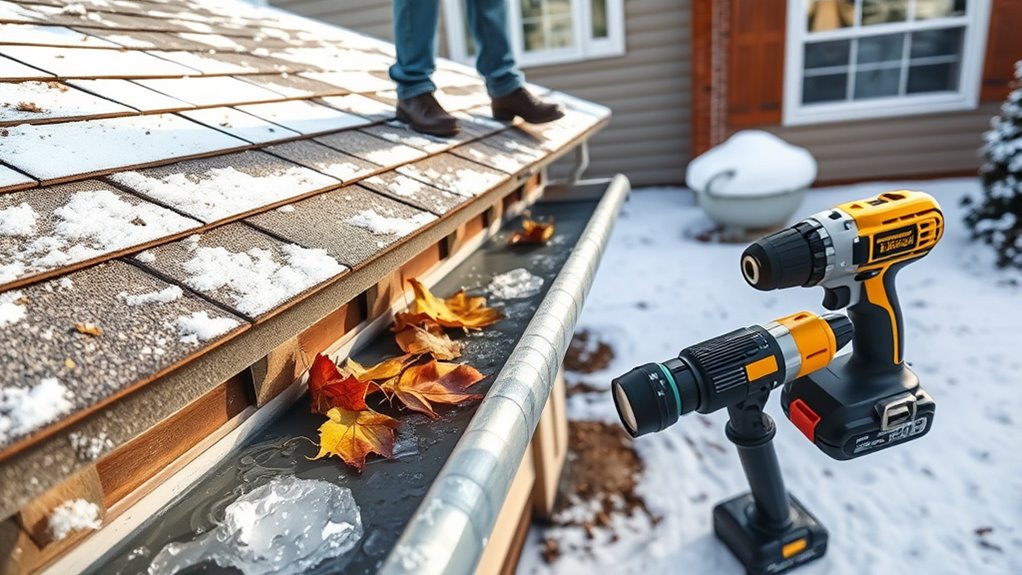

After winter, inspect your roof for missing or damaged shingles, sagging areas, or cracks, using a sturdy ladder, gloves, and a flashlight. Check gutters for ice, debris, or blockages, and clear them out with a scoop or trowel. Confirm downspouts direct water away from your home. Safety is key—consider binoculars or professional help for high or tricky spots. Keep your home safe; discover essential tips that make the process easier.
Open a free Amazon Business account
Business pricing, bulk buying and tax-exempt orders.
As an affiliate, we earn on qualifying purchases.
Key Takeaways
- Use a sturdy ladder, gloves, and flashlight to safely access and inspect your roof and gutters for damage.
- Look for missing, loose, or cracked shingles and signs of wear or sagging on the roof surface.
- Clear gutters of debris, ice, and leaves using a scoop or trowel to prevent blockages and water damage.
- Check gutters and downspouts for sagging, cracks, or rust, ensuring water flows away from the home foundation.
- Consider hiring a professional for high or steep roofs or if damage or safety concerns arise during inspection.

Has winter taken a toll on your home? If so, it’s time to give your roof and gutters a thorough inspection. Winter weather can be harsh on your home’s exterior, leading to hidden roof damage and clogged or damaged gutters that could cause bigger problems if left unchecked. Addressing these issues now can save you money and stress later.
Start by examining your roof closely. Look for missing, loose, or damaged shingles, especially around the edges and valleys where damage is more likely. Ice dams and heavy snow can cause shingles to lift or crack, creating vulnerable spots. Check for any signs of sagging or uneven areas that might indicate underlying structural problems. If you notice any of these issues, it’s best to call in a professional for a detailed assessment. Catching roof damage early helps prevent leaks, mold, and further deterioration, all of which become more costly over time.
Inspect your roof carefully for damaged shingles and signs of structural issues after winter.
Next, turn your attention to your gutters. Winter’s freeze-thaw cycles often lead to clogged gutters filled with ice, leaves, and debris. These obstructions prevent proper water flow, causing gutters to overflow and potentially damage your home’s siding, foundation, or landscaping. Gutter maintenance involves removing debris, checking for sagging sections, and ensuring downspouts are clear and directing water away from the foundation. Regular cleaning is essential, especially after a harsh winter, because standing water can cause rust and deterioration. Installing gutter guards can help reduce future buildup and make maintenance easier. Properly functioning gutters protect your home from water damage and help maintain its structural integrity.
To make the process easier, gather some essential tools before you start. Use a sturdy ladder, gloves, and a garden trowel or scoop to remove debris from gutters. A flashlight can help you see into shadowed areas of your roof and gutters, revealing hidden damage or blockages. For roof inspections, a pair of binoculars can be useful if the roof is too high or steep to safely walk on. If you’re comfortable, a roof rake can help you clear snow or ice buildup. Remember to prioritize safety — if your roof or gutters are difficult to access or you’re unsure about the condition, hire a professional. They have the experience and equipment to conduct a detailed inspection and perform repairs safely.
As an affiliate, we earn on qualifying purchases.
Frequently Asked Questions
When Is the Best Time to Inspect My Roof After Winter?
You should inspect your roof shortly after winter ends, ideally in early spring, to catch any damage from winter weather. This timing allows you to perform essential roof maintenance and address issues caused by snow, ice, or fallen debris. Doing this check early helps guarantee your roof remains in good condition, maintaining winter preparedness and preventing costly repairs later. Always use proper tools and safety precautions during your inspection.
How Do I Identify Hidden Damage on My Gutters?
Think of your gutters as the veins of your home, quietly carrying away life’s storms. To spot hidden damage, look for subtle signs like sagging, unusual corrosion, or small cracks that might hide beneath debris. Regular gutter cleaning reveals these silent weaknesses. Use a flashlight to peer inside, and don’t forget to check for shingle granules or water stains around your gutters—these clues signal hidden damage that needs your attention.
Are There Specific Tools Recommended for Inspecting Gutters?
You should use a sturdy ladder, gloves, and a flashlight for gutter cleaning and inspections. An inspection checklist helps you spot issues like clogs, leaks, or damage. A garden trowel or scoop assists in removing debris, while a garden hose with a spray nozzle helps check for proper water flow. These tools guarantee you thoroughly examine your gutters for hidden damage after winter, keeping your home safe and protected.
What Signs Indicate My Roof Needs Professional Repair?
Like a silent sentinel, your roof whispers warnings when shingle deterioration becomes evident or water stains appear on ceilings. These signs reveal weakened defenses against the elements, signaling you need a professional repair. If shingles are curling, missing, or if water stains grow larger, don’t ignore these signs. Prompt action preserves your home’s integrity, ensuring your roof continues to shield you from winter’s harshest returns.
How Often Should I Perform Post-Winter Home Checks?
You should perform post-winter home checks twice a year—spring and fall. After winter, focus on seasonal cleaning and DIY maintenance by inspecting your roof and gutters for damage or debris. Regular checks help you catch issues early, preventing costly repairs later. Keep an eye on your roof’s shingles and gutter function, and clear any blockages. Doing this consistently guarantees your home stays protected and in good shape year-round.
As an affiliate, we earn on qualifying purchases.
Conclusion
As you finish inspecting your roof and gutters, remember that a little effort now prevents big problems later. Think of it like giving your home a well-deserved health check after winter’s harshness—smooth sailing ahead. Sure, it’s a small task, but it’s the difference between facing spring with confidence or surprises lurking. So, take pride in your work, knowing you’ve kept your home safe and sound, ready for whatever the seasons bring next.
As an affiliate, we earn on qualifying purchases.
As an affiliate, we earn on qualifying purchases.
NFL season / tailgating Picks
team gear
As an affiliate, we earn on qualifying purchases.