
To stay safe on icy sidewalks, apply a DIY approach by spreading salt-based ice melt before storms or ice forms to prevent bonding. Use traction devices like cleats or spikes on your shoes or skates for better grip. Reapply ice melt as needed, especially after storms, and check your walkways for icy patches. Combining these simple solutions can greatly reduce fall risks, and you’ll find more practical tips on keeping safe during winter conditions if you continue exploring.
Key Takeaways
- Apply ice melt proactively before storms to prevent ice bonding and keep sidewalks clear.
- Use traction devices like cleats or spikes on shoes and skates for added grip on icy surfaces.
- Combine ice melt with traction aids for comprehensive protection against slips and falls.
- Regularly reapply ice melt after storms to maintain slip-resistant walkways.
- Keep safety supplies, including ice melt and traction devices, easily accessible during winter conditions.
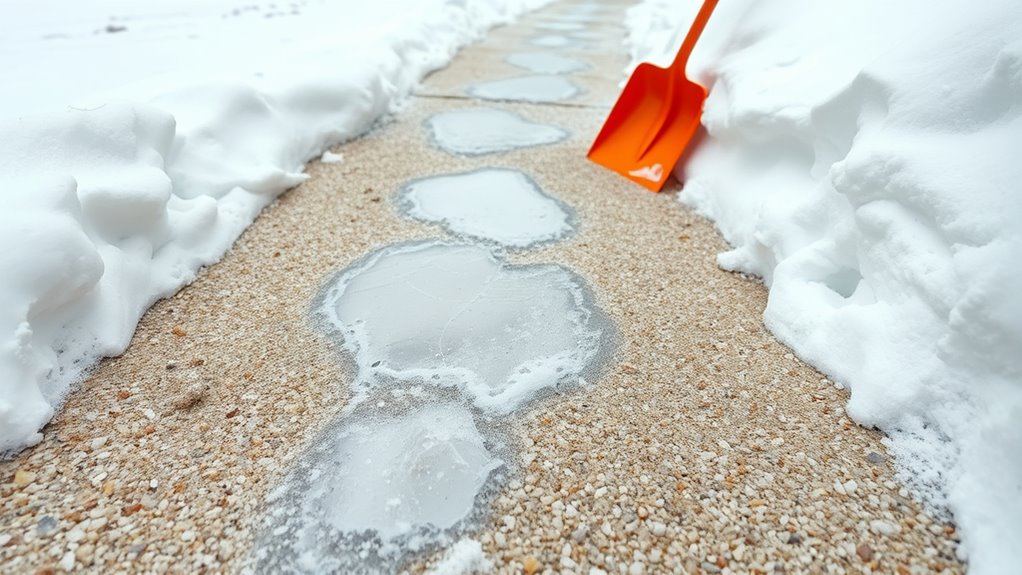
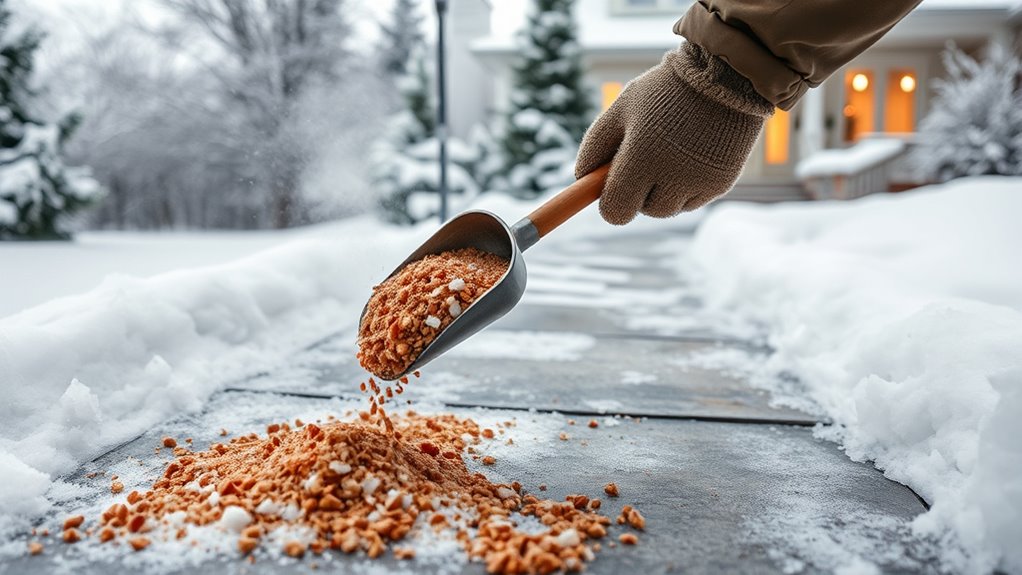
Have you ever wondered how to stay safe when walking or skating on frozen ice? The key is preventing slips and falls, which can cause serious injuries. Luckily, there are simple DIY solutions you can try at home to make icy surfaces safer. One effective method involves using ice melt products. You can sprinkle ice melt on sidewalks and driveways before a storm hits or right after ice begins to form. The salt-based compounds work by lowering the freezing point of water, quickly melting the ice and making the surface less slippery. Just be sure to choose an ice melt suitable for your environment and pet-safe if needed. Applying it in advance creates a barrier that prevents ice from bonding strongly to the pavement, reducing hazardous patches. After a storm, reapply as necessary to keep walkways clear and safe.
In addition to ice melt, using traction devices is another essential step. Traction devices include accessories like cleats, spikes, or chains that attach to your footwear or skates. When walking on icy surfaces, these devices grip the slick surface, considerably reducing your risk of slipping. If you prefer walking, slip-on cleats or spikes designed for shoes are easy to use and store. Simply slide them over your shoes before heading outside, especially in areas prone to icy patches. For skating, ensure your skates are equipped with appropriate grips or consider adding traction aids if you’re practicing outdoor skating on rough or icy patches. These devices give you more stability and confidence, especially on uneven or heavily iced walkways.
Combining the use of ice melt and traction devices offers a thorough approach to staying safe. Before venturing out, apply ice melt to the most traveled routes, then equip your shoes or skates with traction aids. This dual approach minimizes the chances of slipping, whether you’re walking to your mailbox or skating in a local pond. Remember, it’s better to prevent a fall than deal with injuries later. Keep a supply of ice melt handy, especially during winter storms, and invest in quality traction devices that fit well and are easy to put on. Always check the surface beforehand and adjust your precautions accordingly. Staying vigilant, prepared, and using these DIY home solutions will help you navigate icy conditions safely. Additionally, choosing a high-quality snow and ice removal product can be more effective and safer for your property.
Frequently Asked Questions
Can Salt Damage My Lawn or Plants Nearby?
Yes, salt can damage your lawn and plants nearby. It affects lawn safety by harming grass and can leach into the soil, impacting plant protection. To prevent damage, consider using alternatives like sand, kitty litter, or calcium magnesium acetate. If you do use salt, apply it sparingly and keep it away from the roots of your plants to minimize harm and maintain a healthy landscape during winter.
Are There Eco-Friendly Alternatives to Salt for Ice?
Yes, there are eco-friendly de-icers and natural ice melts you can use instead of traditional salt. Products like calcium magnesium acetate and potassium chloride are safer for the environment and won’t harm your plants or pets. You can also try natural ice melt options like sand, sawdust, or kitty litter to provide traction without chemical exposure. These eco-friendly alternatives help keep your sidewalks safe while protecting your lawn and surrounding greenery.
How Often Should I Reapply De-Icing Solutions?
Like a vigilant sentinel guarding your path, you should reapply de-icing solutions as needed, especially after each thaw or new snowfall. Generally, check every 24 to 48 hours, adjusting based on weather considerations—if temperatures drop below freezing again, it’s time for a fresh coat. For pre-treatment, apply before a storm to prevent ice from bonding, and reapply after significant snow or when the ice begins to reform, ensuring your walkway stays safe.
Will Baking Soda Work Effectively on Icy Sidewalks?
Baking soda isn’t very effective on icy sidewalks because it doesn’t melt ice like commercial ice melt or de-icers. While ice melt contains chemicals designed to lower the freezing point of water, baking soda won’t do that. If you’re looking for an affordable DIY solution, use ice melt or a mixture of salt and sand. Baking soda may help with minor snow and ice but isn’t reliable for thick ice.
What Safety Gear Should I Wear When Applying DIY Solutions?
Wearing the right safety gear is a game-changer when applying DIY solutions to icy sidewalks. You should don protective footwear with good traction to prevent slips and falls, and always wear gloves or hand protection to keep your hands safe from harsh chemicals or cold temperatures. Safety goggles are also a smart choice to shield your eyes from splashes or debris. Prioritize your safety—you’re tackling a winter wonderland that can turn treacherous in an instant!
Conclusion
As you step outside, imagine your sidewalks shining clear and safe beneath your feet, no more slipping or sliding. With these simple DIY solutions, you can create a winter haven where icy hazards melt away like frost under the morning sun. Keep safety front and center, and watch your walkways transform into a firm, trustworthy path. Stay alert, stay prepared, and enjoy the winter wonderland without the worry of dangerous slips.