To prep your workshop for cold weather, start by insulating doors and windows with thermal curtains and sealing gaps to keep the heat in. Store tools in dry, temperature-controlled spaces and protect electronics with moisture barriers. Use dehumidifiers and light oil coatings to prevent rust, and maintain batteries at ideal levels. Wear layered clothing and plan your work schedule for warmer parts of the day. Keep your space safe and efficient—you can learn all the best tips to get ready for winter.
Open a free Amazon Business account
Business pricing, bulk buying and tax-exempt orders.
As an affiliate, we earn on qualifying purchases.
Key Takeaways
- Insulate windows and doors with thermal curtains and seal gaps to retain heat and prevent drafts.
- Store tools in dry, temperature-controlled environments, using moisture barriers and desiccants to prevent rust.
- Use dehumidifiers and light oil coatings to control humidity and protect tools from corrosion.
- Wear thermal gear, shift work hours to warmer parts of the day, and take indoor breaks to manage cold exposure.
- Prepare emergency kits with warm clothing, first aid, and fire safety supplies for winter safety preparedness.
thermal insulated curtains for windows
As an affiliate, we earn on qualifying purchases.
As an affiliate, we earn on qualifying purchases.
Insulating and Weatherproofing Your Workshop
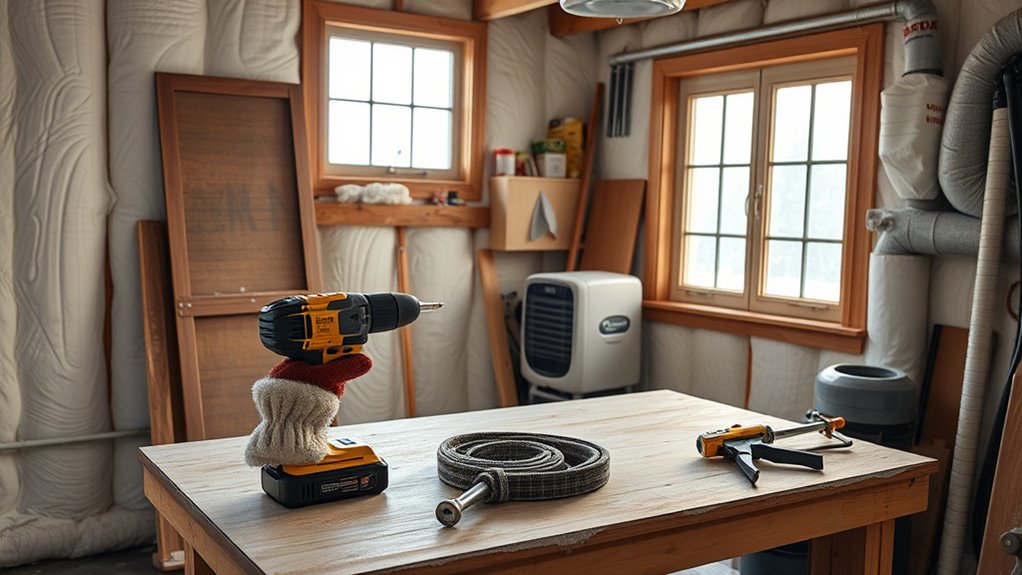
Insulating and weatherproofing your workshop becomes essential to keep it warm and maintain a comfortable workspace. Installing thermal curtains across doorways and windows helps block drafts and retain heat, making your space more energy-efficient. These curtains are easy to hang and can be drawn when working or opened for ventilation. Additionally, sealing gaps around windows, doors, and vents prevents cold air from seeping in. Creating heated workspaces doesn’t mean you need a full heating system—small space heaters or infrared panels can supplement insulation efforts. Proper weatherproofing guarantees your tools stay dry and functional, and it keeps you comfortable during those long winter projects. Incorporating smart heating solutions can further optimize your workspace’s temperature control. Staying informed about energy-efficient technologies can help you choose the best options for winter heating. Using proper insulation materials can significantly improve heat retention and reduce energy costs. Employing seasonal maintenance strategies ensures your workshop remains in optimal condition throughout winter. Gold IRA markets have shown resilience during economic downturns, emphasizing the importance of protecting your investments even in winter. With these steps, your workshop stays warm, safe, and ready for winter work.
moisture barrier for tool storage
As an affiliate, we earn on qualifying purchases.
As an affiliate, we earn on qualifying purchases.
Proper Storage and Maintenance of Tools

Proper storage and maintenance of your tools are crucial to guarantee they stay in good condition throughout the winter. Make certain all tools are clean and dry before storing to prevent rust and corrosion. Use tool labeling to organize your workshop, making it easier to find what you need and reducing unnecessary handling. Regularly check tool calibration, especially for precision instruments, to maintain accuracy. Keep sharp tools properly sharpened to prevent accidents and ensure maximum performance. Store power tools in a dry, temperature-controlled environment to avoid moisture damage. Lubricate moving parts as needed, and inspect tools for wear or damage before winter storage. Incorporating proper storage practices can also help extend the lifespan of your tools and prevent unnecessary repairs. Additionally, paying attention to corrosion prevention techniques can significantly reduce the risk of rust forming during months of disuse. Using AI-powered monitoring devices can help you track your tools’ condition remotely and alert you to potential issues. Implementing regular cleaning routines can further safeguard your tools against dust and dirt buildup. Embracing artistic expression and curiosity about your tools can also inspire better maintenance habits and innovative solutions for your workshop.
electric space heater for workshop
As an affiliate, we earn on qualifying purchases.
As an affiliate, we earn on qualifying purchases.
Protecting and Storing Batteries and Electronics

As temperatures drop, it is crucial to store your batteries and electronics properly to prevent damage. Keep them in a cool, dry place and avoid exposing them to extreme cold or heat. Implementing simple maintenance strategies can extend their lifespan through the winter months. For optimal protection, consider using appropriate storage solutions that help regulate temperature and humidity levels.
Cold Storage Tips
Have you considered how cold temperatures can impact your batteries and electronics during winter? Cold can reduce their performance and lifespan. To protect them, store batteries in a warm, insulated space, using thermal insulation to prevent temperature swings. Moisture barriers are essential to keep condensation at bay, which can cause corrosion or short circuits. Place electronics in sealed containers with moisture barriers to avoid moisture damage. Keep devices away from direct cold exposure, and avoid leaving them in freezing environments for extended periods. Proper storage minimizes damage and preserves functionality. Additionally, choosing projectors with adequate contrast ratio can significantly improve image quality in rooms with variable lighting conditions during winter months, especially when combined with proper lighting control. Ensuring proper air quality in your workspace can also prevent dust and pollutants from settling on sensitive equipment. Maintaining good ventilation can help reduce humidity and moisture buildup in your workshop. Here’s a quick guide:
| Item Type | Storage Method | Additional Tips |
|---|---|---|
| Batteries | Insulated, warm area | Use thermal insulation |
| Electronics | Sealed with moisture barriers | Avoid direct cold exposure |
| Cables | Coiled, in dry, insulated containers | Prevent moisture build-up |
| Power tools | Warm storage, protected from cold | Keep dry and insulated |
| Chargers | Indoor, temperature-controlled | Prevent condensation |
Battery Maintenance Strategies
To guarantee your batteries and electronics stay reliable through the winter, implementing effective maintenance strategies is essential. Proper battery charging and storage protect against cold-related damage. First, always keep batteries charged to around 50-70% before storing; this prevents capacity loss. Second, store batteries in a cool, dry place, ideally between 32°F and 68°F, to minimize battery degradation. Third, periodically check and recharge stored batteries every few months to maintain ideal performance. Avoid exposing batteries to extreme cold or heat, as temperature fluctuations can cause permanent damage. Additionally, using appropriate essential oils in your environment can promote relaxation and improve air quality during the colder months. Ensuring your storage area is well-ventilated can also help prevent moisture buildup and further protect your batteries. Incorporating battery maintenance routines and storing in a suitable environment will help extend their lifespan and guarantee your tools and electronics stay ready when you need them most. Regularly monitoring environmental conditions can further enhance battery longevity. Incorporating climate control measures can further optimize storage conditions and safeguard your equipment from temperature-related issues.
As an affiliate, we earn on qualifying purchases.
Managing Humidity and Preventing Rust

Ever wondered how to keep your tools in top shape during winter? Managing humidity and rust prevention are key. Keep your workshop’s humidity levels stable using a dehumidifier or silica gel packs, which absorb excess moisture. Avoid drastic temperature swings that create condensation, as moisture promotes rust. Regularly wipe down tools with a dry cloth after use to remove any lingering dampness. Store tools in airtight containers or tool chests with desiccants to further control humidity. Applying a light coat of oil on metal surfaces creates a protective barrier against moisture. Controlling humidity is essential for preventing rust and preserving your tools’ integrity. Incorporating desiccant materials such as silica gel or activated charcoal can further enhance moisture absorption in storage areas. Additionally, applying a light coat of oil or corrosion inhibitor can provide an extra layer of defense against moisture. Using antimicrobial essential oils, such as tea tree oil, can also help create a protective environment by inhibiting microbial growth that may accelerate corrosion. Bioluminescent fungi have been studied for their potential in biotechnological applications, which underscores the importance of understanding moisture control as it affects biological and chemical processes. These simple steps prevent rust and preserve your tools’ longevity. Consistent humidity control guarantees your tools stay in excellent condition, ready to perform whenever you need them.
Adjusting Your Work Routine for Cold Conditions
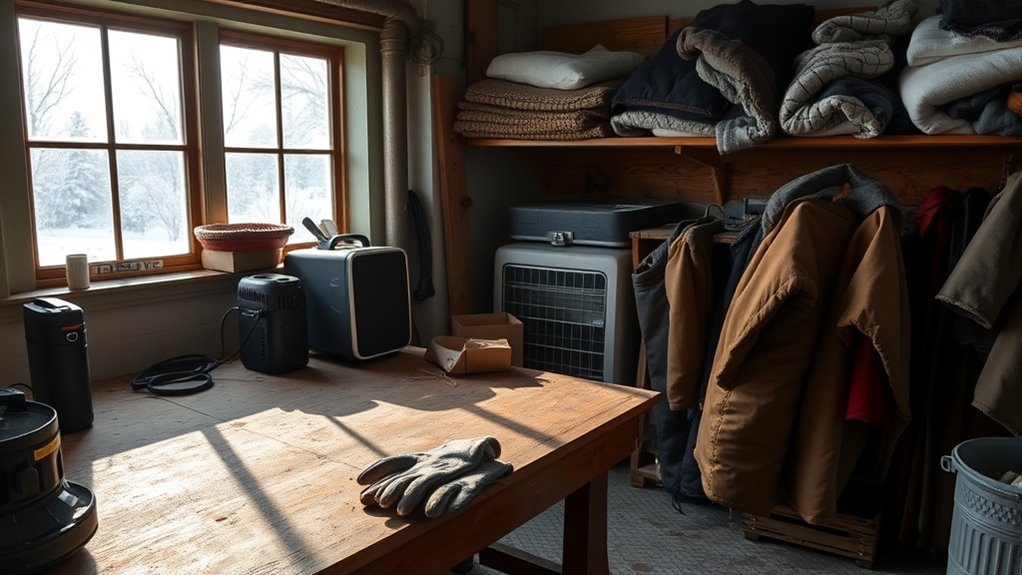
Cold temperatures can considerably slow down your work and affect your tools if you don’t adjust your routine accordingly. To stay productive, consider adjusting work hours to warmer parts of the day, such as late morning or early afternoon. This minimizes exposure to the cold and maintains efficiency. Wearing thermal gear is essential; it keeps your body warm and prevents fatigue caused by cold stress. Additionally, take short breaks indoors to warm up and check your tools for condensation or ice buildup, which can impair their function. Here are three ways to adapt your routine:
- Shift work hours to daylight or warmer periods.
- Wear thermal gear, including insulated gloves and layered clothing.
- Regularly warm up and inspect tools for moisture or ice.
Emergency Preparedness and Safety Tips
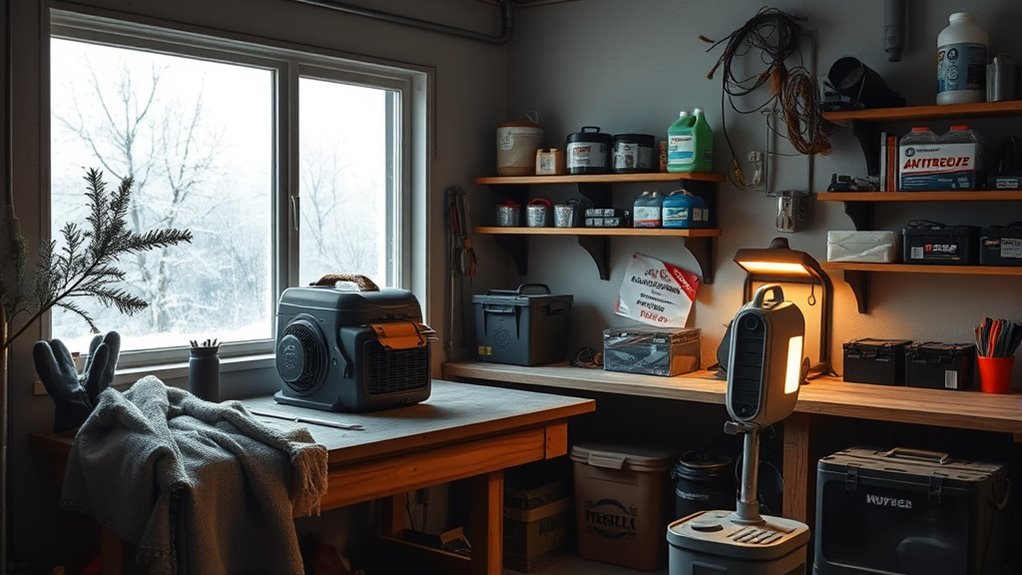
Before winter hits, make sure your emergency kit is stocked with essentials like warm clothing, first aid supplies, and a flashlight. Properly storing your tools keeps them safe and ready for quick access during emergencies. Staying prepared helps you respond effectively and stay safe in winter conditions.
Emergency Kit Essentials
Are you prepared for unexpected emergencies in your workshop during winter? Having an emergency kit on hand is essential to handle any situation swiftly. Your kit should include key items such as a well-stocked first aid kit to treat cuts or burns caused by cold or sparks. Make sure you also have fire safety supplies like a fire extinguisher and fire blankets to prevent small fires from escalating. Additionally, include a flashlight with extra batteries, so you’re never left in the dark during power outages or accidents. Consider adding thermal blankets and basic tools like scissors and gloves for quick response. Staying prepared helps you manage winter-related hazards efficiently, ensuring safety for you and your workspace.
Safe Tool Storage
Have you considered how proper tool storage can enhance safety and preparedness in your winter workshop? Well-organized tools prevent accidents and make your work more efficient. Start by using sturdy storage containers to keep your tools protected from moisture and cold. Label each container clearly so you can quickly find what you need, reducing the risk of mishandling. Keep sharp or heavy tools separate and secure to avoid injuries. Regularly inspect your tool organization system to ensure everything is in its place and in good condition. Proper storage not only safeguards your tools but also minimizes clutter, creating a safer workspace during winter. Prioritize safe tool storage to stay prepared and avoid accidents when working in cold, challenging conditions.
Frequently Asked Questions
How Can I Prevent Ice Buildup Inside My Workshop?
To prevent ice buildup inside your workshop, you should improve insulation techniques to keep the cold out and maintain a consistent temperature. Install moisture barriers to reduce humidity that causes condensation. Keep doors and windows sealed tightly, and consider using dehumidifiers or heaters to control moisture levels. Regularly check for leaks and insulate pipes to prevent freezing. These steps help keep your workspace dry and ice-free during cold weather.
What Are the Best Heating Options for a Workshop in Winter?
You should consider using reliable heat sources like electric space heaters or propane heaters to warm your workshop efficiently. Pair these with proper insulation methods, such as insulating walls and sealing windows, to retain heat. You might also add a programmable thermostat for consistent temperature control. Combining effective heat sources with good insulation keeps your workspace warm, safe, and comfortable during winter, preventing ice buildup and protecting your tools.
How Do I Identify Early Signs of Frost Damage on Tools?
Your tools whisper warnings like a canary in a coal mine. Look for signs of frost damage, such as rust spots, warping, or brittle components, which indicate moisture intrusion and cold stress. Regular tool maintenance and frost damage prevention help keep your tools in top shape. Inspect metal surfaces for discoloration, and test moving parts for stiffness. Catching issues early guarantees your tools stay reliable through winter’s chill.
Are There Specific Clothing Tips for Working Safely in Cold Weather?
When working in cold weather, you should wear layered clothing to stay warm and adjust your insulation as needed. Make sure to wear insulated footwear to protect your feet from frostbite and maintain good grip on slippery surfaces. Keep your hands warm with gloves, and consider a hat or head covering to retain body heat. These tips help you work safely and comfortably despite the cold.
How Can I Effectively Ventilate My Workshop During Winter?
You should prioritize proper ventilation techniques to keep your workshop safe during winter. Did you know that good air circulation reduces indoor air pollution by up to 50%? To effectively ventilate, open windows and doors periodically, use exhaust fans, and consider installing adjustable vents. These methods help prevent moisture buildup and improve air quality, ensuring a safer, more comfortable workspace even in cold weather.
Conclusion
As winter approaches, your workshop becomes a fortress against the cold, ensuring your tools stay safe and your projects stay on track. By insulating, weatherproofing, and properly storing your gear, you turn your workspace into an unbreakable sanctuary. With these preparations, you’ll conquer winter’s relentless chill like a seasoned warrior, confidently tackling any project that comes your way. Stay vigilant, stay prepared—your workshop’s resilience will make even the harshest winter feel like a gentle breeze.
NFL season / tailgating Picks
team gear
As an affiliate, we earn on qualifying purchases.