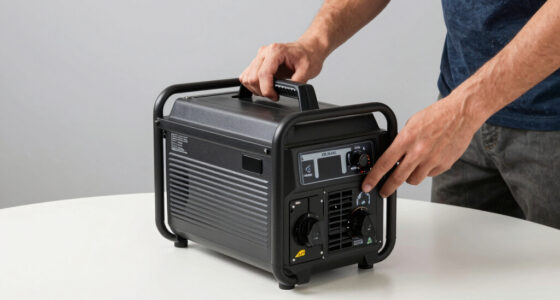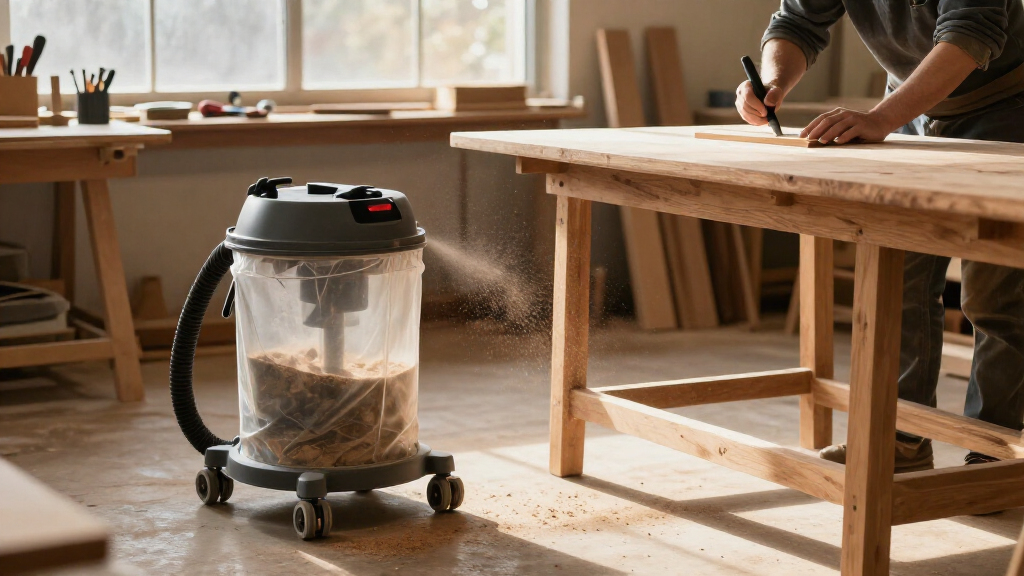
The WEN DC1300 is my best overall pick among these woodworking dust collectors, pairing a high stated airflow with a large bag and mobile base for a multi-tool shop. For limited floor space, the POWERTEC DC5371 and VEVOR 1 HP wall-mount model offer 560 CFM ratings without taking up a floor footprint; the POWERTEC lists a 1-micron filter bag. The main tradeoff is between greater collection capacity and a compact setup that is easier to place in a small shop. Bag size, filtration, hose compatibility, and how many machines you connect can matter as much as the advertised CFM. Read on for the full breakdown and a guide to matching a collector to your tools.

Get business pricing on tools and workshop supplies
- Business-only prices and quantity discounts
- Tax-exempt purchasing
- Multiple users, one account, clear invoices
Complete the kit



Key Takeaways
- DC1300 leads for a larger, mobile shop: Its stated 1,300 CFM, 50-gallon bag, and mobile base make it the most capable all-around option in this lineup, though its size calls for dedicated floor space.
- Wall-mount models trade capacity for floor space: The POWERTEC DC5371 and VEVOR 1 HP unit both list 560 CFM, while the POWERTEC specifies a 1-micron filter bag.
- The VEVOR 1100 CFM model bridges capacity and footprint: Its vortex-cone design and 35-gallon collection bag suit buyers wanting a higher-airflow system without the DC1300’s 50-gallon bag.
- Small collectors suit one tool or an occasional-use shop: The WEN DC3401, WEN DC3474, and VEVOR 800 CFM model offer smaller collection formats, but buyers should match their capacity to their dust output and work habits.
- Published airflow figures do not settle the choice: Hose diameter, duct layout, filter type, and the tool’s dust port all affect real collection, so compare the complete setup rather than CFM alone.


| woodworking dust collector | Airflow | Motor | Filtration | Noise level |
|---|---|---|---|---|
| WEN DC1300 1,300 CFM Woodworki | Up to 1,300 CFM | 14 amps | — | — |
| VEVOR Wall-Mount Dust Collecto | 560 CFM | — | 2.5 microns | Up to 90 dB |
| WEN 15-Gallon Woodworking Dust | Up to 600 CFM | 7.4-amp induction motor | — | — |
| VEVOR 1100 CFM 2.5 Micron Vort | 1,100 CFM | — | 2.5 microns | Under 90 dB |
| POWERTEC DC5371 1 HP Wall-Moun | — | 1 HP induction motor | — | 80 dB |
| POWERTEC 1 HP Dust Collector w | — | — | 1 micron | — |
| VEVOR Dust Collector 800 CFM 2 | 800 CFM | 1 HP induction motor | 2.5 microns | ≤90 dB |
| WEN DC3401 12-Gallon Woodworki | Up to 660 CFM | 5.7 amps, brushed | — | — |
More Details on Our Top Picks
WEN DC1300 1,300 CFM Woodworking Dust Collector with 50-Gallon Bag and Mobile Base
The WEN DC1300 leads this group for airflow and collection capacity, making it a strong fit for a workshop that runs larger machines or wants to reduce how often it empties the bag. Its 1,300 CFM rating, two 4-inch inlets, and 50-gallon bag set it apart from the smaller WEN DC3474, which moves up to 600 CFM and holds 15 gallons. The four-caster base also helps when the collector needs to move between work areas. That capacity comes with a larger floor footprint and a single-speed design, so it offers less placement flexibility than wall-mounted picks such as the POWERTEC DC5371. It is designed for indoor use, and its listed airflow alone does not replace suitable ducting or source capture at each machine.
Pros:- Up to 1,300 CFM of airflow
- Two 4-inch inlets can serve more than one tool connection
- 50-gallon collection bag reduces how often it needs emptying
- Four swivel casters make the floor-standing unit movable
Cons:- Single speed and power level limit adjustment to different tools
- Floor-standing design takes more workshop space than wall-mounted collectors
- Designed for indoor use
Best for: Woodworkers with a dedicated indoor shop, larger dust-producing tools, and room for a floor-standing collector with a high-capacity bag.
Not ideal for: Small-shop owners who need a wall-mounted unit, variable-speed control, or a collector intended for outdoor use.
- Airflow:Up to 1,300 CFM
- Motor:14 amps
- Impeller:10-inch steel; up to 3,450 RPM
- Inlets:Two 4-inch inlets
- Collection bag capacity:50 gallons
- Mobility:Mobile base with four swivel casters
- Power source:AC
- Warranty:Two years
Our verdict“Choose the DC1300 if your indoor shop can accommodate a mobile floor unit and needs more airflow and bag capacity than the WEN DC3474 provides.”
VEVOR Wall-Mount Dust Collector, 1 HP, 560 CFM
The VEVOR wall-mount collector is a space-saving choice for shops that want a sizable collection bag without giving up floor area. Its 21-gallon bag holds more than the POWERTEC DC5371’s listed setup specifies, while 560 CFM places it below the high-airflow WEN DC1300 and VEVOR 1100 CFM Vortex Cone. The 2.5-micron filtration and bottom zipper are practical touches for routine sawdust and sanding-dust collection, with the zipper making bag emptying less awkward. The tradeoff is that wall mounting fixes the collector’s position, which can complicate connecting machines spread around a shop. Its noise rating reaches 90 dB, so it is not the quietest choice here; the POWERTEC DC5371 is listed at 80 dB and uses a finer 1-micron filter.
Pros:- Wall mounting frees floor space
- 21-gallon collection bag offers substantial capacity for a wall-mounted unit
- 2.5-micron filtration is specified for fine dust capture
- Bottom zipper simplifies emptying the bag
Cons:- 560 CFM is well below the WEN DC1300 and VEVOR 1100 CFM models
- Wall-mounted placement is less flexible than a mobile base
- Noise level is rated up to 90 dB
Best for: Woodworkers with limited floor space who can mount a collector near a primary machine and want a larger bag for routine sawdust and sanding dust.
Not ideal for: Shops needing a mobile collector, finer listed filtration than 2.5 microns, or a lower stated noise level.
- Mounting type:Wall mount
- Motor power:1 HP induction motor
- Airflow:560 CFM
- Filtration:2.5 microns
- Collection bag capacity:21 gallons (80 L)
- Noise level:Up to 90 dB
- Voltage:120 volts
- Weight:24 pounds
Our verdict“Pick this VEVOR if wall mounting and a larger bag matter more than the finer filtration and lower stated noise level of the POWERTEC DC5371.”
WEN 15-Gallon Woodworking Dust Collector, 7.4-Amp Motor, Mobile Base, Optional Wall Mount (DC3474)
The WEN DC3474 balances portability with a modest footprint, and its optional wall mount gives it more placement choices than the floor-only WEN DC1300. With up to 600 CFM and a 15-gallon, 5-micron bag, it suits a smaller shop or a dedicated machine better than a multi-machine setup demanding the DC1300’s 1,300 CFM and 50-gallon capacity. Swivel casters and a carrying handle help when the collector needs to move, while the wall-mount option can reclaim floor space once a preferred location is chosen. The compromises are a single 4-inch dust port and a bag capacity smaller than the VEVOR 21-gallon wall-mount model. At 41.1 pounds, it is movable, but not especially light to lift onto a wall.
Pros:- Up to 600 CFM suits smaller-shop dust collection needs
- Swivel casters and carrying handle support repositioning
- Optional wall mount can free floor space
- Two-year warranty
Cons:- 15-gallon bag fills sooner than the WEN DC1300’s 50-gallon bag
- Single 4-inch dust port limits connection options
- 41.1-pound weight makes wall installation and lifting less convenient
Best for: Hobbyist woodworkers who need a movable collector for one 4-inch-port machine and value the choice of floor or wall placement.
Not ideal for: High-demand shops seeking a large multi-tool collector, a bigger bag, or a lightweight unit for frequent lifting.
- Model:DC3474
- Motor:7.4-amp induction motor
- Airflow:Up to 600 CFM
- Impeller:9 inches
- Dust port:4 inches
- Collection bag:15 gallons, 5-micron zippered
- Dimensions:43.3 x 17.7 x 20.1 inches
- Weight:41.1 pounds
- Mounting:Mobile base with swivel casters; optional wall mount
Our verdict“Choose the DC3474 for a smaller shop that wants caster mobility and optional wall mounting, rather than the greater capacity of the WEN DC1300.”
VEVOR 1100 CFM 2.5 Micron Vortex Cone Dust Collector, 1.5 HP Sawdust Collection System with 35-Gallon Bag & 42-Gallon Filter Bag, 3400 RPM
The VEVOR 1100 CFM Vortex Cone pairs substantial airflow with two large bags, making it a better fit for longer shop sessions than the 560 CFM wall-mounted VEVOR or the 15-gallon WEN DC3474. Its 35-gallon collection bag and 42-gallon filter bag provide more capacity between maintenance stops, while 2.5-micron filtration is specified for capturing fine particles. At 68.1 pounds and roughly 75.6 inches tall, it is a serious floor unit rather than a compact collector to tuck beside a bench. The WEN DC1300 offers a higher stated airflow of 1,300 CFM and two inlets, so it may suit shops prioritizing maximum airflow and multiple connections. This VEVOR instead emphasizes dual-bag capacity; its bulk and weight make placement a decision to settle before setup.
Pros:- 1,100 CFM airflow supports substantial dust collection
- 35-gallon collection bag and 42-gallon filter bag provide extended capacity
- 2.5-micron filtration is specified for fine-particle capture
- Clip-style bag access simplifies removal
Cons:- At 68.1 pounds, moving it is difficult
- Tall, bulky dimensions can constrain shop placement
- Lower listed airflow than the WEN DC1300, which also has two inlets
Best for: Woodworkers with a dedicated floor space who run dust-producing machines for extended sessions and want large collection and filter bags.
Not ideal for: Small workshops, frequently rearranged work areas, or buyers who need the highest airflow rating and multiple inlets.
- Airflow:1,100 CFM
- Motor power:1.5 HP
- Motor speed:3,400 RPM
- Filtration:2.5 microns
- Collection bag capacity:35 gallons
- Filter bag capacity:42 gallons
- Noise level:Under 90 dB
- Weight:68.1 pounds
- Dimensions:36.22 x 29.13 x 75.59 inches
Our verdict“Choose this VEVOR when extended collection capacity matters more than easy relocation or the WEN DC1300’s higher airflow and dual inlets.”
POWERTEC DC5371 1 HP Wall-Mount Dust Collector, 560 CFM, with 1-Micron Filter Bag
The POWERTEC DC5371 is the most filtration-focused wall-mount pick in this group: its reusable 1-micron filter bag is finer by specification than the 2.5-micron bags on the VEVOR wall-mount and VEVOR Vortex Cone models. Its 560 CFM rating matches the wall-mounted VEVOR, but POWERTEC adds the option to mount it on a wall, workbench, or floor, giving it more placement flexibility than a wall-only setup. The viewing window and bottom zipper also make bag condition and disposal easier to manage. It cannot match the WEN DC1300 or VEVOR 1100 CFM unit for stated airflow, and the 4-inch inlet grate needs regular checks for clogs. The listed 80 dB noise level is lower than the VEVOR wall-mount’s rating of up to 90 dB, though it is not silent.
Pros:- Reusable 1-micron filter bag is finer by specification than the VEVOR wall-mount’s 2.5-micron filtration
- Can mount on a wall, workbench, or floor
- Viewing window and bottom zipper ease inspection and disposal
- Listed 80 dB noise level is lower than the VEVOR wall-mount’s rating
Cons:- 560 CFM is below the WEN DC1300 and VEVOR 1100 CFM models
- 4-inch inlet grate can collect debris and needs regular inspection
- Single speed offers no adjustment for different collection needs
Best for: Small-shop woodworkers who want a compact collector with a finer specified filter and multiple mounting options for a 4-inch machine connection.
Not ideal for: Shops needing airflow above 560 CFM, multiple inlets, or an inlet that does not require routine clog inspection.
- Model:DC5371
- Motor:1 HP induction motor
- Voltage:120V/240V
- Current:12 A at 120V; 6 A at 240V
- Airflow capacity:560 CFM
- Inlet size:4 inches
- Filter:Reusable 1-micron cloth bag
- Noise level:80 dB
- Mounting options:Wall, workbench, or floor
Our verdict“Choose the DC5371 for a space-conscious shop prioritizing a 1-micron filter and flexible mounting over higher airflow.”
POWERTEC 1 HP Dust Collector with 1-Micron Filter and Mobile Base (DC1081)
The POWERTEC DC1081 pairs 800 CFM airflow with a 1-micron filter bag, making it a stronger fit for a small shop prioritizing finer dust capture than the VEVOR DC100, whose listed filtration is 2.5 microns. Its four-wheel base and handle also make it practical to move between machines, while quick-release clamps simplify collection-bag changes. The 120/240 V motor compatibility offers more electrical flexibility than the WEN DC3401, which is specified for AC power without a dual-voltage rating. The tradeoff is that this remains a 1 HP, 800 CFM collector, not a high-airflow system for several machines running together. It also needs assembly and is specified for indoor use, so it suits a dedicated shop better than outdoor or jobsite cleanup.
Pros:- 1-micron filter bag captures finer particles than the VEVOR DC100’s 2.5-micron filtration
- Four-wheel mobile base and handle make it easier to move between machines
- Quick-release clamps speed up collection-bag removal
- 120/240 V compatibility provides electrical setup flexibility
Cons:- 800 CFM and a 1 HP motor are a step below higher-airflow collectors in the roundup
- Requires assembly before use
- Specified for indoor use only
Best for: Woodworkers with a small indoor shop who want a mobile 800 CFM collector and finer filtration than the VEVOR DC100 provides.
Not ideal for: Shops running multiple dust-producing machines at once or users who need an outdoor-rated collector; its 1 HP, 800 CFM capacity and indoor-use specification limit those applications.
- Motor power:1 HP
- Voltage:120/240 V
- Motor type:Single phase
- Motor speed:3450 RPM
- Air suction capacity:800 CFM
- Filtration:1 micron
- Intake port:4 inches
- Item weight:55 pounds
Our verdict“Choose the POWERTEC DC1081 for a mobile, finer-filtering collector in a modest indoor shop, but look to a higher-airflow model for several machines.”
VEVOR Dust Collector 800 CFM 2.5 Micron Vortex Cone 1HP Sawdust Collection System with 16-Gallon Bag, Filter and Casters
The VEVOR DC100 makes a practical case for buyers who want 800 CFM airflow without stopping as often to empty the collector: its 16-gallon bag holds more than the WEN DC3401’s 12-gallon bag. The quick-release clips also make bag removal less fussy. Against the POWERTEC DC1081, however, the VEVOR lists 2.5-micron filtration rather than 1 micron, so the POWERTEC is the better match when finer filtration is the priority. The DC100 is described as using a vortex cone and a 1 HP induction motor, with operation rated at no more than 90 dB, but the supplied specifications do not list a port size or voltage range. I would favor it for routine chip and sawdust collection, not for buyers who need clearly documented connection details or the finest filtration in this group.
Pros:- 800 CFM airflow for collecting chips and sawdust
- 16-gallon bag reduces how often collection needs to be emptied
- Quick-release clips simplify bag removal and cleaning
- Listed operating noise of no more than 90 dB
Cons:- 2.5-micron filtration is coarser than the POWERTEC DC1081’s 1-micron filter
- Provided specifications do not state the intake-port size
- At 57.3 pounds and about 60 inches tall, it may be awkward for tight shop layouts
Best for: Small-shop woodworkers who collect steady volumes of chips and sawdust and want a larger bag than the WEN DC3401 offers.
Not ideal for: Buyers who prioritize 1-micron filtration, need a specified dust-port size before purchase, or want documented dual-voltage compatibility.
- Airflow:800 CFM
- Filtration:2.5 microns
- Motor:1 HP induction motor
- Collection bag:16 gallons
- Noise level:≤90 dB
- Model number:DC100
- Dimensions:30.71 x 22.83 x 60.24 inches
- Item weight:57.3 pounds
Our verdict“Pick the VEVOR DC100 if longer collection runs and a larger bag matter more than the finer filtration of the POWERTEC DC1081.”
WEN DC3401 12-Gallon Woodworking Dust Collector
At 17 pounds, the WEN DC3401 is the easiest of these three to reposition or store, and its compact footprint gives it an advantage in a crowded home workshop. Its airflow reaches 660 CFM, below the 800 CFM POWERTEC DC1081 and VEVOR DC100, so I would treat it as a collector for one connected machine rather than a higher-capacity shop system. The 12-gallon bag is also smaller than the VEVOR’s 16-gallon option, meaning more frequent emptying during chip-heavy work. In return, WEN offers both lockable casters and an optional wall-mount setup, allowing buyers to reclaim floor space when the collector stays near one machine. A 5-micron bag and single speed are compromises for users seeking finer filtration or adjustable operation, but the two-year warranty adds useful coverage.
Pros:- Light 17-pound body is easy to carry and reposition
- Compact design can use lockable casters or an optional wall mount
- Moves up to 660 CFM through a 4-inch dust port
- Includes a two-year warranty
Cons:- 660 CFM is lower than the 800 CFM POWERTEC DC1081 and VEVOR DC100
- 5-micron bag filtration is coarser than the other two products in this batch
- Single speed and 12-gallon capacity limit flexibility and collection time
Best for: Home woodworkers with limited floor space who need a lightweight collector for one 4-inch-port machine and value wall-mount flexibility.
Not ideal for: Users seeking 800 CFM airflow, finer-than-5-micron filtration, variable speed, or a large bag for extended chip-heavy sessions.
- Motor:5.7 amps, brushed
- Impeller:6-inch nylon
- Airflow:Up to 660 CFM
- Dust port:4 inches
- Collection bag:12 gallons, 5-micron
- Dimensions:34.25 x 13 x 14.2 inches
- Weight:17 pounds
- Warranty:Two years
Our verdict“Choose the WEN DC3401 for a lightweight, space-saving collector serving one machine, but step up to the POWERTEC or VEVOR for more airflow.”
How We Picked
I compared the eight woodworking dust collectors on the factors that change day-to-day shop use: stated airflow, collection capacity, filtration details, mounting style, mobility, and suitability for different shop sizes. I also treated missing or limited specifications as a reason to avoid overstating a model’s capabilities; a listed micron rating or bag size is useful, but it does not by itself describe filtration performance across an entire system.
The ranking favors models with a strong balance of airflow, capacity, and practical placement, which puts the WEN DC1300 first for broad workshop use. The VEVOR 1100 CFM vortex-cone model follows as a higher-capacity alternative with a smaller collection bag, while wall-mounted units earn their place for shops where floor space is scarce. Compact models rank lower for general-purpose use, not because they lack a role, but because their smaller formats better suit lighter workloads or individual machines.
Factors to Consider When Choosing Woodworking Dust Collectors
Choosing a dust collector starts with the machine and layout it must serve, not the biggest number on a product page. I would use these factors to narrow the field before deciding between a mobile, wall-mounted, or compact unit.
Match airflow to the tool and duct path
Airflow figures are a starting point, not a guarantee of collection at the cutter. Long hose runs, narrow fittings, bends, and shared duct branches all add resistance and can reduce what reaches a machine. Check the tool maker’s port size and dust-collection guidance, then plan the shortest practical route with the fewest restrictions. A collector with a high advertised CFM may still disappoint if paired with undersized ducting. Avoid assuming that one collector can serve several machines at once unless its capacity and duct layout support that arrangement. For many small shops, connecting one machine at a time is the simpler plan.
Treat filtration as separate from chip collection
A collector can move chips and visible sawdust while still needing a filter suited to the fine dust your work produces. Compare the stated micron rating and filter construction, but do not treat a number alone as proof of overall shop air quality. Fine dust can escape through a poorly sealed bag or filter, and the machine’s collection performance depends on the whole system. Think about where the collector exhausts and whether your shop needs separate air filtration for airborne particles. A 1-micron bag, such as the one listed for the POWERTEC DC5371, is a meaningful specification to compare, but it does not remove the need to check fit and maintenance requirements. Choose based on your dust exposure concerns as well as chip capacity.
Estimate collection capacity from your work habits
Bag volume affects how often you stop to empty the collector, especially when planing or sanding generates substantial waste. A large bag can reduce interruptions, but it also takes more room and can be awkward to handle when full. Small-format units make sense for intermittent use, a single bench machine, or a shop with limited storage. Buyers sometimes choose the smallest collector because it is easier to place, then find that frequent emptying becomes a chore. Consider both the type of debris and how many hours the machine will run between cleanouts. Leave space to remove and replace bags without moving other equipment.
Choose a location before choosing a mounting style
A mobile base is useful when machines move around the shop or when one collector serves several stations. A wall-mounted unit frees floor area, but its location fixes the start of the hose or duct route and may complicate collection from tools across the room. Check wall structure, mounting clearance, outlet access, and the room needed to remove the bag or filter. A compact collector can fit beneath or beside a bench, though access for cleaning still matters. Do not count a wall mount as space-saving if its ducts create an inconvenient path or block routine shop access. Sketch the layout before buying so the collector’s placement supports the work rather than dictating it.
Check ports, adapters, and electrical needs
Dust ports vary across table saws, sanders, routers, and other tools, so a collector may need reducers or a different hose before it can connect. Each adapter and narrow section can restrict airflow, making compatibility a performance issue rather than a minor accessory detail. Confirm the inlet size, hose diameter, included fittings, and whether the tools have useful dust ports at all. Also compare motor requirements with the circuits available in your shop, especially if other machines share the same circuit. A collector that fits the electrical and connection layout can be a better buy than a higher-airflow model that needs substantial changes. Set aside room in the plan for any adapters and hose supports.
Pay more for the limitation you need to solve
Greater capacity is worth prioritizing when several machines generate heavy debris or when frequent bag changes disrupt work. A wall-mounted collector may be the better upgrade when floor space is the main constraint, even if its stated airflow is lower than that of a larger mobile system. For a hobby shop using one machine occasionally, a smaller collector can keep the setup manageable without adding unused capacity. Avoid paying for a larger unit if your ducting, electrical supply, or tool ports will prevent you from using its strengths. On the other hand, choosing only by compact size can lead to frustrating collection limits as the shop grows. Match the purchase to the bottleneck you actually face: airflow, storage, floor area, filtration, or maintenance time.
Frequently Asked Questions
Can one of these collectors serve more than one woodworking machine?
That depends on the collector’s airflow under your duct conditions and whether the machines will run one at a time or together. For a small shop, a mobile collector connected to one tool at a time is often simpler than a branched system. Simultaneous use demands enough airflow at every open branch, and long runs or small fittings can weaken collection. Check the tool ports, duct diameter, and the collector’s guidance before planning shared connections. If you add blast gates, close the branches serving idle tools so airflow is directed where it is needed.
Is a 1-micron filter bag enough for fine woodworking dust?
A stated 1-micron rating is a useful point of comparison, but it does not tell the whole story about how much fine dust escapes during use. Seals, filter condition, bag material, and airflow all affect the system’s performance. The POWERTEC DC5371 lists a 1-micron filter bag, while other models in this roundup specify different filter details or do not provide the same rating. Check the manufacturer’s filtration information and maintenance instructions before relying on a collector for fine-dust control. If airborne dust is a concern, consider room air filtration as a separate layer rather than treating a dust collector as a complete solution.
Should I choose a wall-mounted collector or a mobile unit?
Choose a wall-mounted model when floor space is scarce and the machines you serve sit within practical hose reach. A mobile unit is more flexible if you rearrange the shop, work at separated stations, or want to move collection to different tools. The wall-mounted VEVOR and POWERTEC options in this roundup share a stated 560 CFM rating, while mobile choices include higher-capacity formats such as the WEN DC1300. Placement matters: a long or obstructed hose route can undermine the convenience of either style. Measure the space and map the connections before settling on a mount.
When is a smaller 12- or 15-gallon collector a sensible choice?
A smaller collector can suit a hobbyist who uses one machine at a time, generates modest amounts of debris, or needs to store equipment in a tight shop. The WEN DC3401 and DC3474 offer smaller collection formats than the WEN DC1300, so they call for less space but may need more frequent emptying during demanding work. The right choice depends on the material and tool: planing can fill a bag much faster than occasional trimming. Think about whether you would rather accept more cleanout stops or reserve more floor area for a larger system. If the shop workload is likely to grow, leave room for a future upgrade.
What should I prioritize if my tools have different-size dust ports?
Start by listing each tool’s port diameter and checking which ports are designed to capture dust effectively. Reducers can connect mismatched sizes, but a narrow adapter may restrict airflow, particularly on a long hose run. Give priority to the machines that create the most dust and plan the shortest, least restrictive connection for them. Check whether the collector includes useful fittings or whether you will need separate adapters and hoses. If several tools have very different needs, a collector used with one machine at a time may be more practical than trying to build a single shared duct system around every port.
Conclusion
For most multi-tool shops, I recommend the WEN DC1300 because its stated 1,300 CFM, 50-gallon bag, and mobile base make it the strongest all-around fit in this group. Buyers who want a high-airflow alternative with a vortex-cone design can look to the VEVOR 1100 CFM model, while those who need to save floor space should compare the POWERTEC DC5371 with the VEVOR 1 HP wall-mount unit. For value-minded buyers, the VEVOR 800 CFM collector offers a middle ground with a 16-gallon bag and casters, though it has less collection capacity than the larger systems. Beginners with a compact shop or light workload may prefer the WEN DC3401 or DC3474, provided their tool use matches the smaller format. My specific pick for a wall-mounted setup is the POWERTEC DC5371, while the WEN DC1300 remains my best overall choice for buyers with room for a larger mobile collector.