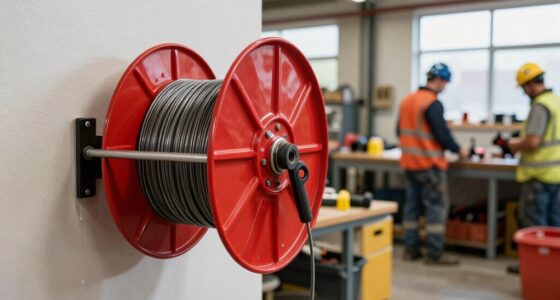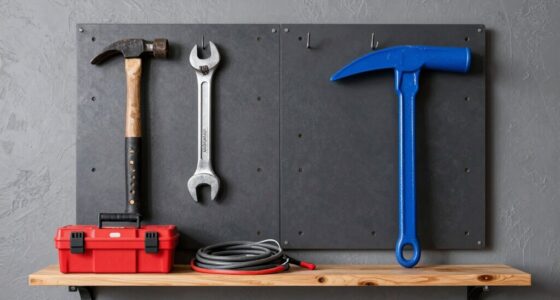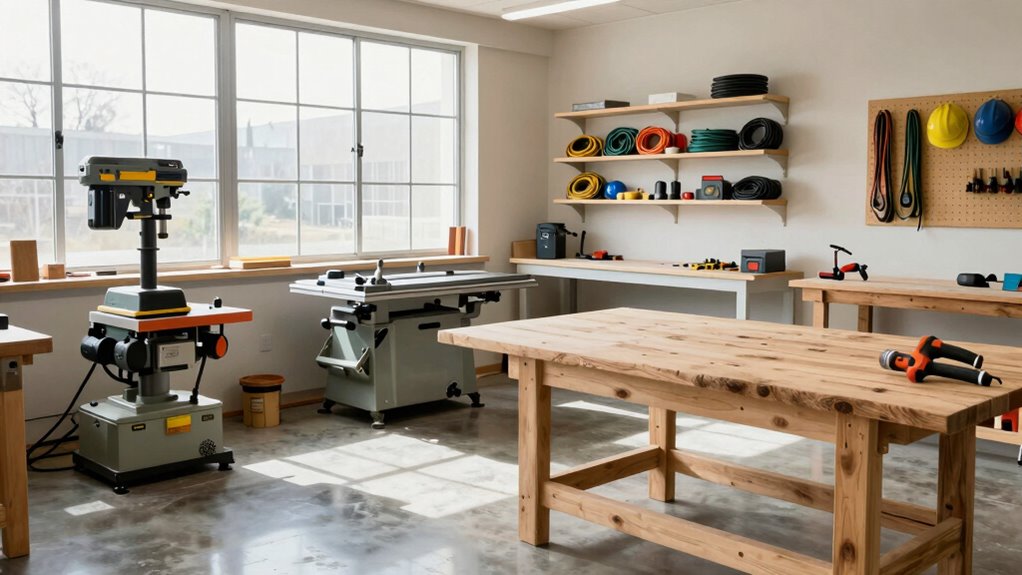

When building a workshop around heavy tools, guarantee you plan for proper ventilation with strategic placement of exhaust fans and air intakes to keep air quality high. Position tools on stable, level surfaces with enough clearance for safety and maintenance. Avoid high-traffic areas and entry points. Consider airflow patterns to optimize ventilation and protect both tools and workspace. Continuing with these tips will help you create a safer, more efficient environment tailored to your needs.

Get business pricing on tools and workshop supplies
- Business-only prices and quantity discounts
- Tax-exempt purchasing
- Multiple users, one account, clear invoices
Key Takeaways
- Position heavy tools on stable, level surfaces for safety and ease of maintenance.
- Ensure sufficient clearance around tools for safe operation and future upgrades.
- Strategically place exhaust fans and air intakes to optimize airflow and remove dust and fumes.
- Design workspace layout to promote effective airflow patterns and ventilation efficiency.
- Incorporate multiple ventilation solutions to maintain air quality and prolong tool lifespan.

Equally important is installing effective ventilation systems. Heavy tools often generate dust, fumes, or noise that can compromise air quality and your comfort. To maintain a safe environment, you should incorporate proper ventilation from the start. A well-ventilated workshop not only improves air circulation but also helps control temperature and humidity levels, which can prolong the life of your tools and materials. Consider installing exhaust fans, air filtration units, or even windows that open to the outside. If your workshop is enclosed, make sure the ventilation system is robust enough to handle the volume of air exchange required, especially when working with materials that produce hazardous dust or fumes. Regular maintenance of these systems guarantees they stay effective and keep your workspace safe. Proper ventilation is crucial for ensuring a safe and healthy workspace. Additionally, understanding the air quality benefits of good ventilation can motivate ongoing system upkeep. Incorporating air filtration units can further enhance indoor air quality by effectively removing fine particles and contaminants. When planning your workshop layout, think about the placement of your heavy tools relative to your storage solutions and ventilation. Heavy equipment should be positioned on a stable, level surface with enough clearance around it for safe operation and maintenance. Keep these tools away from entry points or high-traffic areas to prevent accidents. For ventilation, position exhaust fans and air intakes strategically so that fumes and dust are efficiently directed out of your workspace. Proper airflow not only improves safety but also reduces the buildup of hazardous particles, ensuring cleaner air for you to breathe during long work sessions. Additionally, considering airflow patterns can help optimize ventilation efficiency across your workspace. Ensuring you understand air quality standards can help you select the most effective ventilation solutions for your needs.
As an affiliate, we earn on qualifying purchases.
Frequently Asked Questions
How Do I Ensure Proper Ventilation in a Heavy Tool Workshop?
To guarantee proper ventilation, you should install a robust dust collection system to keep airborne particles in check and improve air quality. Incorporate exhaust fans or windows to promote airflow and remove fumes, dust, and noise. Additionally, use noise control measures like soundproof panels or barriers around heavy tools. Regularly maintain ventilation equipment, and position air vents strategically to ensure fresh air circulates effectively throughout your workshop, keeping it safe and comfortable.
What Safety Gear Is Essential When Working With Heavy Tools?
When working with heavy tools, you must wear essential safety gear like eye protection, hearing protection, gloves, and steel-toed boots. Always use personal protective equipment (PPE) to prevent injuries. Additionally, prioritize emergency preparedness by keeping first aid kits nearby, knowing fire extinguisher locations, and having clear evacuation plans. Staying vigilant and equipped guarantees your safety while handling heavy tools.
How Can I Organize Heavy Tools for Easy Access?
To organize heavy tools for easy access, invest in sturdy tool storage solutions like heavy-duty shelves, wall-mounted racks, or mobile tool carts. Label each storage spot clearly to streamline locating tools quickly. Incorporate regular maintenance routines to keep your tools in top shape, preventing clutter buildup and ensuring safety. By maintaining an organized workspace, you save time and reduce the risk of accidents, making your workshop more efficient and safer.
What Are the Best Flooring Options for Supporting Heavy Equipment?
You should choose flooring with high durability to support heavy equipment, like reinforced concrete, which can withstand significant weight without cracking. Opt for concrete with reinforcement, such as rebar or wire mesh, to enhance strength and prevent shifting or damage under heavy loads. Consider epoxy coatings for added durability and ease of maintenance, ensuring your workshop floor remains sturdy and safe as you work with heavy tools day after day.
How Do I Prevent Electrical Issues With High-Power Tools?
You’d think plugging in high-power tools was as simple as flicking a switch, right? Wrong. To prevent electrical issues, make certain your electrical wiring is rated for the load, and install proper circuit protection like circuit breakers or GFCIs. Regularly inspect connections and avoid daisy-chaining multiple devices. This keeps your workshop safe, your tools happy, and your electricity bill from turning into a horror story.
air filtration units for workshop
As an affiliate, we earn on qualifying purchases.
As an affiliate, we earn on qualifying purchases.
Conclusion
Think of your workshop as a sturdy ship, built to weather any storm. With the right foundation for your heavy tools, you’re anchoring stability and safety. Every beam, shelf, and corner supports your journey, guiding you smoothly through your projects. When you build wisely, your workshop becomes a vessel of craftsmanship, ready to set sail on countless creative adventures. Now, navigate with confidence and enjoy the voyage ahead.
dust collection system for workshop
As an affiliate, we earn on qualifying purchases.
As an affiliate, we earn on qualifying purchases.
As an affiliate, we earn on qualifying purchases.
Halloween Picks
halloween
As an affiliate, we earn on qualifying purchases.