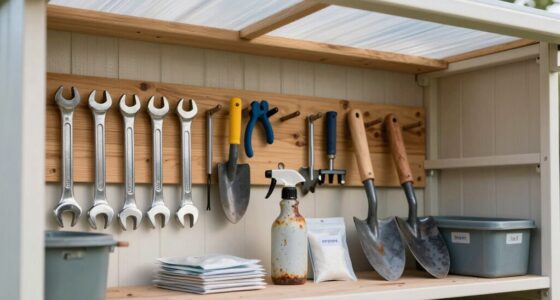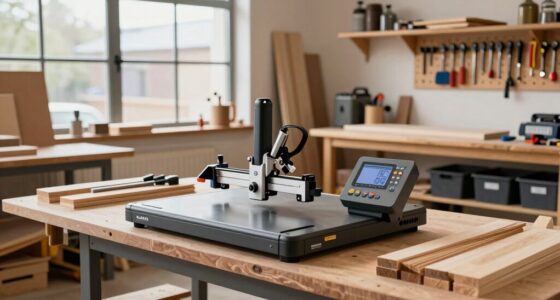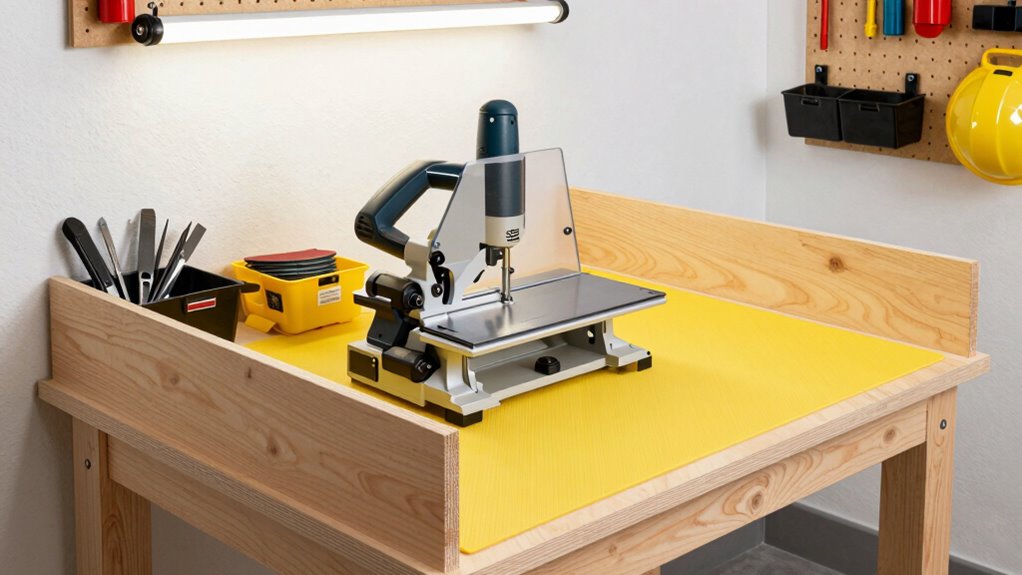
To create a dedicated cut zone in your workshop, clearly define and separate it from other areas, positioning it for easy access while avoiding high-traffic spots. Use sturdy workbenches or specialized tables for stability, store tools in labeled containers, and implement dust collection systems to keep debris in check. Incorporate proper lighting and safety equipment like goggles and guards, and regularly review your setup to improve safety and workflow. Keep exploring for detailed tips to optimize your workspace.
Listen free for 30 days with Audible
Thousands of audiobooks and originals — cancel anytime.
As an affiliate, we earn on qualifying purchases.
Key Takeaways
- Clearly define and separate the cut zone from other workshop areas for safety and organization.
- Position the zone for easy access while avoiding high-traffic areas to streamline workflow.
- Incorporate proper lighting, ventilation, and dust collection to enhance safety and air quality.
- Equip the area with well-maintained tools, safety guards, and necessary PPE for secure operations.
- Regularly review and adjust the layout to improve efficiency and accommodate evolving workshop needs.

Have you ever struggled with cluttered workspaces or safety hazards caused by mixing cutting areas with other workshop zones? If so, creating a dedicated cut zone can dramatically improve both safety and efficiency. To start, it’s essential to think about layout optimization. You want this area to be clearly defined, organized, and separate from your general workshop space. A well-planned layout reduces the risk of accidents and makes your workflow smoother. Position the cut zone in a spot that’s easily accessible but away from high-traffic areas to minimize disruptions and prevent accidents. Consider the natural flow of your workspace and allocate enough room for the tools, materials, and movement needed during cutting tasks.
Once you’ve chosen the perfect location, focus on safety equipment. Installing proper safety measures isn’t optional; it’s vital. Equip the zone with safety goggles, hearing protection, dust masks, and gloves. You should also have easily reachable fire extinguishers and first aid kits nearby. Ensure that your cutting tools, like saws or cutters, are well-maintained and fitted with safety guards. Proper lighting is another essential element—bright, focused illumination helps prevent mistakes and keeps you aware of your surroundings. The goal is to create an environment where safety equipment is integrated seamlessly into your workflow, reducing the likelihood of injuries. Regularly inspecting your workplace safety practices helps maintain a secure environment. Additionally, incorporating safety signage can serve as helpful reminders to maintain safe practices in the zone. Incorporating efficient organization strategies can also help streamline your tasks and reduce clutter, boosting safety and productivity. Paying attention to dust control measures is equally important to prevent debris buildup and improve air quality in the workspace. Implementing proper ventilation can further enhance air quality and worker comfort.
Prioritize safety with goggles, masks, gloves, fire extinguishers, and well-maintained tools for a secure cutting zone.
In addition to safety equipment, consider how to organize the space for maximum efficiency. Use sturdy workbenches or specialized cutting tables to provide stable surfaces. Keep your tools within arm’s reach but neatly stored in designated containers or wall-mounted racks. Label storage areas clearly so you can quickly find what you need without rummaging through clutter. Implement dust collection systems or vacuums to keep debris contained within the cut zone, maintaining a clean work environment and improving air quality. This also helps prevent slips, trips, and falls, which are common hazards in workshop settings.
Finally, remember that layout optimization isn’t a one-time task. Regularly review and adjust your setup as your needs evolve. Keep safety equipment in good condition and ensure your workspace remains organized. Creating a dedicated cut zone isn’t just about safety—it’s about streamlining your entire process. When you separate your cutting operations from other workshop activities, you’ll notice an immediate boost in safety, productivity, and peace of mind.
As an affiliate, we earn on qualifying purchases.
Frequently Asked Questions
What Safety Equipment Is Essential in a Cut Zone?
In your cut zone, you should wear protective gear like safety goggles, ear protection, and sturdy gloves to prevent injuries. Make sure safety protocols are strictly followed, including keeping the workspace clean and free of distractions. Use a dust mask if cutting materials that produce debris or fumes. Regularly inspect your equipment to avoid malfunctions. Staying vigilant and adhering to safety procedures helps protect you from accidents and creates a safer workshop environment.
How Do I Prevent Dust From Spreading Outside the Cut Zone?
Did you know that improper dust control can cause long-term health issues? To prevent dust from spreading outside your cut zone, focus on dust containment strategies. Use sealed enclosures and keep a vacuum system running close to the source. Additionally, install proper ventilation systems that direct dust away and filter the air. Regularly check and maintain these systems to make certain they’re effective, keeping your workspace safe and clean.
What Are the Best Lighting Options for a Dedicated Cut Area?
For your dedicated cut zone, opt for LED lighting with a high color temperature, around 5000K to 6500K, to mimic daylight and improve visibility. LED options are energy-efficient, long-lasting, and provide bright, consistent light. Make certain your lighting is adjustable to reduce shadows and glare, helping you work more precisely. Proper illumination not only boosts safety but also enhances your ability to see fine details during cuts.
How Often Should I Maintain My Cutting Tools?
Did you know that dull tools can cause accidents and increase project time by up to 50%? You should maintain your cutting tools regularly—sharpening them at least every few uses or when they start to dull. Proper storage organization helps protect blades from damage, reducing the need for frequent tool sharpening. By staying on top of maintenance, you guarantee safer, more precise cuts every time.
Can I Convert an Existing Space Into a Dedicated Cut Zone?
Yes, you can convert an existing space into a dedicated cut zone. Start by organizing your workspace, focusing on efficient tool storage to keep everything accessible and safe. Clear clutter and establish designated areas for cutting, measuring, and safety gear. Use storage solutions like shelves or cabinets to keep tools organized. This approach improves workspace organization, enhances safety, and makes your cutting tasks more efficient and enjoyable.
dust collection system for workshop
As an affiliate, we earn on qualifying purchases.
As an affiliate, we earn on qualifying purchases.
Conclusion
Creating a dedicated cut zone keeps your workshop organized, improves safety, and boosts efficiency. By designating a specific area for cutting, you minimize clutter, reduce hazards, and streamline your workflow. It’s about establishing boundaries, setting standards, and maintaining focus. When you dedicate a space for cutting, you’re not just improving your workspace—you’re enhancing your craftsmanship, your safety, and your productivity. Make it intentional, make it organized, and make it your own.
heavy-duty workbench for cutting
As an affiliate, we earn on qualifying purchases.
As an affiliate, we earn on qualifying purchases.
workshop tool storage containers
As an affiliate, we earn on qualifying purchases.
As an affiliate, we earn on qualifying purchases.
NFL season / tailgating Picks
team gear
As an affiliate, we earn on qualifying purchases.