
To create a safer grinding station, wear appropriate PPE like safety goggles, gloves, and respirators to protect yourself from hazards. Set up your workspace at a comfortable height with good lighting, and secure tools and workpieces properly. Make certain of proper ventilation to clear dust and fumes, and keep cords and clutter away to prevent trips. Develop safe habits like taking regular breaks, staying alert, and inspecting equipment. Continuing with these tips will help you master a truly safe grinding environment.
Key Takeaways
- Equip workers with appropriate PPE, including safety goggles, gloves, and masks, and replace damaged gear promptly.
- Arrange tools and workpieces to minimize unnecessary movement and secure workpieces with clamps or vises.
- Ensure proper ventilation to control dust, fumes, and sparks, maintaining good air quality.
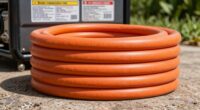
- Keep cords, hoses, and debris organized to prevent tripping hazards and maintain a clutter-free workspace.
- Regularly inspect and maintain equipment, and have safety measures like fire extinguishers readily accessible.

Setting up a safer grinding station is essential for protecting yourself from potential hazards and ensuring efficient work. The first step is to focus on your personal protective equipment (PPE). Wearing the right gear can considerably reduce the risk of injury from sparks, debris, and flying particles. Safety goggles or a full-face shield keep your eyes and face protected, while hearing protection minimizes damage from loud noise. Dust masks or respirators are crucial when grinding materials that produce harmful dust or fumes. Gloves are also vital; they shield your hands from sparks, hot surfaces, and sharp edges, but make sure they fit well and don’t interfere with your grip or control. Remember, PPE isn’t just about wearing gear—it’s about choosing the right equipment suited for your specific tasks and replacing it when damaged or worn out.
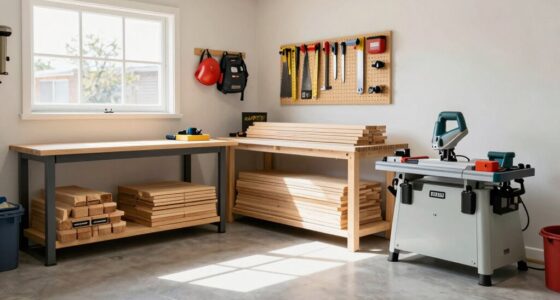
Beyond personal safety, workstation ergonomics plays an important role in creating a safer grinding environment. An ergonomically designed workspace helps prevent strain and fatigue, which can lead to accidents or repetitive stress injuries. Ensure your work surface is at a comfortable height so you don’t have to bend or stretch excessively. A stable, non-slip bench prevents shifting during grinding, providing better control and reducing the chance of slips or falls. Position your grinder so that sparks and debris are directed away from your body, ideally into a collection system or away from your clothing and workspace. Keep your tools within easy reach to avoid unnecessary stretching or awkward movements, which can cause loss of control or fatigue. Proper lighting is also essential; a well-lit area allows you to see your work clearly, reducing errors and accidents. Incorporating proper ventilation helps remove dust, fumes, and sparks, which enhances both safety and air quality in your workspace. Good airflow management is crucial in dispersing hazardous particles and maintaining a healthier environment. Additionally, using appropriate ventilation systems can significantly improve air quality and safety during grinding operations. Ensuring that your workspace is well-organized and free of clutter also contributes to overall safety, making it easier to work efficiently and reduce accidents.
Organizing your workspace minimizes hazards. Keep cords and hoses neatly arranged to prevent tripping. Use clamps or vises to secure your workpiece firmly, so you don’t have to hold it by hand, which can be dangerous and tiring. Regularly inspect your equipment for damage or wear, replacing worn-out parts immediately to prevent malfunctions or accidents. Additionally, ensure proper ventilation in your workshop to clear away dust, fumes, and sparks, which improves air quality and visibility. Keep a fire extinguisher nearby as a safety precaution against sparks igniting flammable materials. Developing good habits, such as taking regular breaks and staying attentive, also contributes to a safer grinding station by reducing fatigue and maintaining focus on your task.
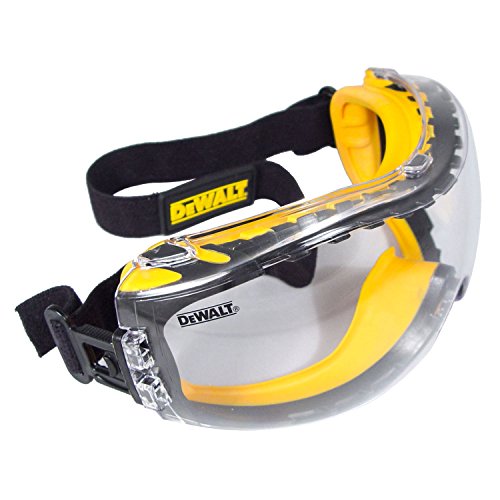
DEWALT DPG82-11 Concealer Clear Anti-Fog Dual Mold Safety Goggle, Clear Lens, 1 Pair
- Lens Coating: Hard coated for scratch resistance
- Anti-Fog Coating: Prevents lens fogging
- Comfort Fit: Dual injected rubber conforms to face
As an affiliate, we earn on qualifying purchases.
As an affiliate, we earn on qualifying purchases.
Frequently Asked Questions
What Personal Protective Equipment Is Most Essential?
You need to wear essential personal protective equipment like protective gloves and eye protection. Gloves shield your hands from heat, sparks, and sharp debris, while eye protection prevents injuries from flying particles and sparks. Always guarantee your safety gear fits properly and is in good condition. Using these items consistently reduces the risk of accidents and injuries, keeping you safer while grinding. Prioritize your safety with the right protective equipment at all times.
How Often Should Safety Inspections Be Conducted?
Back in the day, safety was often an afterthought, but now you know better. You should conduct safety inspections at least once a month to guarantee equipment maintenance is up to date and hazards are minimized. Regular inspections help identify potential issues before emergencies happen, so you’re prepared. Consistent checks also reinforce emergency preparedness, keeping your grinding station safe and compliant with safety standards.
What Are Common Hazards in Grinding Stations?
You should be aware that common hazards in grinding stations include flying debris, sparks, and dust, which can cause injuries or respiratory issues. Proper equipment maintenance is essential to minimize malfunctions, and you must have emergency procedures in place for accidents. Always wear protective gear, keep the work area clean, and regularly inspect tools and equipment to prevent hazards. Staying vigilant helps guarantee safety for yourself and others.
How to Properly Handle Grinding Dust?
You should always handle grinding dust by using dust containment methods like local exhaust ventilation systems to capture particles at the source. Make certain your ventilation systems are properly maintained and functioning effectively. Wear appropriate personal protective equipment, such as masks or respirators, to prevent inhalation. Regularly clean the workspace to minimize dust buildup, and stay aware of any safety guidelines to ensure a safe grinding environment.
Are There Specific Training Requirements for Operators?
You need to be fully equipped to navigate this hazardous landscape, so operator certification is vital—think of it as your shield against danger. You must also pay close attention to safety signage, which acts as your guiding light. Proper training ensures you understand risks and safety protocols, transforming you from a novice into a vigilant guardian of the grinding station. Never underestimate the power of knowledge in keeping you safe.

BASE CAMP M Plus Dust Mask, Breathable Reusable Face Mask with 6 Activated Carbon Filters for Woodworking Construction Mowing Grinding (Modern1)
- High Filtration Efficiency: Blocks 99.6% of airborne particles
- Enhanced Breathability: 11.3% more breathable mesh material
- Comfortable Fit: Adjustable elastic neck band for easy fit
As an affiliate, we earn on qualifying purchases.
As an affiliate, we earn on qualifying purchases.
Conclusion
By prioritizing safety, maintaining cleanliness, and using proper equipment, you create a grinding station that protects you, preserves your tools, and promotes efficiency. By staying alert, following protocols, and regularly inspecting your workspace, you reduce risks, prevent accidents, and guarantee longevity. Remember, a safe grinding station isn’t just about compliance; it’s about commitment. Keep safety at the forefront, keep tools in check, and keep yourself protected—because safety isn’t just a step, it’s a standard.

WORKPRO Dual Jaws Table Vise 2.5" & 1.5", 360° Swivel Clamp-On Bench Vise
- Dual Jaws for Versatile Use: Includes 2.5" serrated and 1.5" smooth jaws
- 360° Swivel Base: Fully rotatable for flexible positioning
- Easy Mounting: Clamp-on or bolt-down installation options
As an affiliate, we earn on qualifying purchases.
As an affiliate, we earn on qualifying purchases.

12 in Utility Blower Exhaust Fan with 32.8 ft Duct, 3500 r/min & 3500 CFM Heavy Duty Blower Fan, High Velocity Low Noise Extraction and Ventilation Fan for Ventilating Workshops, Confined Space
- High Airflow Capacity: 3500 CFM airflow for quick ventilation
- Powerful 580W Motor: Ensures efficient odor removal and fresh air
- Versatile PVC Duct: Flexible design for various intake/exhaust needs
As an affiliate, we earn on qualifying purchases.
As an affiliate, we earn on qualifying purchases.


![There Will Come Soft Rains (1950) [Pdf]](https://tooltrekpro.com/wp-content/uploads/2026/08/there-will-come-soft-rains-1950-pdf-featured-260x140.jpg)