Dust collection matters more than you think because it protects your health by reducing inhalation of dangerous particles that can cause respiratory issues. It also prevents dust buildup on tools, which extends their lifespan and keeps your workspace safer. Proper systems and regular maintenance make a big difference, preventing fire hazards and equipment malfunctions. If you want to discover how good dust management can improve your environment, keep going to learn more.

Get business pricing on tools and workshop supplies
- Business-only prices and quantity discounts
- Tax-exempt purchasing
- Multiple users, one account, clear invoices
Key Takeaways
- Proper dust collection reduces health risks by minimizing inhalation of harmful particles and respiratory issues.
- It prevents equipment damage and prolongs tool lifespan by avoiding dust buildup.
- Effective systems capture dust at the source, ensuring workspace cleanliness and safety.
- Regular maintenance and safety protocols are essential to prevent hazards and system inefficiencies.
- Investing in dust collection improves air quality, safety, and operational efficiency overall.
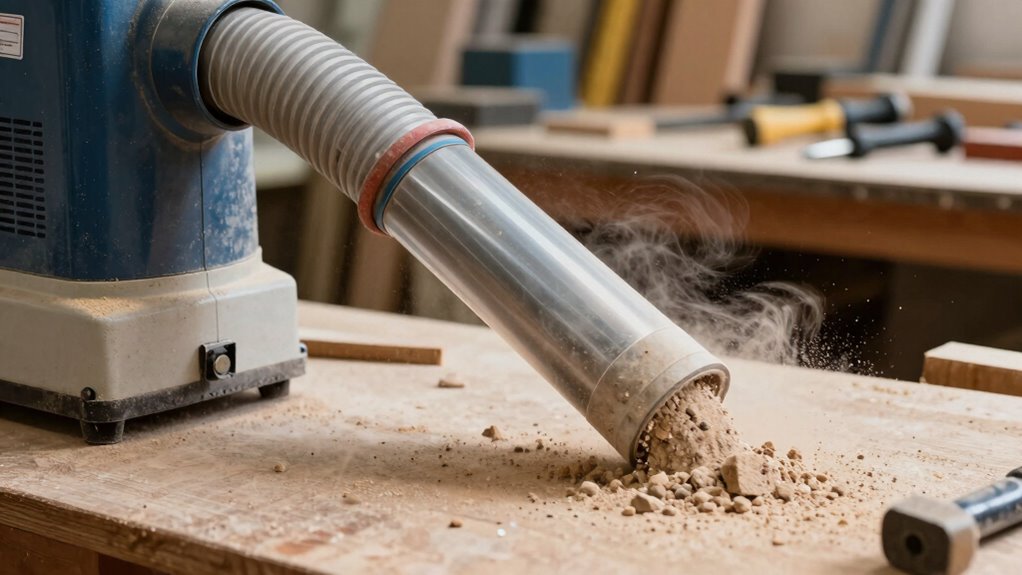
Have you ever considered how much dust your workshop generates and the impact it can have on your health and equipment? Dust isn’t just a minor nuisance; it can profoundly affect your air quality, making your workspace unsafe if not properly managed. When dust particles become airborne, they can be inhaled, leading to respiratory issues or aggravating existing health conditions. Additionally, dust settling on tools and machinery can cause damage over time, reducing their lifespan and performance. That’s why a good dust collection system isn’t just a convenience—it’s an essential part of maintaining a safe and efficient workspace. Proper air quality management is crucial for a healthy environment.
Dust management is crucial for health, safety, and prolonging your tools’ lifespan.
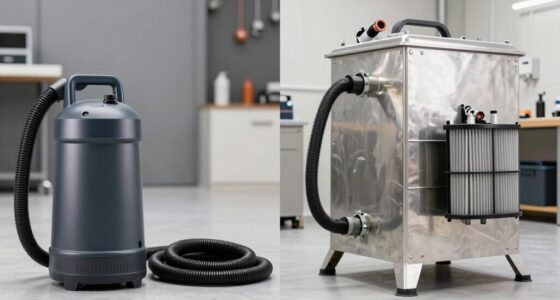
Effective dust collection helps improve air quality by pulling dust out of the air before it has a chance to settle or become airborne. If you neglect this, you’re exposing yourself to fine particles that can easily be inhaled deep into your lungs, increasing your risk of health problems like asthma or chronic bronchitis. Properly managing dust also minimizes the buildup on surfaces and machinery, preventing potential fire hazards caused by dust accumulation. This is especially critical if your workshop involves woodworking, sanding, or other activities that produce a lot of fine debris. Incorporating dust collection systems designed for your specific needs ensures optimal safety and efficiency.
Implementing a reliable dust collection system is a key safety protocol you should follow. It’s not enough to just sweep or vacuum occasionally; you need a dedicated system designed to capture dust at the source. This means attaching hoses and vents directly to your tools and ensuring the system has enough capacity and suction power to handle your workload. Regular maintenance of your dust collection equipment is also essential. Emptying filters and bins prevents clogging and ensures the system continues to operate at peak efficiency, further safeguarding your air quality.
Good safety protocols extend beyond just installing a dust collector. You should wear proper protective gear, such as masks and goggles, especially during dusty tasks. Adequate ventilation is equally important, as it helps dilute any residual airborne dust and keeps the air fresh. Training yourself and others in proper dust management procedures fosters a safety-conscious environment that prioritizes health and longevity of your tools.
In the end, dust collection matters more than you might realize. It’s about protecting your health, prolonging your equipment’s lifespan, and creating a safer, cleaner workspace. Investing in a high-quality dust collection system and adhering to safety protocols isn’t just good practice—it’s indispensable for a sustainable and healthy workshop environment.
dust collection system for woodworking
As an affiliate, we earn on qualifying purchases.
As an affiliate, we earn on qualifying purchases.
Frequently Asked Questions
How Often Should Dust Collection Systems Be Maintained?
You should maintain your dust collection system regularly, ideally following the manufacturer’s recommended maintenance schedules. Typically, inspecting and cleaning filters and components every few months keeps your system running efficiently. Consistent maintenance not only prevents clogs and buildup but also extends system longevity. By staying proactive with maintenance, you guarantee peak performance, protect your workspace, and reduce safety hazards, making your dust collection system reliable over time.
Can DIY Dust Collection Systems Be Effective?
Yes, DIY dust collection systems can be effective if you focus on proper air filtration and system efficiency. Imagine a well-designed setup that captures fine dust particles before they spread, keeping your workspace cleaner and healthier. While it might not match commercial systems, a carefully built DIY system can substantially reduce airborne dust, improve air quality, and protect your lungs. Just ensure your design prioritizes airflow and filtration quality.
What Is the Cost Difference Between Portable and Fixed Systems?
Portable dust collection systems typically cost less upfront, often around a few hundred dollars, but may require more frequent filter maintenance due to smaller filters. Fixed systems are more expensive, ranging from several hundred to thousands of dollars, but offer better system compatibility and larger filters, reducing maintenance. While fixed systems have higher initial costs, they often provide more consistent performance and longer-lasting filters, saving you money over time.
How Does Dust Collection Impact Indoor Air Quality?
Dust collection markedly improves your indoor air quality by reducing airborne particles through effective air filtration. When you use a proper system, it minimizes dust accumulation on surfaces and in the air, preventing respiratory issues and allergies. Regularly maintaining your dust collection setup ensures cleaner air, creating a healthier workspace. You’ll notice less dust settling on furniture and equipment, making your environment safer and more comfortable for everyone.
Are There Specific Dust Types That Require Special Collection Systems?
Yes, certain dust particle types, like fine wood dust or hazardous metal particles, require specialized collection systems. These particles are often tiny and can bypass standard filters, reducing filtration efficiency. To protect your health and equipment, you should choose dust collection systems designed for specific dust types, ensuring high filtration efficiency. This targeted approach helps minimize airborne contaminants and maintains a safer, cleaner workspace.
air filtration system for workshop
As an affiliate, we earn on qualifying purchases.
As an affiliate, we earn on qualifying purchases.
Conclusion
Think of dust collection like a sturdy sailboat steering rough seas. Without a reliable system, dust and debris threaten to capsize your workspace’s safety and cleanliness. But with the right collection method, you’re guiding smoothly, keeping hazards at bay and ensuring your workshop stays a safe harbor. Remember, a well-maintained dust system isn’t just equipment—it’s your vessel’s anchor, keeping you steady and secure as you craft your masterpiece. Prioritize dust collection, and your workspace will always stay afloat.
dust mask for woodworking safety
As an affiliate, we earn on qualifying purchases.
As an affiliate, we earn on qualifying purchases.
As an affiliate, we earn on qualifying purchases.
Halloween Picks
halloween
As an affiliate, we earn on qualifying purchases.