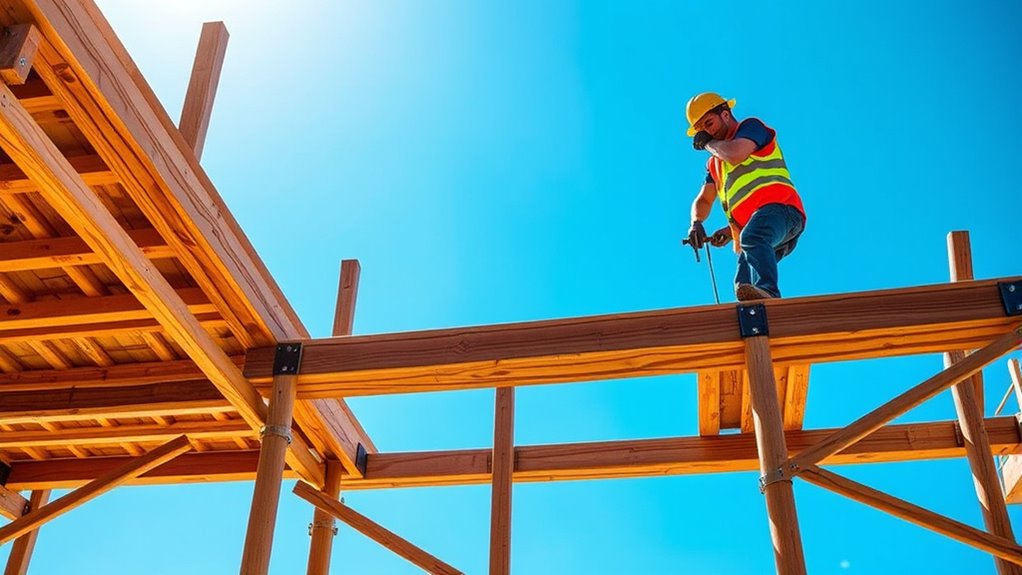

To find safe DIY alternatives to ladders for high work, consider building sturdy scaffolding using high-quality materials like steel, aluminum, or pressure-treated lumber. Ensure your framework is designed for stability, evenly distributing weight and including guardrails for safety. Regularly inspect all components for damage and secure joints tightly. Proper assembly and adherence to safety standards are vital. Keep in mind that understanding proper materials, design, and maintenance can greatly improve your safety—continue to explore for more expert tips.

Get business pricing on tools and workshop supplies
- Business-only prices and quantity discounts
- Tax-exempt purchasing
- Multiple users, one account, clear invoices
Key Takeaways
- Use stable, properly assembled scaffolding systems designed for high work safety and load capacity.
- Incorporate guardrails and toe boards to prevent falls and ensure secure footing.
- Regularly inspect all components for damage, wear, or instability before use.
- Ensure proper anchoring and leveling to maintain stability during elevated tasks.
- Follow local safety standards and manufacturer guidelines for safe scaffolding assembly and use.
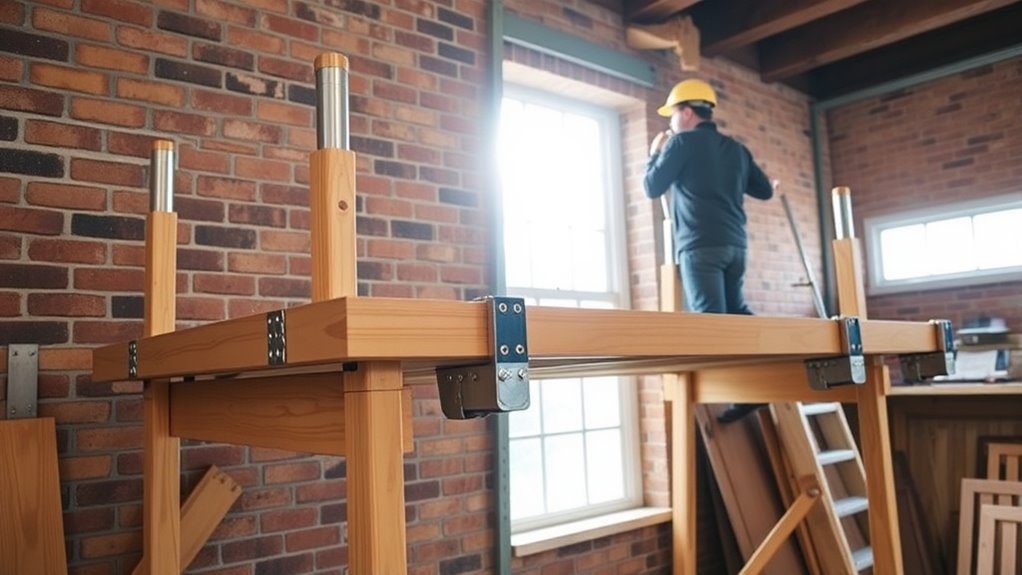
Ever wondered if you can build your own scaffolding safely and effectively? The answer is yes, but it requires careful planning and attention to detail, starting with understanding safety precautions and material selection. Your first priority should always be safety—both yours and anyone else’s who might use or be near the scaffolding. Before diving into construction, familiarize yourself with safety standards and building codes relevant to your area. These guidelines will help you understand the necessary load capacities, proper anchoring, and structural requirements. Ignoring safety precautions can lead to accidents, injuries, or even fatalities, so never cut corners or underestimate the importance of proper safety measures. Additionally, considering water resistance in your materials can help prolong the lifespan of your scaffolding when exposed to moisture or weather conditions. When it comes to material selection, choose high-quality, durable components designed for structural support. Steel and aluminum are common choices because they are strong, weather-resistant, and capable of supporting substantial weight. If you opt for wood, select pressure-treated lumber that’s free from cracks or warping, ensuring stability and longevity. It’s essential to match your materials to the scope of your project, considering factors like height, weight load, and environmental conditions. Using substandard or inappropriate materials can compromise the entire structure, risking collapse or failure. Start by designing a solid framework that evenly distributes weight and provides a stable base. Make sure your platform is wide enough to stand comfortably and has guardrails to prevent falls. Secure all joints tightly using appropriate fasteners, such as heavy-duty bolts or screws, to avoid wobbling or loosening over time. When assembling your scaffolding, double-check that each component is correctly aligned and secured before climbing or placing any load on it. Always inspect your scaffolding thoroughly, looking for any signs of weakness or damage before each use.
As an affiliate, we earn on qualifying purchases.
Frequently Asked Questions
What Are the Legal Requirements for DIY Scaffolding?
You need to follow scaffold regulations and safety standards to guarantee your DIY scaffolding is legal. Make sure it’s properly assembled, stable, and can support the weight it’ll carry. Check local building codes and safety guidelines, and consider inspecting your setup regularly. If unsure, consult a professional or local authorities to avoid legal issues and accidents. Staying compliant not only keeps you safe but also prevents potential fines.
How Much Does DIY Scaffolding Typically Cost?
You get what you pay for, so expect DIY scaffolding to cost between $100 and $500 depending on materials. Scaffold materials like planks, poles, and fasteners influence the overall cost estimation. If you opt for quality, durable materials, you’ll spend more upfront but save on repairs or replacements later. Budget wisely, and remember that safety gear and tools add to your total project expenses.
Can DIY Scaffolding Support Heavy or Bulky Materials?
Yes, your DIY scaffolding can support heavy or bulky materials if you carefully consider the weight capacity and material strength. Make sure to select strong, durable components like steel or heavy-duty wood, and guarantee joints are securely fastened. Always check the maximum weight capacity specified by the manufacturer or design your scaffolding to withstand the load. Properly constructed, it provides a safe platform for handling heavier or bulky items.
What Are Common Mistakes to Avoid When Building Scaffolding?
When building scaffolding, you should avoid common mistakes like neglecting scaffolding stability and skipping proper safety gear. Always guarantee the structure is securely anchored and level to prevent falls or collapses. Use proper safety gear such as helmets, harnesses, and gloves to protect yourself. Rushing the setup or overloading the scaffolding can cause accidents, so take your time, double-check connections, and follow safety guidelines to keep yourself safe.
How Long Does DIY Scaffolding Typically Last Before Needing Replacement?
You might be surprised, but your DIY scaffolding can last up to five to ten years with proper maintenance. Regular scaffolding maintenance, like checking for rust, loose fittings, and material wear, extends its lifespan. Using durable materials and inspecting them often helps prevent sudden failures. Keep an eye on weather effects and usage wear, and replace components as needed—this way, your safety remains a priority, and your scaffolding stays reliable longer.
heavy-duty scaffolding materials
As an affiliate, we earn on qualifying purchases.
As an affiliate, we earn on qualifying purchases.
Conclusion
Remember, safety first is the best policy. DIY scaffolding offers a reliable, cost-effective alternative to ladders when you need to work at heights. By following proper guidelines and using sturdy materials, you can reduce risks and complete your project confidently. Don’t put safety on the back burner—after all, a stitch in time saves nine. With careful planning and caution, you can tackle high work safely and successfully.
adjustable scaffolding with guardrails
As an affiliate, we earn on qualifying purchases.
As an affiliate, we earn on qualifying purchases.
As an affiliate, we earn on qualifying purchases.
Fall Picks
fall essentials
As an affiliate, we earn on qualifying purchases.