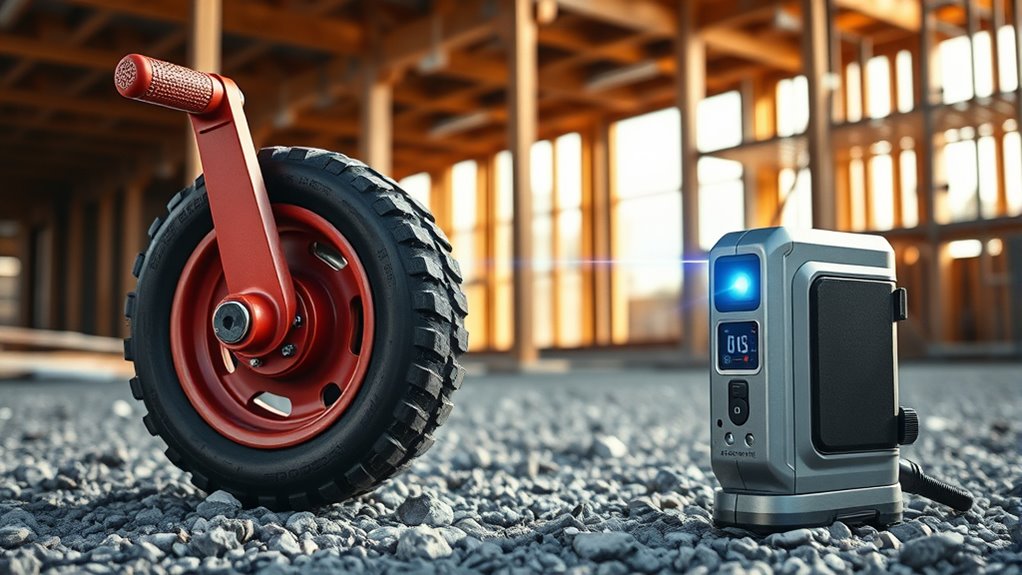

Choose a measuring wheel when you’re working outdoors on uneven or rough terrain and need quick, manual measurements without power tools. Opt for a laser measure when you’re indoors, over long distances, or require high precision, especially in modern construction or surveying projects. Each tool has its strengths depending on your environment and accuracy needs. If you want to discover which option suits your project best, keep exploring to get all the details.
Key Takeaways
- Use measuring wheels for outdoor, uneven terrains requiring quick, manual distance measurement.
- Choose laser measures for indoor, precise, long-distance measurements with minimal physical effort.
- Opt for measuring wheels when working in rugged environments or on surfaces difficult for laser devices.
- Select laser measures for projects needing high accuracy, such as surveying, construction, or interior design.
- Consider environmental conditions, project scale, and precision needs to determine the appropriate measuring tool.
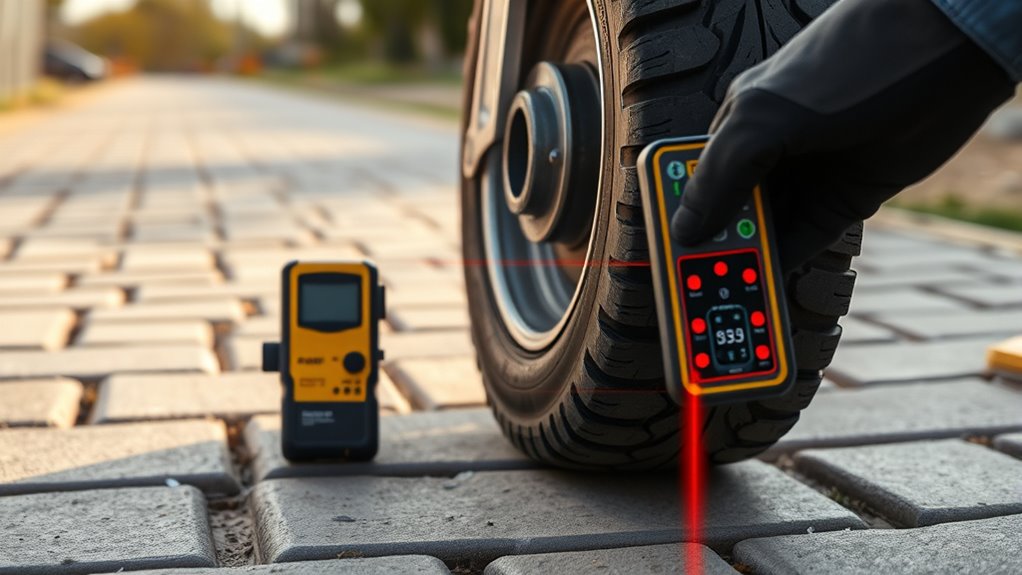
Have you ever wondered which measuring tool is best suited for your project—traditional measuring wheels or modern laser measures? Understanding the strengths and ideal uses of each can markedly impact your efficiency and accuracy. To start, it’s helpful to ponder the historical development of these tools, as it reveals how they evolved to meet different needs. Measuring wheels have been around for centuries, with early versions dating back to the 19th century. They are simple devices, consisting of a wheel attached to a handle, designed to be rolled along a surface. Over time, their design has improved through various calibration techniques to enhance precision and durability. These calibration techniques ensure that measurements taken with a measuring wheel are consistent and accurate over time, even when used on different terrains or under varying conditions.
In contrast, laser measures are a much more recent innovation, emerging in the late 20th century. Their development was driven by advances in laser technology and digital electronics, allowing for quick and highly precise measurements over long distances. The historical development of laser measures reflects a shift toward digital, high-tech tools that require less manual effort and are less susceptible to human error. They incorporate calibration techniques that maintain their accuracy, such as self-calibration features and regular factory calibrations, making them reliable for professional applications. These devices are especially useful for measuring large spaces, where traditional wheels might be cumbersome or impractical.
When choosing between these tools, think about your project’s scope and environment. Measuring wheels excel in outdoor or uneven terrains, where rolling along a surface provides a straightforward way to measure distances. They are also more affordable and don’t require power, making them a practical choice for quick, on-the-spot measurements. Laser measures, on the other hand, shine in indoor settings, long-distance measurements, or when high precision is necessary. Their ability to measure from a distance without physically moving through the space saves time and effort, especially in construction, surveying, or interior design. The calibration techniques embedded in laser devices ensure ongoing accuracy, even after extended use.
Ultimately, your choice depends on the context. If you’re working outdoors on rough terrain, a measuring wheel might be your best bet. For precise, long-distance measurements indoors or in complex environments, a laser measure offers unmatched convenience and accuracy. Both tools have evolved through technological advances and calibration techniques, underscoring their respective strengths. Knowing their historical development helps you understand their capabilities and limitations, empowering you to select the right tool for your specific needs. Additionally, ease of use and environmental considerations should guide your choice, as some tools are better suited for specific conditions and user preferences.

Zozen Measuring Wheel in Feet and Inches, Double Collapsible, 12.5" Orange
- Portable and Foldable Design: Folds to 16 inches for easy transport
- High Accuracy: Measures with ±0.5% precision
- Clear Red Visibility: Bright red wheel for easy viewing
As an affiliate, we earn on qualifying purchases.
As an affiliate, we earn on qualifying purchases.
Frequently Asked Questions
How Accurate Are Laser Measures Compared to Traditional Measuring Wheels?
Laser measures are generally more accurate than traditional measuring wheels, especially over longer distances or in precise projects. They offer an accuracy comparison that favors laser tools, often within millimeters. Plus, they provide user convenience with quick, easy measurements, reducing effort and error. You’ll find laser measures ideal for detailed tasks, while wheels suit rougher, outdoor, or uneven terrain. Choose based on your need for precision versus convenience.
What Is the Maximum Range for Most Laser Measuring Devices?
Most laser measuring devices have a maximum range of about 200 to 300 meters, but this depends on the device’s specifications and proper calibration. Keep in mind the distance limitations, as exceeding them can lead to inaccurate readings. To guarantee precision, regularly calibrate your device and consider environmental factors like light and obstacles that can affect the laser’s effectiveness over longer distances.
Are Laser Measures Suitable for Outdoor Use in Bright Sunlight?
Think of laser measures as a trusty compass on a bright, sunlit day—solar glare and reflective surfaces can distort their readings, making them less reliable outdoors. While some models boast outdoor suitability, many struggle in sunlight. If you’re working outside, especially in direct sunlight or near reflective surfaces, consider using a laser measure with an outdoor mode or opt for a measuring wheel to guarantee accuracy.
How Durable Are Measuring Wheels in Rough Terrains?
Measuring wheels can handle rough terrains surprisingly well, but durability challenges do exist. You might find that their terrain adaptability varies depending on build quality; rubber tires and sturdy frames improve resilience. For consistently rugged conditions, opt for models designed specifically for rough terrains, as they offer better protection against impacts and debris. Keep in mind, regular maintenance also boosts durability, helping your measuring wheel perform reliably over time.
Can Laser Measures Measure Diagonals or Only Straight Lines?
Laser measures can definitely handle diagonal measurement, not just straight lines. Thanks to laser accuracy, you can easily measure diagonals across rooms or objects, ensuring precise results. Simply aim the laser at one corner and extend it to the opposite corner, and the device calculates the diagonal length quickly. This makes laser measures ideal for projects requiring accurate diagonal measurements, saving you time and reducing errors compared to manual methods.

MILESEEY Laser Measure, 229ft Laser Measuring Tool with Angle Sensor
- High-Precision Laser Measurement: Measures up to 229ft with ±2mm accuracy
- Accurate Angle Measurement: Electronic level with ±0.3° precision
- Fast Auto Measurements: Measures in 0.5 seconds with auto calculations
As an affiliate, we earn on qualifying purchases.
As an affiliate, we earn on qualifying purchases.
Conclusion
So, next time you’re faced with a simple measuring task, don’t rush to grab a high-tech laser measure—saving your energy for the real challenge. After all, sometimes a trusty measuring wheel is all you need, proving that even in a high-tech world, the simplest tools still get the job done. Who knew that in some cases, old-school is the way to go? Irony’s sweet victory—sometimes, less really is more.
MILESEEY Laser Measure, 229ft Laser Measuring Tool with Angle Sensor
- High-Precision Laser Measurement: Measures up to 229ft with ±2mm accuracy
- Accurate Angle Measurement: Electronic level with ±0.3° precision
- Fast Auto Measurements: Measures in 0.5 seconds with auto calculations
As an affiliate, we earn on qualifying purchases.
As an affiliate, we earn on qualifying purchases.
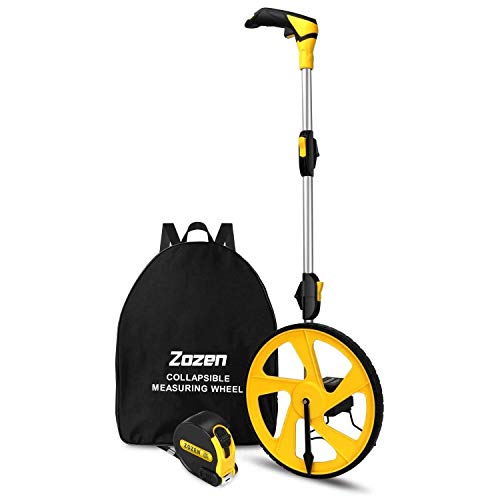
Zozen Measuring Wheel in Feet and Inches, Double Collapsible, Mechanical
- Maximum Capacity: 9999.11 units in feet and inches
- Measurement Units: Feet and inches with tape measure accuracy
- Design Features: Large handle, redesigned joints, threaded TPR tires
As an affiliate, we earn on qualifying purchases.
As an affiliate, we earn on qualifying purchases.