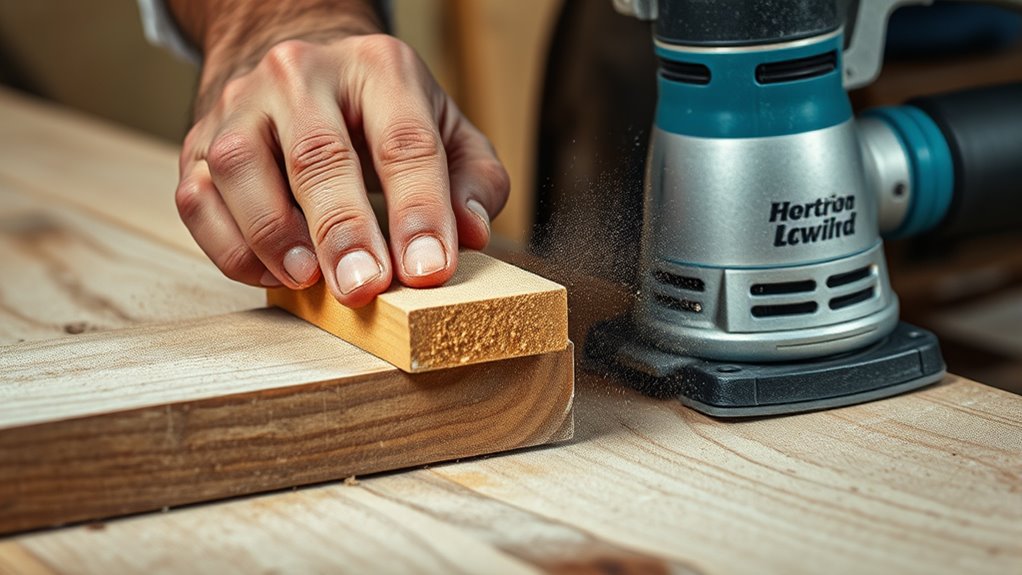

If you need precise control or work on small, detailed projects, hand sanding is your best option, as it requires no electricity and allows for careful handling. It’s ideal when you want to avoid gouging or uneven surfaces, and for delicate touch-ups. However, for larger areas or rough surfaces, a power sander speeds things up and reduces fatigue. To discover which method best suits your project and how to use each effectively, keep exploring these tools’ strengths.
Key Takeaways
- Hand sanding offers superior control for detailed, small-scale work where precision is prioritized over speed.
- Power sanders excel on large, rough surfaces, significantly reducing time and physical effort needed.
- For intricate touch-ups or delicate finishes, hand tools can prevent over-sanding and surface damage.
- Extensive projects or large areas are more efficiently handled with power sanders to save time and reduce fatigue.
- The choice depends on project size, desired finish, and control, with elbow grease sometimes surpassing electricity in precision.
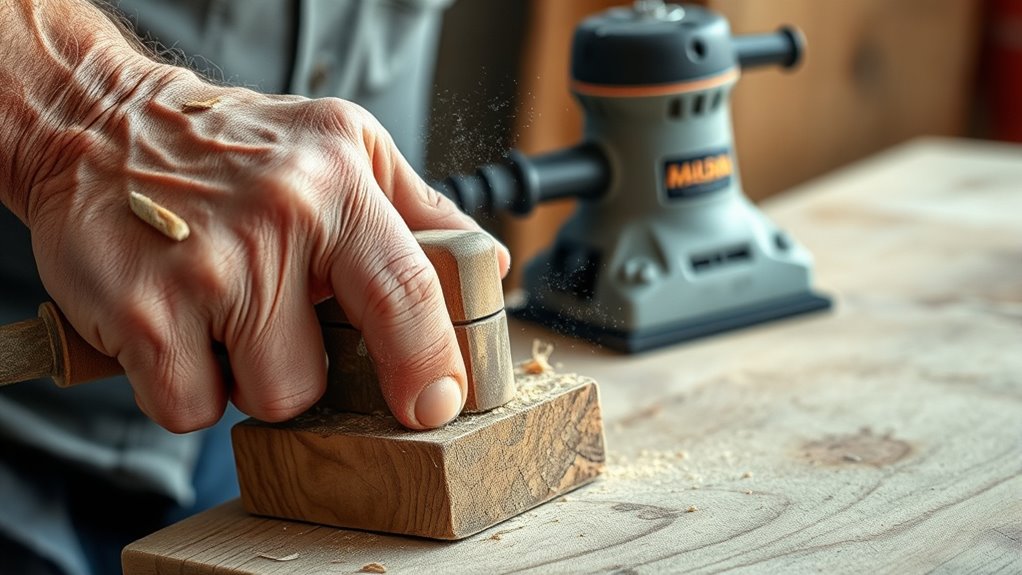
When it comes to sanding surfaces, choosing between sanding by hand and using a power sander can profoundly impact your project’s efficiency and finish. If you prefer a more tactile approach, you’ll want to consider the advantages of hand tools. Hand sanders, like blocks or files, are simple, lightweight, and incredibly durable, making them reliable for many projects. Their durability means you can often reuse them for years without significant wear, especially if you take care of them properly. Plus, because they don’t rely on electricity, there’s no concern about motor breakdowns or replacing parts. This makes them ideal for small touch-ups or detailed work where precision matters. However, you should also be aware of their limitations. Hand tools require more effort and time, which can become tiresome if you’re working on larger surfaces.
On the other hand, power sanders can notably speed up the process, especially on extensive projects. While they cut down on effort, they come with their own set of considerations. One notable aspect is the power sander noise. Some models can be quite loud, which might be bothersome, especially if you’re working indoors or in a noise-sensitive environment. Choosing a quieter model can help mitigate this, but even then, the noise level is generally higher than with hand tools. Despite this, power sanders excel at producing a smooth, even finish quickly. They can handle rougher surfaces and larger areas more efficiently, saving you time and physical strain. Additionally, understanding the contrast ratio of your sander can help you select a device that produces better visual results on your projects.
When deciding between the two, think about the scope of your project. For small, detailed, or delicate work, hand tools offer excellent control and durability, ensuring you don’t damage the surface. They’re also more affordable and require less maintenance. But if you’re tackling a large deck or multiple surfaces, a power sander’s speed and efficiency will likely outweigh the noise and initial investment. Keep in mind, though, that power sanders can sometimes cause gouges or uneven surfaces if not used carefully, so experience and technique matter. Ultimately, your choice depends on the project’s size, your endurance, and how much noise you’re willing to tolerate. Both options have their strengths, but understanding these factors helps you pick the right tool for the job.
Frequently Asked Questions
Which Sanding Method Provides the Best Finish for Fine Woodworking?
For the best finish in fine woodworking, hand sanding often offers superior grain refinement and surface smoothness. You can control pressure and follow the wood grain more precisely, reducing scratches and imperfections. Power sanders are faster but may leave uneven surfaces or micro-scratches if not used carefully. So, if you prioritize a flawless, refined surface, hand sanding delivers the precision needed for a top-quality finish.
How Do Hand Sanders Compare in Safety to Power Sanders?
If you’re worried about safety, hand sanders are your best friend—no flying sparks or unexpected motor jams here. Manual safety is straightforward; you control every move, reducing risks. Power safety, on the other hand, involves guarding against electric shocks, dust explosions, and accidental starts. While power sanders save time, you’ll find peace of mind with a hand sander, avoiding electrical mishaps and keeping your fingers intact.
Can Hand Sanding Be More Environmentally Friendly Than Using Power Tools?
Yes, hand sanding can be more environmentally friendly than using power tools. By adopting sustainable practices, you reduce energy consumption and minimize noise pollution. Using eco-friendly tools, like wooden blocks and natural abrasives, decreases your carbon footprint and avoids battery waste. Plus, hand sanding produces less dust and chemical emissions, making it a healthier choice for you and the planet. It’s a simple way to stay eco-conscious while completing your project.
What Are the Cost Differences Between Hand Sanding and Power Sanding?
Ever wondered which costs more: hand sanding or power sanding? Hand tools are cheaper initially, with low tool costs, and require minimal maintenance expenses. Power sanders have a higher upfront price, but they save you time and effort. Over time, maintenance expenses for power tools add up, making hand sanding more economical for small projects. Are you willing to invest in convenience or save money with manual labor?
Which Method Is More Suitable for Large-Scale Sanding Projects?
For large-scale sanding projects, a power sander is more suitable because it offers faster, more efficient results. You benefit from manual control to guarantee precision, and tool versatility allows you to switch between different sanding attachments easily. While hand sanding provides control, it’s too labor-intensive for extensive work. A power sander speeds up the process without sacrificing the level of detail you need, making it the better choice for big projects.
Conclusion
When choosing between sanding by hand or using a power sander, consider the task’s precision and scale. Hand sanding offers control for delicate details, while power sanders save time on large surfaces. Did you know that a power sander can remove material up to 10 times faster? So, next time you face a big project, remember that sometimes, a little elbow grease and patience can give you just the perfect finish—no electricity required.