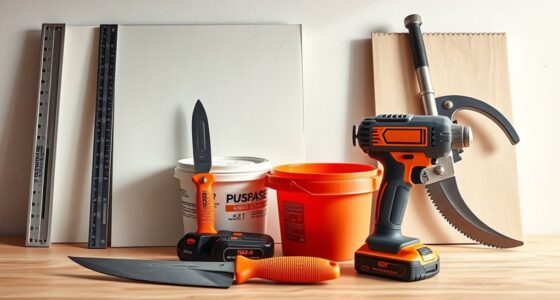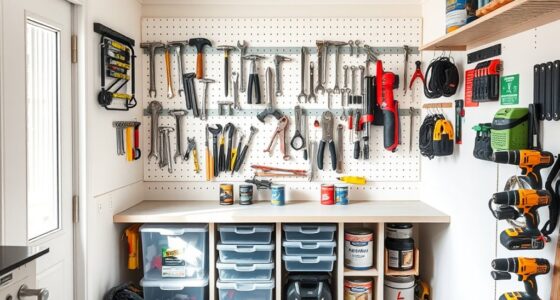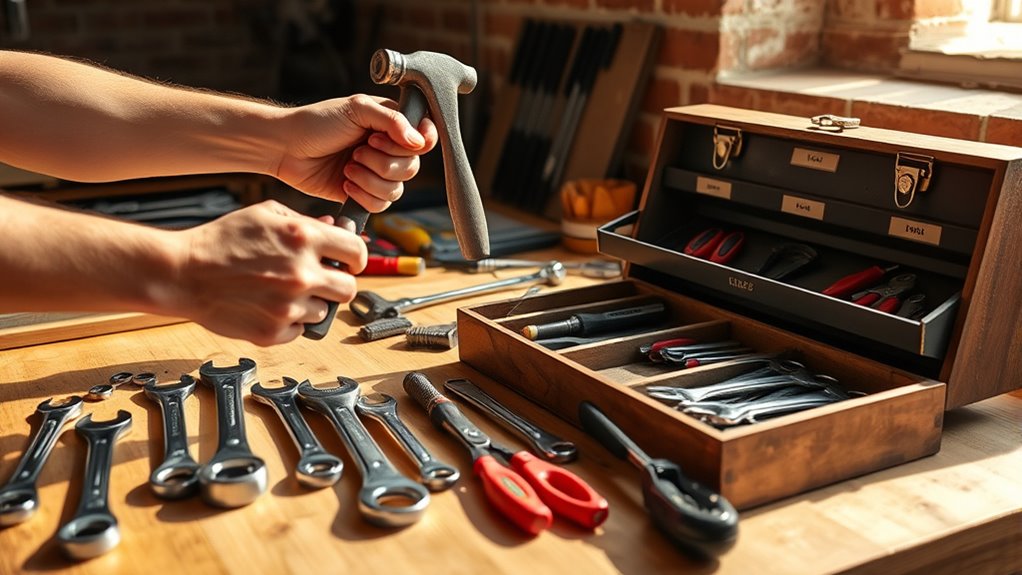

When borrowing or lending tools, communicate politely and ask for permission first. Clearly specify what you need and how you’ll use it. Return tools promptly and in the same condition you received them, cleaning if necessary. Keep track of borrowed tools and store them properly. Respect the owner’s rules and inform them of any damages. Practicing good etiquette builds trust and fosters a helpful community—continue to learn more about best practices.
Key Takeaways
- Always ask permission politely before borrowing any tools, specifying the intended use.
- Return tools promptly, in the same condition, and clean if necessary.
- Keep track of borrowed tools and return them on time.
- Follow the owner’s rules and store tools properly after use.
- Communicate clearly to prevent misunderstandings and foster mutual respect.
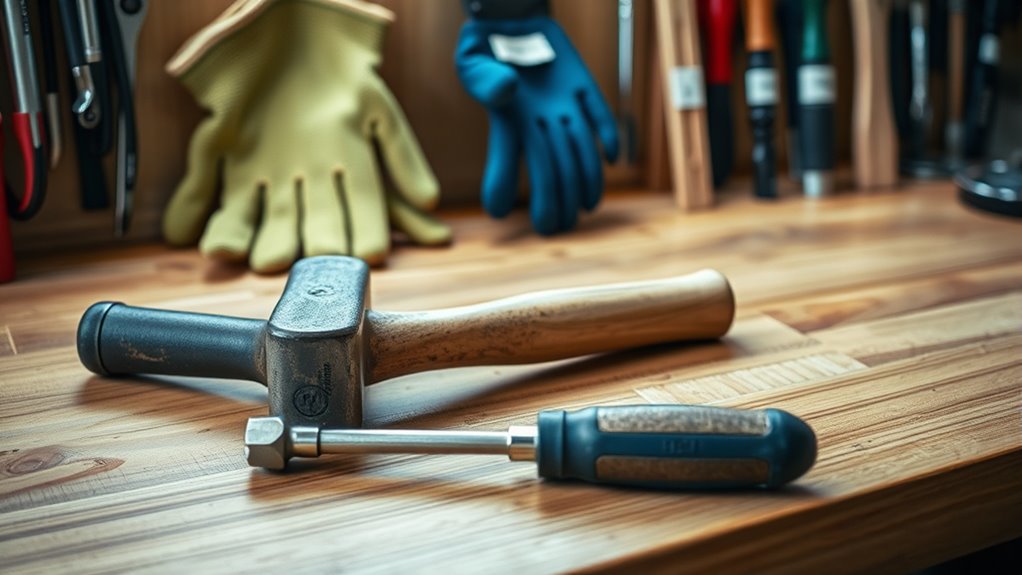
Have you ever wondered why certain tools seem to work better when used properly? The secret often lies in how you approach tool sharing and your borrowing manners. When you borrow a tool, it’s not just about taking something temporarily; it’s about respecting the tool’s condition and the person lending it to you. Good borrowing manners start with clear communication—ask politely, specify what you need, and confirm if it’s okay to borrow. Being considerate shows you value their belongings, and it encourages future sharing. Always be specific about the tool and its intended use to prevent misunderstandings. If you’re unsure whether a particular tool is suitable for your project, don’t hesitate to ask for guidance or recommendations. This not only demonstrates respect but also helps you avoid damaging the tool or using it improperly.
Respectful communication and clear requests foster trust and ensure proper tool sharing.
When you’re finished, return the tool promptly and in the same condition you received it. If you notice any damage or if a part is missing, inform the owner immediately. Taking good care of borrowed tools reflects your responsibility and gratitude. Clean the tool if necessary, and store it properly so it remains in good shape for the next person. Remember, tools are often shared among neighbors, friends, or family, and maintaining a positive borrowing experience fosters trust and ongoing cooperation. Regularly maintaining tools, such as cleaning or replacing worn parts, helps preserve their functionality and longevity—this is an important aspect of tool care.
It’s equally important to develop good tool sharing habits. Keep track of tools you lend out and borrow, perhaps with a simple list or a shared log. This helps prevent confusion and ensures everyone’s tools are returned on time. Respect the owner’s rules, such as asking for permission before borrowing, returning the tool by an agreed-upon date, and avoiding using it for purposes they wouldn’t approve. Also, be mindful of the tool’s storage location—return it to its designated spot so it’s easy to find next time. Practicing good borrowing manners and sharing responsibly not only keeps your relationships smooth but also encourages a culture of mutual respect and helpfulness.
Ultimately, how you handle tool sharing can make all the difference in your community or household. Respectful borrowing and lending create a positive environment where everyone feels trusted and valued. By following these simple do’s and don’ts, you’ll ensure tools stay in good condition, relationships stay strong, and everyone benefits from a cooperative spirit. Proper tool etiquette isn’t just about the tools themselves; it’s about fostering respect and kindness in every interaction.
Frequently Asked Questions
How Should I Handle Damaged Tools Borrowed From Someone Else?
If you damage a borrowed tool, you should immediately take responsibility and inform the owner. Offer to cover tool repair costs or replace the damaged item if necessary. Be honest about the damage and avoid making excuses. Handling damage responsibly shows respect and maintains trust, making it easier to return the tool in good condition next time. Taking ownership demonstrates your integrity and commitment to proper tool etiquette.
Is It Proper to Lend Tools to Neighbors I Don’T Know Well?
You can lend tools to neighbors you don’t know well if you prioritize neighborly trust and tool safety. Building trust takes time, so start small and observe how they handle your tools. Communicate clearly about expectations, return policies, and any concerns. By doing so, you safeguard your tools, foster good relationships, and ensure both parties feel confident about sharing tools, making borrowing and lending a positive experience for everyone involved.
What Should I Do if I Forget to Return a Borrowed Tool?
If you forget to return a borrowed tool, you should apologize and promptly make a borrowing reminder to the owner. Check their tool return policies, and if needed, offer to return it immediately or arrange a convenient time. Being honest and proactive demonstrates respect and helps maintain good relationships. Always set a reminder for future borrowing to avoid forgetting and ensure timely returns.
How Can I Politely Decline Lending My Tools?
Think of your tools as your trusted allies; you wouldn’t lend your best friend your favorite shirt without hesitation. To politely refuse lending your tools, set clear boundaries and communicate kindly but firmly. Say something like, “I’d love to help, but I prefer to keep my tools for my own projects.” Polite refusals protect your boundaries while maintaining good relationships, ensuring your tools stay safe and available when you need them.
Are There Specific Tools That Shouldn’T Be Shared at All?
You should avoid sharing specialized tools and high-value tools, as they often require careful handling and can be expensive to replace. These tools are best kept within your trusted circle or used personally to prevent damage or loss. If someone asks to borrow them, politely explain their importance and risk, and suggest they invest in their own or hire professionals instead. This way, you protect your valuable tools and maintain good relationships.
Conclusion
Remember, good tool etiquette keeps relationships strong and your toolkit ready for action. Treat borrowed tools like a knight would his steed—return them in better shape than you found them. A little respect now can prevent a future “Renaissance” of conflict. So, handle tools with care, communicate clearly, and be grateful. After all, borrowing and lending aren’t just about tools—they’re about trust, ensuring your neighborhood stays as harmonious as a well-tuned orchestra.