To excel in hobbyist electronics, you need essential tools like a reliable soldering iron with adjustable temperature for precise joints, helping hands to hold components steady, and a variety of jumper wires for flexible connections. Adding wire strippers, tweezers, and magnifiers boosts your accuracy and efficiency. Organizing your workspace with these tools creates a solid foundation for DIY projects and troubleshooting. Keep exploring to discover how each tool can improve your hobby projects even further.

Get business pricing on tools and workshop supplies
- Business-only prices and quantity discounts
- Tax-exempt purchasing
- Multiple users, one account, clear invoices
Key Takeaways
- Essential soldering irons with adjustable temperature and fine tips enable precise, reliable connections in hobbyist electronics projects.
- Helping hands with adjustable arms and alligator clips improve stability and accuracy during soldering and component placement.
- Circuit prototyping tools like breadboards and jumper wires facilitate quick testing and flexible circuit modifications.
- Additional tools such as wire strippers, tweezers, and magnifiers enhance precision and efficiency in assembling and troubleshooting.
- Using quality tools ensures neater, more durable prototypes, reducing errors and improving overall project professionalism.

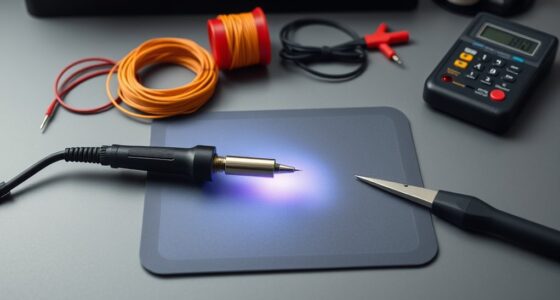
Getting started with hobbyist electronics can be both exciting and overwhelming, especially when choosing the right tools. One of the most essential pieces of equipment you’ll need is a good soldering iron. Precision soldering is indispensable for creating reliable connections, especially when working on small, intricate components. A well-chosen soldering iron allows you to make neat, precise joints, which is fundamental for circuit prototyping. When selecting a soldering iron, consider one with adjustable temperature control, so you can fine-tune the heat for different tasks. A fine tip is also helpful for detailed work, reducing the risk of damaging sensitive components. As you gain experience, you’ll appreciate how a quality soldering iron can make your projects more professional-looking and durable.
A quality soldering iron with adjustable temperature and fine tip ensures precise, reliable connections in your electronics projects.
Beyond soldering, you’ll want to invest in tools that make circuit prototyping easier. A breadboard is a must-have for testing circuit designs without soldering. It lets you quickly assemble and modify your circuits, saving you time and frustration. Jumper wires are equally important—they enable flexible connections and rapid adjustments. To guarantee your prototypes are neat and organized, consider using labels or color-coded wires. This way, you can easily troubleshoot and refine your designs without confusion.
Helping hands are another invaluable tool in your electronics toolkit. These adjustable arms with alligator clips securely hold your components, circuit boards, or wires in place while you work. With helping hands, you can maintain steady focus on your task, reducing hand fatigue and minimizing errors. They’re especially helpful when soldering or inspecting delicate parts, giving you a stable platform to work from. Combining helping hands with your precision soldering skills ensures your work is both accurate and safe, preventing accidental slips or damage.
Other useful tools include wire strippers, tweezers, and magnifying glasses. Wire strippers allow you to prepare your wires cleanly and efficiently, while tweezers help you position tiny components precisely. Magnifying glasses or head-mounted magnifiers give you a closer view of your work, which is invaluable when dealing with miniature parts. Together, these tools create a complete setup that boosts your confidence and efficiency in building and troubleshooting circuits.
adjustable temperature soldering iron
As an affiliate, we earn on qualifying purchases.
As an affiliate, we earn on qualifying purchases.
Frequently Asked Questions
What Safety Precautions Should I Follow When Using a Soldering Iron?
When using a soldering iron, you should wear safety gear like goggles and a mask to protect your eyes and lungs from fumes. Always work in a well-ventilated area to avoid inhaling harmful smoke. Keep the iron in its stand when not in use, and be cautious of hot surfaces. Never touch the tip, and unplug it after finishing to prevent accidents. These precautions keep you safe during soldering.
How Do I Choose the Right Soldering Iron Wattage for My Project?
Imagine you’re working on a delicate circuit board. For this, a soldering iron with 25-40 watts works best, offering precise control without damaging components. When choosing a soldering iron, consider wattage considerations: lower wattage for small, detailed work and higher wattage for larger, demanding tasks. Selecting the right soldering iron involves matching wattage to your project’s complexity, ensuring effective heating and safety.
Are There Eco-Friendly or Lead-Free Solder Options Available?
Yes, eco-friendly solder options are available. You can choose environmentally friendly solder that contains less harmful chemicals, and lead-free alternatives that are safer for both you and the environment. These lead-free options often use alloys like tin-copper or tin-silver-copper, reducing toxic waste. Always check product labels to verify they meet safety standards, and opt for these sustainable choices to minimize your environmental impact during your electronics projects.
How Can I Prevent Damage to Sensitive Electronic Components?
To prevent damage to sensitive electronic components, you must prioritize ESD protection and proper handling techniques. Always wear an anti-static wrist strap, work on an ESD-safe mat, and avoid touching pins or leads directly. Use gentle, steady movements when soldering, and keep components in anti-static bags when not in use. These precautions safeguard your parts from static discharge and mechanical stress, ensuring your project stays intact.
What Are Some Beginner-Friendly Hobbyist Electronics Kits?
You should start with beginner-friendly hobbyist electronics kits that include starter kits and project tutorials. These kits often come with clear instructions, making it easy for you to learn and build your skills. Look for sets that focus on simple projects like blinking LEDs or basic sensors. They give you hands-on experience, build confidence, and help you understand fundamental principles without feeling overwhelmed.
As an affiliate, we earn on qualifying purchases.
Conclusion
With the right tools like a soldering iron and helping hands, you can bring your electronic projects to life. Don’t forget, even the great inventors of yesteryear relied on simple tools to innovate. So, grab your toolkit, channel your inner Edison, and start creating! Whether you’re fixing a gadget or building something new, these tools turn your hobby into a rewarding adventure. Happy tinkering!
breadboard circuit prototyping kit
As an affiliate, we earn on qualifying purchases.
As an affiliate, we earn on qualifying purchases.
precision wire strippers for electronics
As an affiliate, we earn on qualifying purchases.
As an affiliate, we earn on qualifying purchases.
Fall yard work Picks
leaf blowers
As an affiliate, we earn on qualifying purchases.