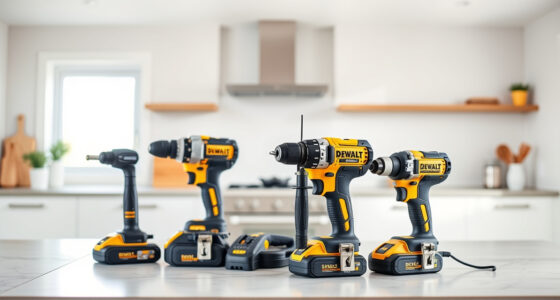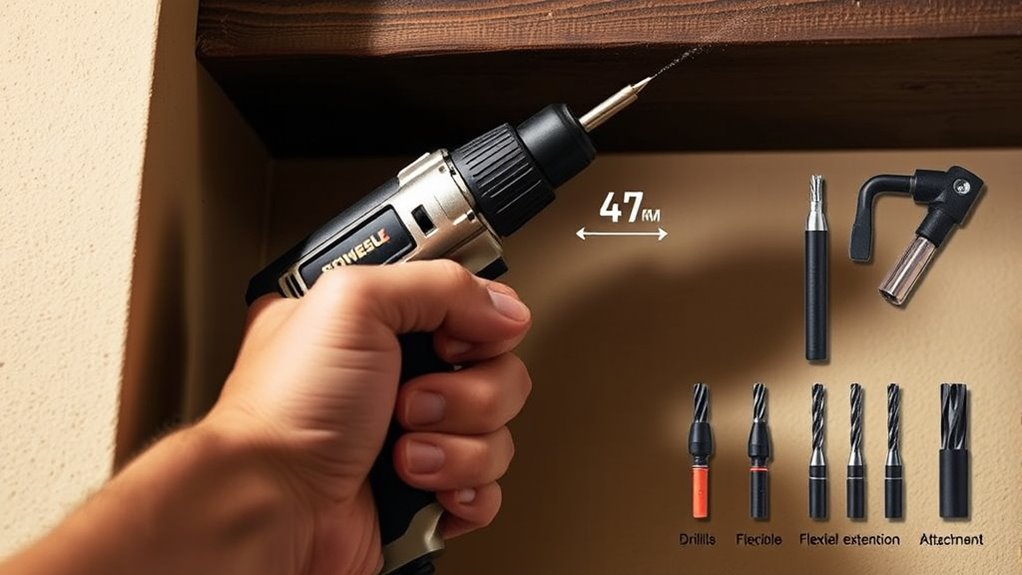

To drill in tight spaces, choose tools like right-angle drills, flexible shafts, and mini drills for better reach and control. Use ergonomic handles and make certain proper lighting to improve visibility. Planning your work by clearing debris and starting with pilot holes can help you stay precise. Take your time, double-check your setup, and go slowly to prevent slips and surface damage. If you keep exploring, you’ll discover even more tips for mastering those tricky spots.

Get business pricing on tools and workshop supplies
- Business-only prices and quantity discounts
- Tax-exempt purchasing
- Multiple users, one account, clear invoices
Key Takeaways
- Use right-angle drills, flexible shafts, and mini drills for better access in confined spaces.
- Equip ergonomic tools with textured grips to improve control and reduce fatigue during precision drilling.
- Clear debris, set appropriate speeds, and start with pilot holes for accurate, safe drilling in tight spots.
- Improve visibility with focused work lights to ensure precise positioning and prevent misalignment.
- Take your time, double-check alignment, and proceed slowly to avoid slips and damage in challenging areas.

Drilling in tight spaces presents unique challenges that require specialized tools and techniques. When you’re working in confined areas, maintaining precision alignment becomes vital to guarantee your holes are accurate and clean. Without proper alignment, your drill can slip or create uneven holes, wasting time and potentially damaging surrounding surfaces. To avoid this, you need to select tools designed for precise positioning, such as right-angle drills or mini drills with adjustable heads. These tools allow you to get close to your target area and keep your bit perfectly aligned. Additionally, paying attention to tool ergonomics is essential. When you’re constrained by limited space, a comfortable, well-balanced drill reduces fatigue and gives you better control. Ergonomic handles with textured grips help you steady your hand, making it easier to keep the drill steady during delicate operations. This control directly impacts the accuracy of your work, especially when precision alignment is vital.
In tight spots, the length and size of your drill bit also matter. Shorter bits or flexible extensions can help you reach difficult spots while maintaining stability. Flexible shafts are especially useful because they allow you to maneuver the bit into awkward angles without sacrificing control or precision. Before you start drilling, take a moment to plan your approach. Clear the area of debris and obstructions, and guarantee your drill is set to the correct speed and torque. Using a drill with variable speed settings allows you to adjust based on the material and location, giving you more control over the process. When working in tight spaces, it’s better to start with a small pilot hole to guide your larger bit, ensuring everything remains aligned. Additionally, selecting the right tools for precise positioning can greatly enhance your accuracy and efficiency in confined areas.
Lighting is another vital factor. A bright, focused work light helps you see exactly where you’re drilling and prevents misalignment. Combined with a steady hand and the right tools, proper lighting enhances your ability to keep the drill precisely aligned with the mark. Remember, patience is key. Take your time to position the drill correctly, double-check your setup, and proceed slowly. Rushing can lead to slips, misaligned holes, and damage to surrounding surfaces. Using the right combination of specialized tools, ergonomic grips, and careful planning, you’ll find drilling in tight spaces becomes much more manageable. With practice, you’ll develop a feel for maneuvering your tools in confined areas, making your work more efficient, accurate, and less frustrating.
As an affiliate, we earn on qualifying purchases.
Frequently Asked Questions
What Safety Precautions Are Essential When Drilling in Tight Spaces?
You should always wear personal protective equipment like goggles and gloves to guard against debris. Make sure good workspace ventilation to avoid dust buildup and inhalation hazards. Keep your workspace clear of obstructions and use proper lighting to see what you’re doing clearly. Double-check your drill settings and stability before starting. By taking these precautions, you minimize risks and work safely in tight, hard-to-reach spots.
Can Standard Drills Be Modified for Hard-To-Reach Spots?
Think of your drill as a snake slithering into tight corners. You can easily modify standard drills by attaching drill bit extensions or flexible drill shafts, turning your tool into a nimble explorer. These accessories help you reach those tricky spots without straining or damaging your equipment. With a few simple additions, your drill becomes more versatile, letting you access every nook and cranny effortlessly.
Which Materials Are Best Suited for Tight-Space Drilling Projects?
For tight-space drilling projects, you should choose materials that are compatible with your drill bits and tools. Soft materials like wood, plastic, or drywall are easier to work with, while metals require specialized drill bits. Focus on selecting the right drill bit type and size to match your material, ensuring efficient drilling without damage. Proper material compatibility and drill bit selection make your project smoother and safer in confined spaces.
How Do I Prevent Damage to Surrounding Surfaces?
To prevent damage to surrounding surfaces, you should prioritize surface protection by using painter’s tape or plastic sheeting around the drilling area. Additionally, implement dust control measures like a vacuum attachment on your drill to minimize debris and mess. Move carefully and drill slowly to avoid slips or unintended damage. This approach guarantees your surfaces stay intact and your workspace remains clean throughout the project.
Are There Specific Lighting Tools Recommended for Precision in Confined Areas?
You should use LED flashlights or headlamp illumination to improve precision in confined areas. LED flashlights offer focused, bright light, making it easier to see small details. A headlamp provides hands-free illumination, allowing you to work freely and maintain accuracy. Both tools help you avoid mistakes and guarantee your work is precise, especially in tight spaces where natural light or bulky lighting setups aren’t practical.
As an affiliate, we earn on qualifying purchases.
Conclusion
Tackling tight spaces might seem challenging, but with the right tools and techniques, you can get the job done efficiently. Did you know that over 60% of DIYers encounter difficult spots at least once a month? By using compact drills, flexible bits, and strategic positioning, you’ll save time and avoid frustration. Remember, preparation and the right tools make all the difference in reaching those tricky spots effortlessly. Happy drilling!
As an affiliate, we earn on qualifying purchases.
As an affiliate, we earn on qualifying purchases.
Fall Picks
fall essentials
As an affiliate, we earn on qualifying purchases.