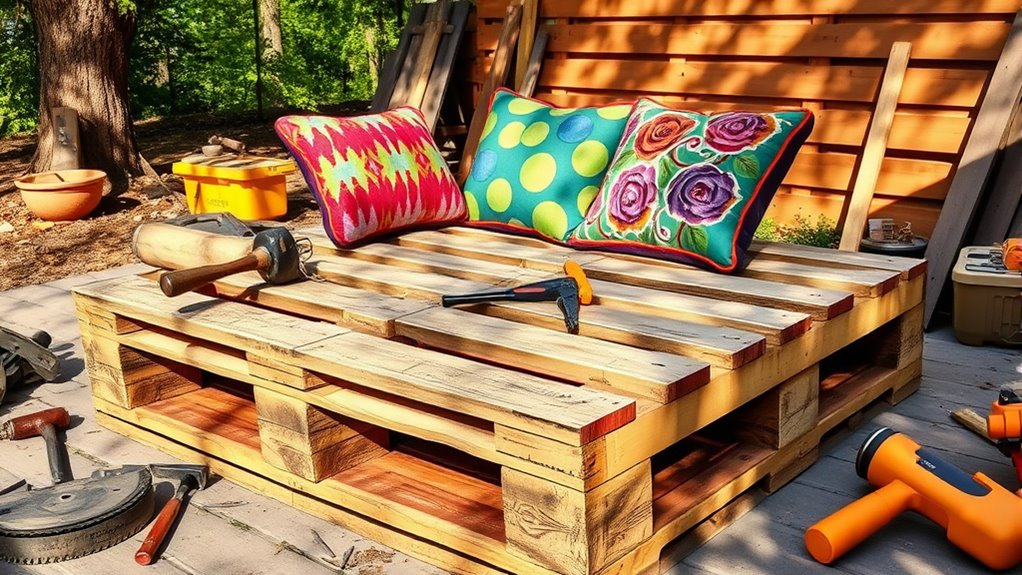

If you want to create stylish, eco-friendly furniture, you can try building a pallet coffee table, garden planter, bed frame, storage crates, or a bench. You’ll need basic tools like a saw, drill, hammer, and clamps, plus safety gear to protect yourself. Carefully disassemble pallets, sand the pieces smooth, and assemble your projects with nails or screws. If you want step-by-step instructions and safety tips, keep exploring to start your DIY pallet journey.

Get business pricing on tools and workshop supplies
- Business-only prices and quantity discounts
- Tax-exempt purchasing
- Multiple users, one account, clear invoices
Key Takeaways
- Select sturdy, heat-treated pallets and thoroughly inspect for damage or hazards before starting.
- Gather essential tools like saws, drills, crowbars, clamps, and safety gear for disassembly and assembly.
- Use proper techniques to disassemble pallets carefully, avoiding splinters and ensuring safe handling of wood pieces.
- Measure and cut wood accurately to create items like furniture, planters, or storage solutions.
- Finish projects with paint, stain, or sealant to enhance durability and appearance, following safety precautions.
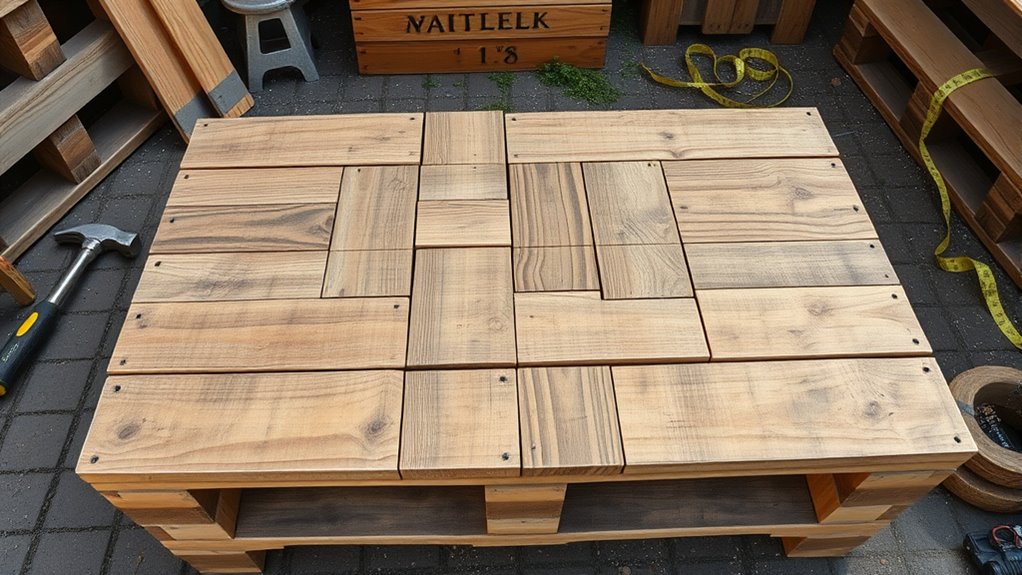
Creating DIY projects with pallets is a rewarding way to transform recycled wood into functional and stylish pieces for your home or garden. When you start working with pallets, you tap into sustainable recycling techniques that give new life to otherwise discarded wood. This not only helps the environment but also allows you to craft unique items tailored to your style. However, before you plunge in, it’s essential to prioritize woodworking safety. Always wear gloves and eye protection, especially when handling rough or splintered wood. Use the right tools carefully, and make certain your workspace is clear of hazards. Keeping safety in mind helps prevent injuries and makes the entire process more enjoyable.
Recycling techniques are at the core of pallet projects. You’ll want to begin by inspecting your pallets for stability and cleanliness. Avoid pallets that look rotten or have been treated with harmful chemicals; opt for ones marked with “HT” (heat-treated) rather than those with chemical treatments. Once you select suitable pallets, the next step involves disassembling them, which can be done with a crowbar, hammer, or electric saw. Be cautious to avoid splinters and splinters that can cause injury, reinforcing the importance of safety gear. Sanding each piece thoroughly smooths out rough edges and prevents splinters from causing harm during use. Additionally, understanding the contrast ratio of your chosen paint or stain can help you achieve a more polished and professional-looking finish.
Inspect pallets carefully, avoiding rotten or chemically treated wood marked with “HT” for safe recycling.
The process of creating with pallets involves a variety of woodworking techniques. Measuring accurately ensures your pieces fit together seamlessly, so always double-check your dimensions before cutting. When using power tools like saws or drills, follow all safety instructions closely. Keep your hands clear of moving blades, and never rush through a cut. Clamps are invaluable for holding pieces steady, reducing the risk of slips or accidents. Using proper joinery methods—such as nails, screws, or wood glue—ensures your project is sturdy and durable. If you’re unfamiliar with certain techniques, look up tutorials or seek advice from experienced woodworkers to avoid mistakes that could compromise safety or quality.
Once assembled, apply a protective finish to your project—be it paint, stain, or sealant—to extend its lifespan and enhance its appearance. Remember, safety doesn’t end with construction; wearing a mask or working in a well-ventilated area prevents inhaling dust or fumes. With patience and attention to proper recycling techniques and woodworking safety, you’ll create beautiful, eco-friendly pieces that showcase your creativity and commitment to sustainability. Whether it’s a rustic coffee table, garden planter, or storage solution, your pallet projects will reflect your skills and resourcefulness, making your space truly one-of-a-kind.
As an affiliate, we earn on qualifying purchases.
Frequently Asked Questions
What Safety Precautions Should I Take When Working With Pallets?
When working with pallets, you should prioritize safety by wearing gloves and eye protection during pallet cleaning to avoid splinters and chemical exposure. Always inspect for nails and sharp edges before starting, and use tools carefully to prevent injuries. Keep your workspace organized, and handle tools responsibly to guarantee tool safety. Taking these precautions helps you work safely and enjoy your project without unnecessary risks.
How Do I Choose the Right Pallets for My Project?
A stitch in time saves nine, so choose pallets wisely. To pick the right one, consider pallet dimensions to fit your project needs, and examine the wood quality for durability and safety. Avoid pallets with visible damage, mold, or chemical residues. Opt for sturdy, clean wood that matches your project’s size and weight requirements. Doing so ensures your project’s success and longevity.
Can I Use Recycled Pallets for Food-Related Projects?
Yes, you can use recycled pallets for food-related projects, but you need to prioritize pallet cleaning and food safety. First, thoroughly clean the pallets with hot water and a mild detergent to remove dirt and residues. Check for any signs of damage or chemical treatments. Only use pallets marked as food-grade or heat-treated, avoiding those with chemical stamps, to guarantee safe contact with food and prevent contamination.
What Are the Best Tools for Dismantling Pallets Safely?
You’ll want to use specialized pallet dismantling tools like a crowbar, claw hammer, and reciprocating saw to make the job safer and easier. Always wear safety gear essentials such as gloves, goggles, and steel-toed boots to protect yourself from splinters and sharp nails. Proper tools and safety gear help you dismantle pallets efficiently while minimizing injury risks. Take your time, and stay focused on handling each piece carefully.
How Do I Treat Pallets to Prevent Pests and Mold?
To prevent pests and mold on your pallets, start by thoroughly cleaning them with a stiff brush and mild soap. Then, treat them with a mixture of water and white vinegar or a commercial mold inhibitor to control mold growth. For pest prevention, apply a safe insecticide or borate solution, ensuring proper drying afterward. Store pallets in a dry, well-ventilated area to keep pests and mold at bay effectively.
As an affiliate, we earn on qualifying purchases.
Conclusion
As you finish your pallet projects, remember each piece is more than just reclaimed wood—it’s a symbol of your creativity and resilience. Like these pallets, you’ve transformed raw materials into something meaningful, echoing the potential within us all to rebuild and repurpose. Let your projects remind you that even scraps can carry purpose and beauty. Embrace the journey of creation, for in every end lies a new beginning—crafted by your hands, fueled by your imagination.
As an affiliate, we earn on qualifying purchases.
As an affiliate, we earn on qualifying purchases.
Fall yard work Picks
leaf blowers
As an affiliate, we earn on qualifying purchases.