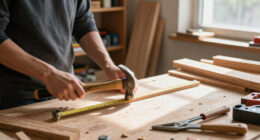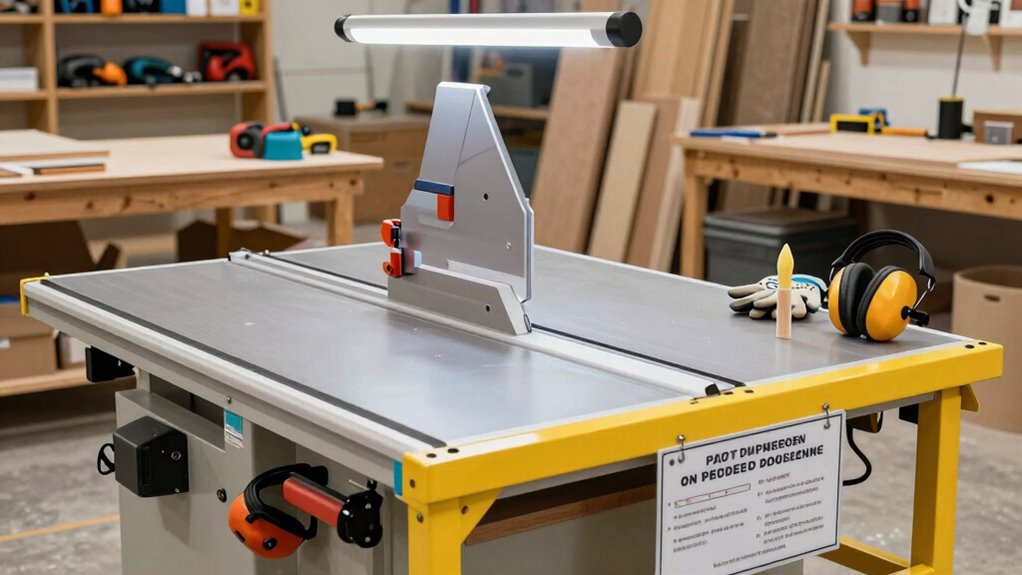
To build a safer table saw work zone, start by organizing your tools, cords, and materials to prevent clutter and trips. Secure the saw firmly to the work surface and make certain all safety features like blade guards are in place and functional. Use proper lighting and position yourself correctly, staying off to the side of the blade. Always wear appropriate safety gear and manage dust effectively. For detailed tips on creating a suitable, secure workspace, keep exploring further.

Get business pricing on tools and workshop supplies
- Business-only prices and quantity discounts
- Tax-exempt purchasing
- Multiple users, one account, clear invoices
Key Takeaways
- Establish a clutter-free area by organizing tools, cords, and materials to prevent trips and distractions.
- Secure the table saw firmly to a stable, level work surface to ensure stability during operation.
- Set up a dust collection system or attach a shop vacuum to minimize airborne dust and improve visibility.
- Ensure all safety features, like blade guards and anti-kickback pawls, are properly installed and functional.
- Use bright lighting and proper positioning, including push sticks, to enhance visibility and keep hands away from the blade.
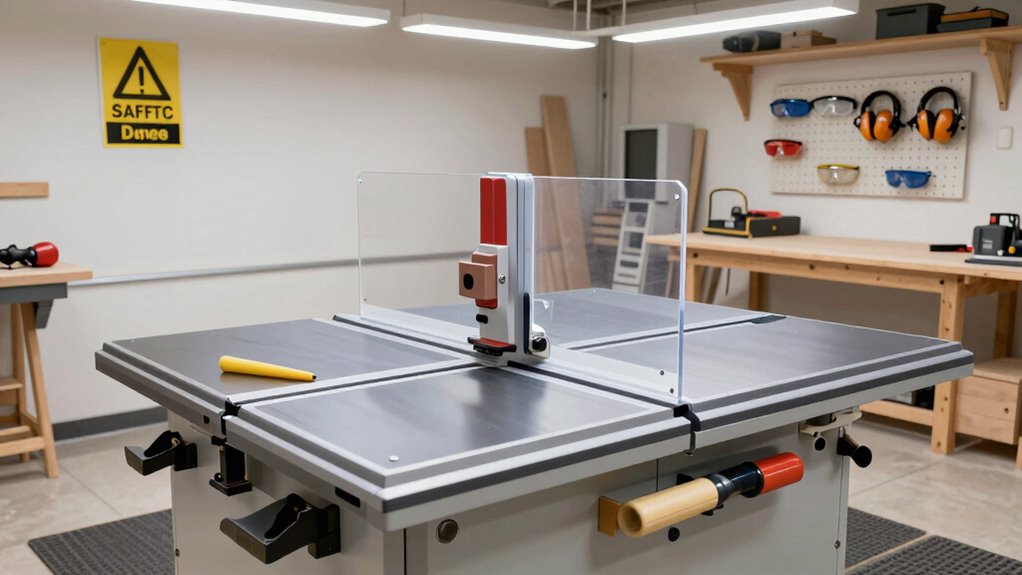
Creating a safe work zone around your table saw is essential to prevent accidents and guarantee smooth operation. When you set up your workspace properly, you not only protect yourself but also improve your efficiency. Start by making sure you have the right safety gear within easy reach. Safety glasses or goggles are a must to shield your eyes from flying debris, while hearing protection helps minimize noise damage. Wearing a dust mask or respirator is equally important, especially when working with materials that produce fine dust. These safety gear items are your first line of defense and should be consistently used whenever operating the saw.
Always keep safety gear nearby—protect your eyes, ears, and lungs during table saw operation.
Next, focus on dust management. Proper dust control isn’t just about cleanliness—it’s about health and safety. Set up a dust collection system or attach a shop vacuum to your saw to capture dust at the source. This reduces airborne particles that can cause respiratory issues and keeps your workspace cleaner. Proper dust management also improves visibility, allowing you to see your cut lines clearly and making your work more precise. Regularly check and maintain your dust collection equipment to ensure it’s functioning effectively. Remember, a well-maintained system is key to minimizing dust hazards. Additionally, understanding the importance of dust collection systems can significantly enhance your safety measures.
To build a safer work zone, clear the area around your table saw of clutter. Keep tools, cords, and materials organized so you don’t trip or accidentally knock something into the blade. Create a designated workspace that’s free of distractions and obstacles. Support the stability of your saw by securing it firmly to the ground or work surface and double-check that all safety features, such as blade guards and anti-kickback pawls, are in place and functioning correctly. Never bypass safety features, as they’re designed to prevent injuries. Ensuring the stability of your saw is crucial for safe operation. Additionally, maintaining proper workspace organization minimizes hazards and promotes efficient workflow.
Lighting also plays a critical role. Bright, focused lighting ensures you can see your work clearly, reducing mistakes and accidents. If your workspace is dim, add additional task lighting directed at the cutting area. When operating your table saw, always stand to the side of the blade, not directly in line with it, to avoid injury if kickback occurs. Use push sticks or push blocks to keep your hands away from the blade, especially when making narrow cuts. Proper workspace setup, including lighting and positioning, is vital for safety and precision.
As an affiliate, we earn on qualifying purchases.
Frequently Asked Questions
How Often Should I Inspect Safety Equipment in My Work Zone?
You should inspect your safety equipment before each work session to make everything’s in top shape. Regular checks are essential for personal protective gear like goggles, ear protection, and dust masks, and equipment maintenance keeps your tools working safely. If you notice any damage or wear, replace or repair the items immediately. Consistent inspections help prevent accidents and keep your work zone safe, so make it a routine part of your safety practices.
What Are the Best Storage Options for Saw Blades and Accessories?
Imagine the chaos if blades and accessories are left out — now, choose smart storage options. Use stackable, labeled bins for blade storage, keeping sharp edges protected and easy to find. Magnetic tool holders or wall-mounted racks are perfect for accessory organization, preventing clutter and accidents. Lockable cabinets provide added safety, ensuring everything stays secure when not in use. Your work zone stays safe, tidy, and ready for the next project.
How Do I Train Others on Safe Table Saw Operation?
You train others on safe table saw operation by using effective training techniques and safety demonstrations. Start with clear, step-by-step instructions, emphasizing the importance of personal protective equipment and proper stance. Use live demonstrations to show correct procedures, and encourage hands-on practice under supervision. Reinforce safety rules regularly, and address questions openly. Consistent, engaging training helps others develop good habits and reduces the risk of accidents.
Are There Specific Safety Signs Recommended for the Work Zone?
Yes, you should use specific safety signs like warning labels to alert everyone about the hazards around the table saw. Additionally, safety barriers help keep unauthorized or untrained people at a safe distance. These signs and barriers make it clear where caution is needed and help prevent accidents. Regularly check that warning labels are visible and intact, and guarantee safety barriers are properly positioned to protect everyone in the work zone.
What Emergency Procedures Should Be in Place Near the Table Saw?
Did you know that proper emergency procedures can reduce accidents by up to 50%? You should have clear emergency drills and first aid procedures in place near your table saw. Train yourself and others regularly, ensuring quick access to first aid kits and emergency stops. Keep everyone informed about evacuation routes and emergency contacts. Being prepared helps minimize injury severity and keeps your work zone safe.
dust collection system for table saw
As an affiliate, we earn on qualifying purchases.
As an affiliate, we earn on qualifying purchases.
Conclusion
By building a safer table saw work zone, you’re turning your workspace into a fortress of safety—where accidents are as rare as a unicorn sighting. Every guard, barrier, and clear path you add is like a shield protecting you from disaster. Think of your work zone as a high-tech command center, where precision and safety reign supreme. With these steps, you’ll not only cut wood—you’ll carve out a haven where danger fears to tread.
As an affiliate, we earn on qualifying purchases.
As an affiliate, we earn on qualifying purchases.
Fall yard work Picks
leaf blowers
As an affiliate, we earn on qualifying purchases.