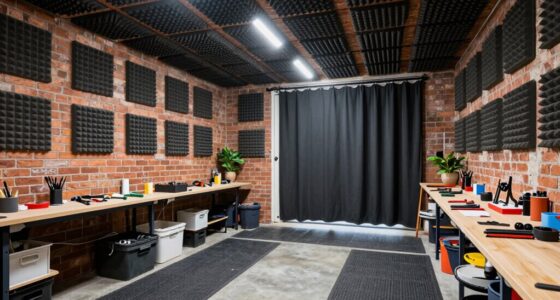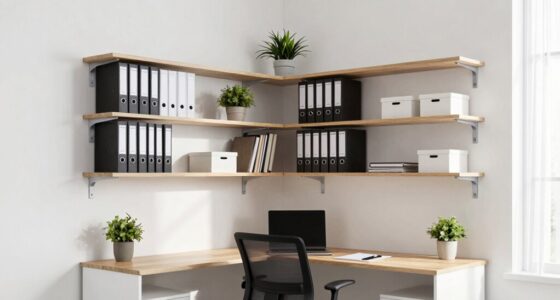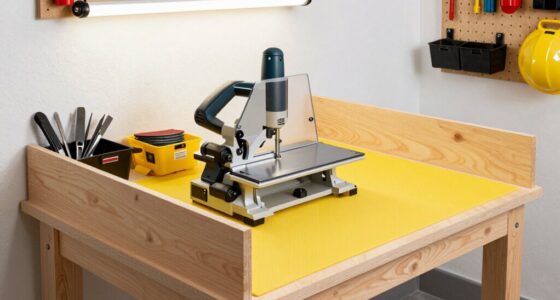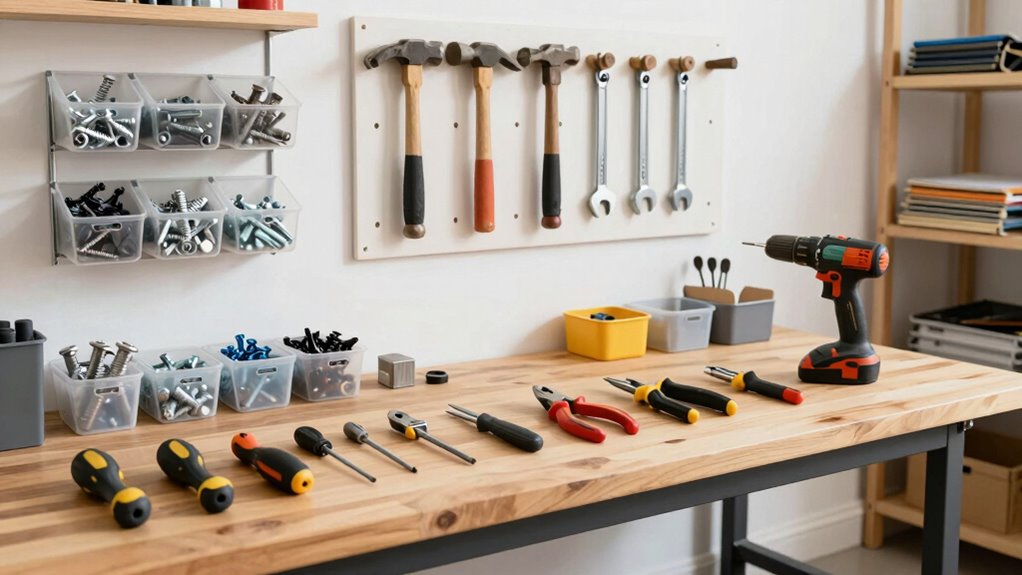

Having a dedicated assembly area speeds up your DIY projects by keeping tools, parts, and materials organized and within quick reach. It reduces time spent searching for items and minimizes clutter, leading to fewer delays. An ergonomic setup helps you work comfortably longer without fatigue, while clear zones improve your workflow. Plus, sustainable storage solutions support eco-friendly practices. Keep going to discover how setting up this space makes your projects more efficient and enjoyable.
Key Takeaways
- Keeps tools, parts, and materials organized, reducing time spent searching during assembly.
- Provides a focused workspace, minimizing distractions and increasing efficiency.
- Supports ergonomic design, reducing fatigue and enabling longer, productive work sessions.
- Facilitates quick setup and cleanup, maintaining project momentum.
- Encourages structured workflows, preventing delays caused by clutter or misplaced items.
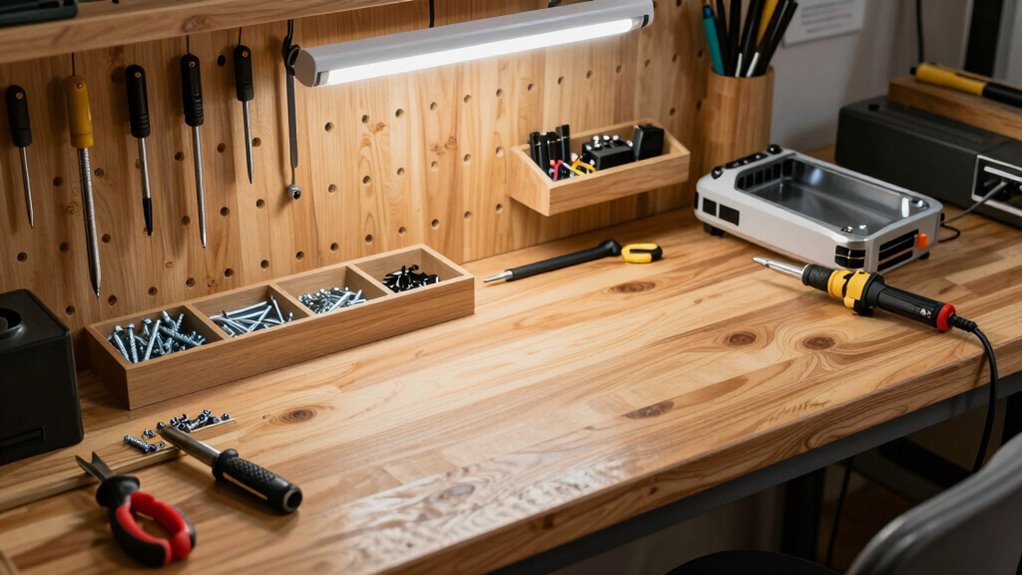
Having a dedicated assembly area can considerably streamline your DIY projects, making the process more efficient and enjoyable. When you set aside a specific space for assembling your projects, you eliminate the constant search for tools, parts, and materials, which can slow you down and cause frustration. This space becomes a hub designed specifically for your needs, allowing you to keep everything organized and within reach. Good storage organization is key here; by having clearly labeled bins, shelves, or drawers, you can quickly locate screws, nails, or other small parts without wasting precious time rummaging through clutter. Efficient storage also reduces the risk of losing small components, ensuring that your projects stay on track from start to finish. Incorporating biodiversity principles in your workspace setup, such as using sustainable storage solutions, can further enhance your commitment to eco-friendly practices. An ergonomic workspace is another essential element that speeds up your progress. When your assembly station is set up to support your body comfortably, you can work longer without fatigue. Adjustable workbenches, supportive chairs, and proper lighting help reduce strain on your back, neck, and eyes. This setup keeps you focused and minimizes breaks caused by discomfort, thereby increasing your productivity. Furthermore, an ergonomic workspace promotes safety, reducing the chances of accidents that could lead to delays or injuries. Think about positioning frequently used tools within easy reach and ensuring your work surface is at a comfortable height. These small adjustments significantly improve efficiency and make a significant difference in how quickly you can complete your projects. Creating a dedicated space also encourages a more disciplined work routine, as it helps establish a structured workflow that keeps you organized and motivated. When your workspace is separate from other household areas, you’re less likely to get distracted or interrupted. You can dedicate specific blocks of time to your projects, knowing everything you need is organized and ready. Creating designated zones for different tasks can improve workflow and help you stay focused. Plus, a designated assembly zone helps you maintain a clean environment, which is essential for efficient work. When tools and materials are stored properly and your work surface stays clear when not in use, setting up and packing away your workspace becomes quicker. Incorporating sustainable storage solutions can enhance this setup by reducing waste and supporting eco-friendly practices.
adjustable workbench for DIY projects
As an affiliate, we earn on qualifying purchases.
As an affiliate, we earn on qualifying purchases.
Frequently Asked Questions
How Do I Choose the Best Location for My Assembly Area?
You should choose a location with good workspace lighting to see your projects clearly and avoid mistakes. Make sure there’s proper ventilation to keep fumes and dust away, making it safer and more comfortable. Pick a spot that’s close to your main tools and supplies, but also has enough space to move freely. Avoid areas prone to moisture or extreme temperatures, so your assembly area stays functional and safe.
What Safety Equipment Should I Include in My Dedicated Space?
Your dedicated assembly area should have essential safety gear like eye protection, gloves, and a dust mask to shield you from hazards. Don’t forget fire safety equipment—fire extinguishers and smoke detectors—that can save your workspace from disaster. Personal protective gear keeps you safe from splinters, dust, and chemicals, while fire safety tools prevent minor mishaps from turning into major catastrophes. Prioritize safety to guarantee your DIY projects stay fun and frustration-free.
How Can I Organize Tools Effectively in a Small Assembly Area?
You can organize tools effectively in a small assembly area by using smart storage solutions like wall-mounted pegboards or magnetic strips for frequently used tools. Incorporate stackable bins or drawers for smaller items, and keep long tools in designated racks. Regularly declutter, label storage compartments, and assign specific spots for each tool. This approach guarantees quick access, maximizes space, and keeps your workspace tidy, boosting your efficiency.
What Are Budget-Friendly Options to Set up a Dedicated Workspace?
You can set up a dedicated workspace with budget-friendly DIY storage solutions like repurposed shelves, plastic bins, and wall-mounted organizers. Focus on simple, cost-effective upgrades such as pegboards for tool storage or magnetic strips for small metal parts. These budget upgrades keep your tools accessible, organized, and ready for quick assembly, helping you work efficiently without overspending.
How Often Should I Clean and Maintain My Assembly Station?
Think of your assembly station like a garden; it needs regular tending. You should clean and maintain it weekly to keep clutter at bay and tools in top shape. Follow a cleaning schedule, wiping surfaces and organizing supplies, and apply maintenance tips like lubricating tools or checking for wear. Regular upkeep guarantees your workspace stays efficient, safe, and ready for your next project, saving you time and frustration.
ergonomic tool storage organizer
As an affiliate, we earn on qualifying purchases.
As an affiliate, we earn on qualifying purchases.
Conclusion
Having a dedicated assembly area truly streamlines your DIY projects, saving you time and reducing frustration. When everything is organized and accessible, you can focus on the task at hand instead of searching for tools or materials. Remarkably, studies show that organized workspaces can boost productivity by up to 20%. So, investing in a dedicated assembly area not only speeds up your projects but also enhances your overall craftsmanship and satisfaction.
sustainable storage bins for workshop
As an affiliate, we earn on qualifying purchases.
As an affiliate, we earn on qualifying purchases.
labeled plastic storage drawers
As an affiliate, we earn on qualifying purchases.
As an affiliate, we earn on qualifying purchases.