
To improve airflow in your garage workshop, install exhaust fans appropriate for your space and add intake vents for fresh air. Position vents opposite the fans for effective cross-ventilation and keep them unobstructed. Use HEPA air purifiers and dust extractors to reduce airborne particles and fumes. Regularly clean and maintain your ventilation equipment, and organize your workspace to avoid blocking airflow paths. Keep exploring for more tips to guarantee your workshop stays fresh and safe.

Get business pricing on tools and workshop supplies
- Business-only prices and quantity discounts
- Tax-exempt purchasing
- Multiple users, one account, clear invoices
Key Takeaways
- Install appropriately sized exhaust fans and intake vents for effective cross-ventilation.
- Use HEPA and activated carbon filters in air purifiers to remove dust, fumes, and odors.
- Keep vents and fans unobstructed and regularly maintain them for optimal airflow.
- Position vents and fans strategically based on workspace layout to promote consistent air movement.
- Organize and declutter the workshop to prevent airflow blockages and enhance system efficiency.
Is poor airflow turning your garage workshop into a stuffy, uncomfortable space? If so, it’s time to look into improving your ventilation systems and air purification. Proper airflow isn’t just about comfort; it’s vital for safety, especially if you work with fumes, dust, or chemicals. Without enough fresh air circulating, you risk buildup of harmful particles and a considerable decrease in air quality. Fortunately, you can make simple adjustments to enhance ventilation and create a healthier, more productive environment.
Improve airflow and air quality for a safer, more comfortable garage workshop environment.
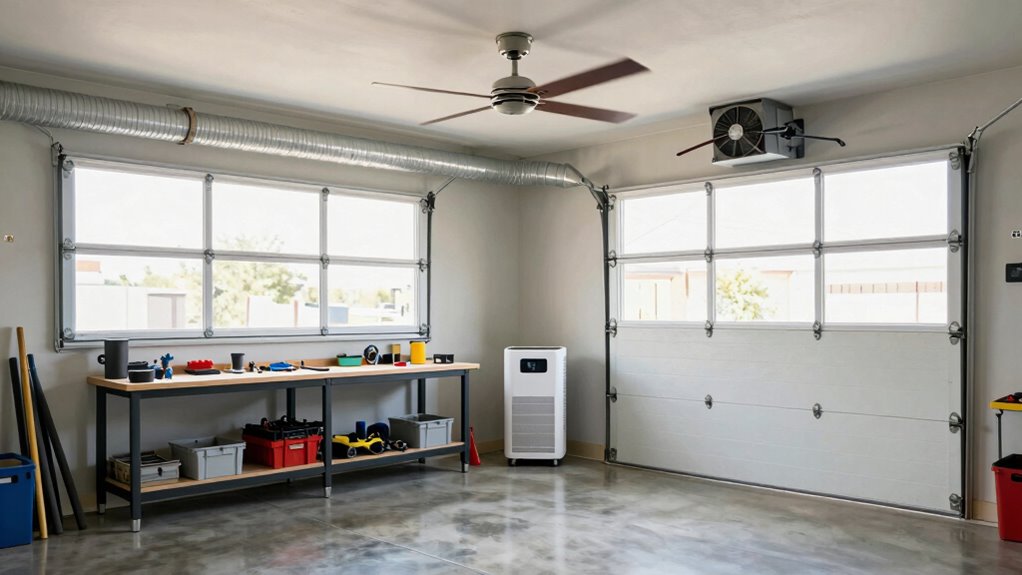
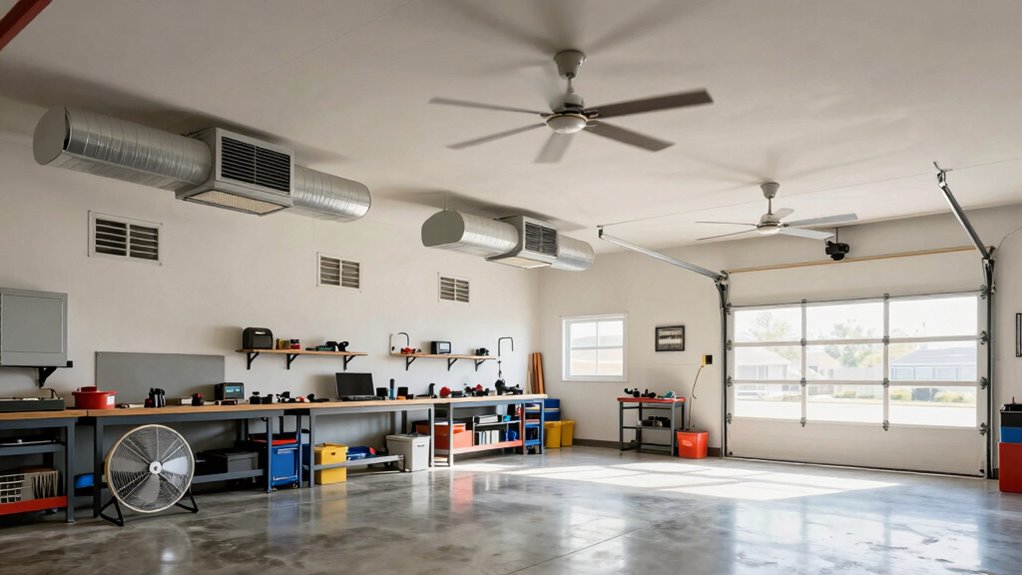
Start by evaluating your current setup. If your garage lacks windows or vents, installing exhaust fans is one of the most effective ways to boost airflow. These fans pull stale air out and draw in fresh air from outside, creating a continuous exchange that keeps the space fresh. Make sure to choose a fan with the right capacity for your workshop size. You might also consider installing intake vents to allow outside air to flow in more freely, especially during warmer months. Proper placement of these vents is vital—position them opposite the exhaust fans to promote effective cross-ventilation.
In addition to fans, using air purification systems can considerably improve air quality. Air purifiers equipped with HEPA filters trap dust, pollen, and airborne particles, preventing them from circulating in your workspace. For chemical fumes or vapors, look for purifiers with activated carbon filters, which absorb odors and hazardous gases. Combining air purification with good ventilation ensures that dust and fumes are not only expelled but also filtered, reducing health risks and improving visibility. Ensuring proper airflow management can also help prevent the accumulation of airborne hazards and optimize your workspace’s overall environment. Additionally, incorporating air quality testing can help you identify specific pollutants that need targeted removal or filtration.
Another simple step is to keep your workshop organized. Clutter can block airflow and trap dust, making ventilation less effective. Regularly clean and declutter your workspace, especially around vents and fans. When working with dust-producing tools, consider using portable dust extractors or shop vacuums with HEPA filters. These tools help capture debris at the source, preventing it from spreading throughout the garage. Additionally, proper airflow management can help optimize the movement of air and improve overall efficiency in your workspace. Regular maintenance of your ventilation equipment, including checking for obstructions, is crucial to ensure consistent performance.
Finally, investing in proper maintenance and regularly cleaning or replacing filters ensures your systems operate at peak performance. Check that fans are operating correctly and that vents remain unobstructed. proper maintenance guarantees your systems work efficiently and last longer, providing consistent airflow and air quality. By combining effective ventilation systems, air purification, and good organizational habits, you can transform your garage workshop into a safer, more comfortable space where you can work efficiently without feeling suffocated or exposed to harmful airborne particles.
As an affiliate, we earn on qualifying purchases.
Frequently Asked Questions
What Are the Best Ventilation Fans for Garages?
The best ventilation fans for garages are those with strong airflow capacity and advanced ventilation technology. Look for models with high CFM ratings to maximize airflow and guarantee proper air exchange. Consider wall-mounted or exhaust fans that can be easily installed and maintain consistent airflow. These fans help eliminate fumes, dust, and humidity, creating a safer, more comfortable workspace. Prioritize units with durable construction and adjustable speed settings for ideal airflow management.
How Does Sealing Gaps Affect Airflow?
Sealing gaps is like closing the doors to a leaky boat—your airflow gets restricted instead of flowing freely. When you seal gaps, you reduce air leakage and draft, which can hinder proper ventilation. While it might seem counterintuitive, sealing gaps helps control airflow better, preventing unwanted drafts and maintaining a steady circulation. Proper sealing guarantees fresh air enters where needed, improving overall airflow and creating a safer, more comfortable workshop environment.
Can Plants Improve Garage Air Quality?
Yes, plants can help improve your garage air quality through indoor air purification. They absorb pollutants and release oxygen, creating a fresher environment. To maximize benefits, you need to regularly maintain your plants by watering and pruning. This guarantees healthy growth and effective air purification. Incorporate easy-to-care-for plants like pothos or snake plants, and you’ll notice cleaner, more breathable air in your garage over time.
Is Opening Windows Enough for Proper Ventilation?
Opening windows might seem like enough, but it’s like trying to fill a bathtub with a tiny straw—your garage needs serious airflow! Natural ventilation through wide-open windows isn’t always enough for proper air exchange, especially during busy or hazardous projects. For maximum safety, you should add exhaust fans or vents to boost airflow, ensuring fumes and dust don’t linger. Relying solely on windows leaves your garage air quality vulnerable to stagnation.
How Often Should Ventilation Systems Be Maintained?
You should maintain your ventilation systems at least twice a year, or more often if your garage workshop has heavy use or significant dust and fumes. Regular maintenance guarantees peak air quality by preventing blockages and ensuring filters are clean. Follow a consistent maintenance schedule, inspect all components, and replace filters as needed. This proactive approach keeps your workspace safe, healthy, and well-ventilated, reducing health risks associated with poor air quality.
As an affiliate, we earn on qualifying purchases.
Conclusion
Improving airflow in your garage workshop keeps the space safer and more comfortable. By installing exhaust fans, keeping doors and windows open, and organizing clutter, you create a breeze that would make even a Victorian chimney sweep proud. Remember, good ventilation isn’t just about comfort — it’s about safety too. So, take these simple steps, channel your inner workshop wizard, and breathe easy knowing your space is fresh, functional, and ready for whatever project comes next.
As an affiliate, we earn on qualifying purchases.
As an affiliate, we earn on qualifying purchases.
Fall yard work Picks
leaf blowers
As an affiliate, we earn on qualifying purchases.