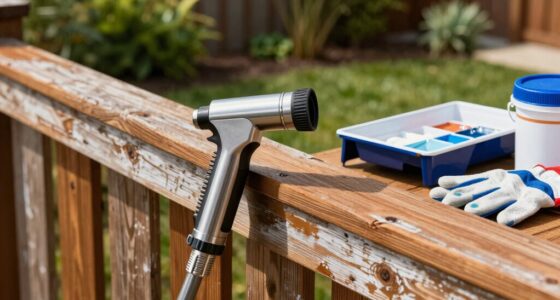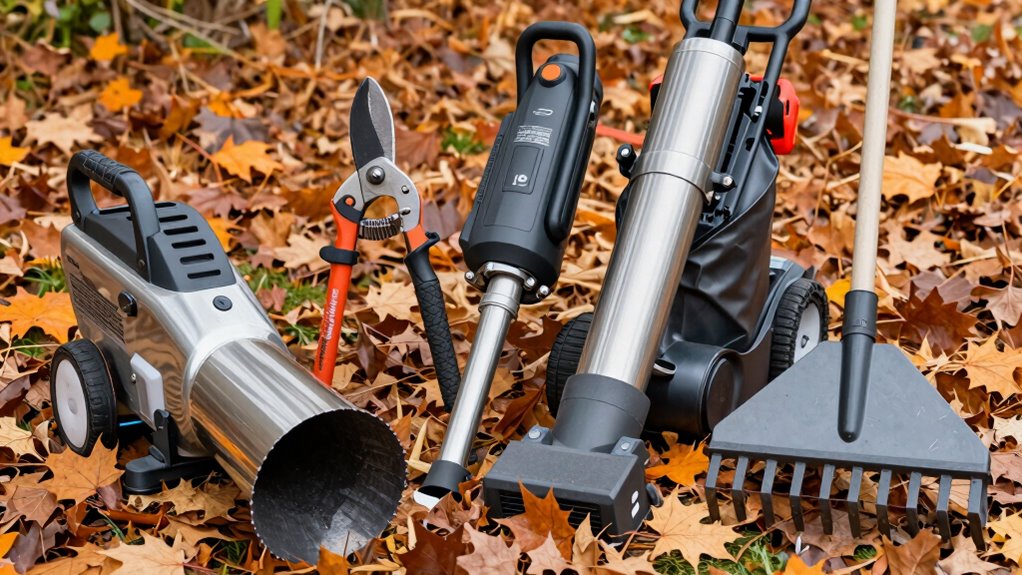

For heavy-duty seasonal yard cleanup, choose powerful tools like leaf blowers with adjustable speeds, heavy-duty chainsaws, and brush cutters to handle thick branches and woody debris efficiently. Use manual tools like sturdy rakes and carts to move and organize waste. Safety features and regular maintenance are essential for peak performance and protection. Employ environmentally friendly disposal methods such as mulching and composting. Keep exploring to discover the most effective strategies and tools for your yard tasks.

Get business pricing on tools and workshop supplies
- Business-only prices and quantity discounts
- Tax-exempt purchasing
- Multiple users, one account, clear invoices
Key Takeaways
- Use powerful, adjustable-speed leaf blowers and vacuums for quick debris removal and mulching.
- Select heavy-duty chainsaws and brush cutters for efficient clearing of thick branches and woody debris.
- Employ durable hand tools like rakes and wheelbarrows to streamline debris collection and transportation.
- Regularly inspect, clean, and maintain tools to ensure safety, efficiency, and longevity during heavy-duty cleanup.
- Incorporate eco-friendly disposal methods like mulching and composting to promote sustainable yard management.
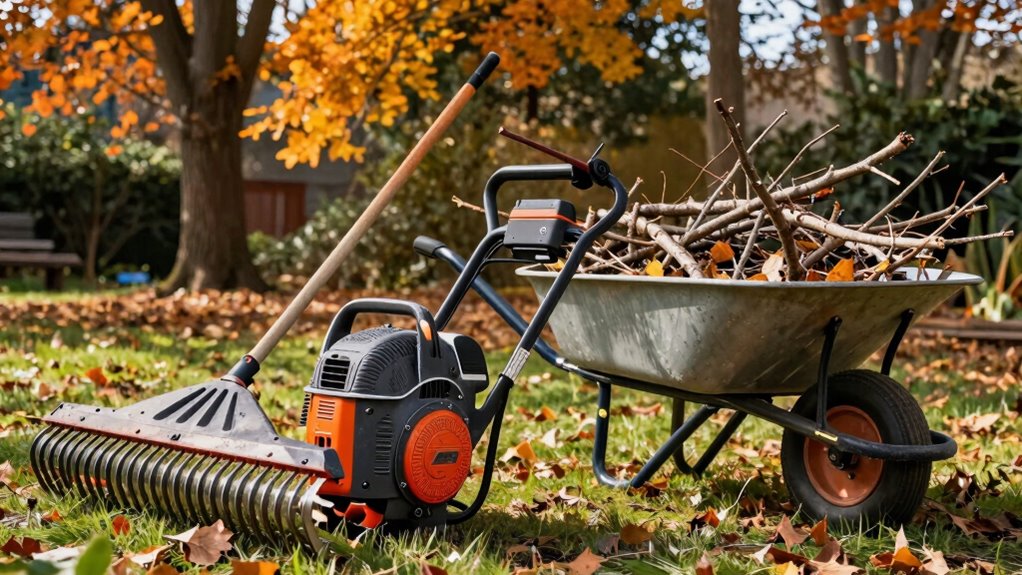
When it’s time to tackle a heavy-duty yard cleanup, having the right tools can make all the difference. You’ll want equipment that can handle the accumulation of garden debris, which often includes leaves, branches, and other stubborn debris that can quickly overwhelm your usual tools. Power tools are your best allies here, offering the efficiency and power needed to clear large areas quickly and effectively. A durable leaf blower, for instance, can save you hours by swiftly moving piles of leaves and small twigs to a central pile for collection. Look for models with adjustable speeds so you can handle delicate areas without damaging plants or landscaping features.
Power tools like leaf blowers save hours and handle large debris efficiently with adjustable speeds.
A heavy-duty leaf vacuum or mulcher can take your cleanup to the next level. These tools not only pick up garden debris but also shred it into mulch, which you can use in your garden beds or compost pile. This reduces waste and creates a resource from what might otherwise be discarded. When choosing power tools, consider those with a comfortable grip and lightweight design, especially if you’ll be working for extended periods. Battery-powered options are convenient because they eliminate cords and give you greater mobility, but ensure they offer enough runtime to complete your task.
For larger branches and woody debris, a robust chainsaw becomes indispensable. Opt for one with a reliable engine and safety features, so you can cut through thick limbs without risking injury. Pair your chainsaw with a sturdy pruning saw for more precise cuts on smaller branches or in tight spaces. If your yard has tough, tangled brush, a brush cutter or clearing saw can speed up the process, cutting through dense growth that would take ages with manual tools. Additionally, proper tool maintenance is essential to keep all your equipment functioning safely and effectively over time. Regularly inspecting and cleaning your tools extends their lifespan and ensures they work efficiently when you need them most. Incorporating biodiversity-friendly tools can also minimize harm to beneficial insects and wildlife during cleanup activities. Using ergonomic tools can help reduce fatigue and prevent injury during extended work sessions.
Once the bulk of garden debris is gathered, a heavy-duty rake or landscape broom will help you sweep up smaller remnants and tidy the area. For lifting and moving heavy piles of debris, a wheelbarrow or garden cart is essential. They make transporting debris to disposal sites much easier, reducing fatigue and saving time. Properly disposing of yard waste through environmentally friendly methods can also be a responsible way to manage your cleanup.
Products Worth Considering

Shark Rocket Corded Stick Vacuum (HV301) – Gray/Orange

Shark PowerDetect Corded Stick Vacuum, Self-Cleaning (Eggplant, HZ4002)

Shark Rocket Pet Plus Corded Stick Vacuum, Lightweight, Bordeaux, HV322
As an affiliate, we earn on qualifying purchases.
Frequently Asked Questions
What Safety Gear Is Recommended for Using Heavy-Duty Yard Tools?
When using heavy-duty yard tools, you should wear protective gloves to prevent cuts and blisters, and safety goggles to shield your eyes from debris. These safety gear items help reduce injury risks during tough yard work. Always check your gloves and goggles for damage before use, and make certain they fit properly. Wearing the right safety gear keeps you protected, so you can focus on completing your yard cleanup safely and efficiently.
How Do I Maintain and Store Heavy-Duty Yard Equipment Properly?
Think of your yard equipment as loyal partners needing care to stay sharp. Regular equipment maintenance, like oiling blades and checking belts, keeps them in top shape. After a hard day’s work, store your tools in dry, organized storage solutions—think shelves, racks, or covered sheds—to safeguard them from the elements. Proper maintenance and smart storage ensure your heavy-duty tools stay ready, reliable, and long-lasting season after season.
Are There Eco-Friendly Options for Heavy-Duty Yard Cleanup Tools?
Yes, eco-friendly options exist for heavy-duty yard cleanup. You can choose solar-powered tools, which use renewable energy and produce no emissions, making your work more sustainable. Additionally, biodegradable lubricants for machinery reduce environmental impact and keep your equipment running smoothly. By switching to these green alternatives, you can maintain your yard effectively while minimizing your ecological footprint.
What Is the Average Cost of Professional Yard Cleanup Services?
You might worry about high costs, but professional yard cleanup services typically average between $200 and $500, depending on the size and complexity of your yard. A cost comparison shows that service providers charge more upfront, but they save you time and effort. While DIY tools may seem cheaper, investing in professional help can make your yard look immaculate, offering peace of mind and stunning results that justify the expense.
Can These Tools Handle Large Tree Branches and Thick Shrubs?
Yes, these tools can handle large tree branches and thick shrubs. With powerful chainsaws and heavy-duty pruners, you can perform tree branch removal efficiently. For thick shrubs, use robust hedge trimmers and follow proper shrub trimming techniques to shape and clean up your landscape. Make certain to wear safety gear and work carefully, especially with heavy branches, to prevent accidents and guarantee a tidy yard.
Conclusion
With the right tools in hand, your yard cleanup becomes as effortless as a gentle breeze on a summer day. Whether you’re tackling fallen branches or stubborn debris, these heavy-duty tools are your trusted allies. Think of them as your secret weapons, transforming what seems like an overwhelming chore into a manageable task. Embrace the power of the right equipment, and you’ll have your yard looking pristine faster than you can say “season’s end.”