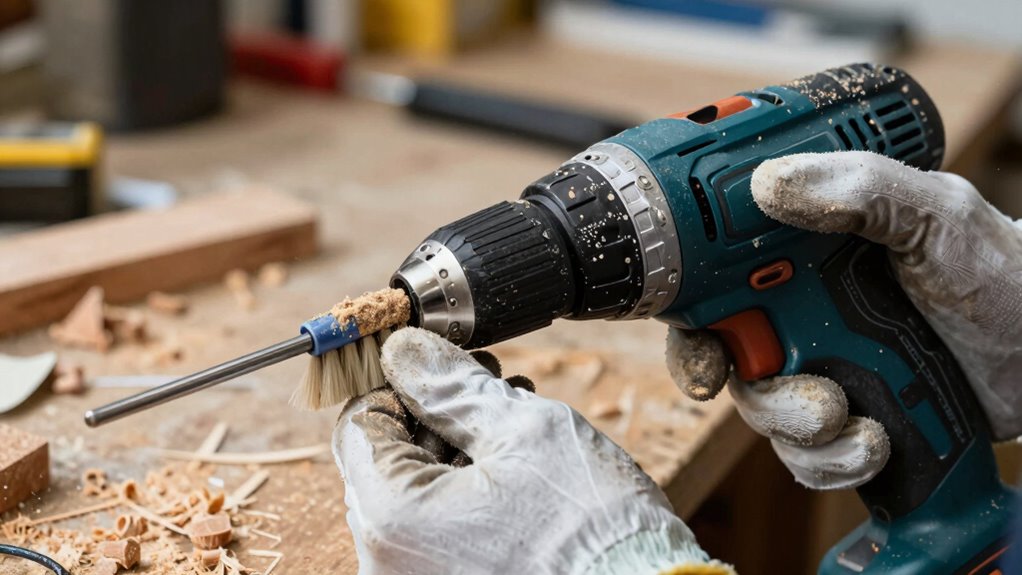

To clean sawdust from your power tools properly, unplug them first to avoid accidents. Use a soft brush or compressed air to remove dust from vents and crevices, being careful to avoid dust scattering or inhalation. Wipe down motor housings with a damp cloth and make certain all moisture is dried before reassembling. Regularly check filters and dust bags, and maintain dust collection systems for best performance. Keep these tips in mind to maintain safety and efficiency, and discover more ways to keep your tools in top shape.
Listen free for 30 days with Audible
Thousands of audiobooks and originals — cancel anytime.
As an affiliate, we earn on qualifying purchases.
Key Takeaways
- Unplug the tool and use compressed air or a soft brush to remove sawdust from vents, crevices, and internal parts.
- Wipe down external surfaces with a damp cloth, avoiding electrical components or water contact.
- Regularly check and replace filters or dust bags to prevent clogging and ensure proper airflow.
- Use vacuum attachments during cleaning to contain dust and minimize airborne particles.
- Ensure all components are thoroughly dried before reassembly to prevent moisture damage.
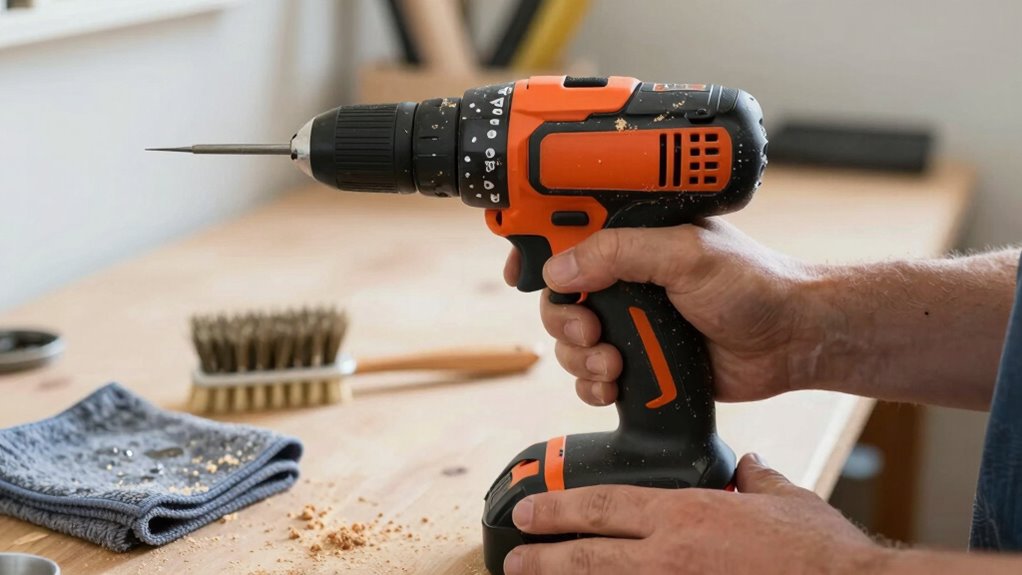
Keeping your power tools in good condition is essential for safety and ideal performance, especially when it comes to removing sawdust. Sawdust buildup can impair your tools, reduce accuracy, and even pose safety hazards if not properly addressed. To prevent these issues, you need to implement effective cleaning methods that focus on dust containment and safety precautions. Proper cleaning not only extends the lifespan of your tools but also keeps your workspace cleaner and safer.
Maintaining your power tools prevents hazards, improves performance, and extends their lifespan through effective cleaning and dust management.
Start by unplugging your power tool before you begin cleaning. This safety precaution prevents accidental activation and reduces the risk of injury. Once it’s disconnected, use a soft brush or compressed air to loosen and remove loose sawdust from vents, crevices, and other hard-to-reach areas. Be careful with compressed air—use it in a well-ventilated space to avoid inhaling dust particles and to prevent sawdust from scattering everywhere. To contain dust effectively, consider working in a designated area equipped with dust collection systems or vacuum attachments. These systems help trap sawdust at the source, minimizing airborne particles and making cleanup easier. If your tool lacks a vacuum port, you’ll want to manually clean the parts with a cloth or brush, but always ensure you do this in a space where dust won’t spread to other areas.
When cleaning the motor housing or internal components, avoid using water or liquid cleaners, as these can damage electrical parts. Instead, opt for compressed air or a slightly damp cloth, making sure all moisture is thoroughly dried before reassembling. Regular maintenance also involves checking and replacing filters or dust bags, if your tool uses them. Doing so prevents clogging and maintains maximum airflow, which is critical for both safety and performance. Additionally, proper cleaning techniques can help prevent the buildup of sawdust that might interfere with your tool’s moving parts or safety features. Using dust containment strategies can significantly reduce the amount of airborne dust, improving both safety and cleanliness in your workspace. Moreover, routine inspections can help identify potential issues early, ensuring your tools remain in optimal condition.
Always follow the manufacturer’s instructions regarding cleaning and maintenance. Some tools might have specific procedures or recommended cleaning products, so consulting the user manual ensures you’re not voiding warranties or damaging delicate parts. Remember, safety precautions are paramount: wear eye protection when using compressed air, keep your workspace well-ventilated, and dispose of collected sawdust responsibly. Proper cleaning and dust containment not only protect your health but also keep your power tools functioning efficiently for years to come. With consistent care, your tools will operate smoothly, safely, and with peak efficiency, making your woodworking projects safer and more enjoyable.
power tool dust collection system
As an affiliate, we earn on qualifying purchases.
As an affiliate, we earn on qualifying purchases.
Frequently Asked Questions
Can I Use Compressed Air to Remove Sawdust?
Yes, you can use compressed air to remove sawdust from your power tools. It’s effective for blowing out dust from vents and crevices, but make sure to hold the nozzle at a safe distance to avoid damage. Pair it with gentle cleaning solutions and a soft brush for thorough cleaning. Always wear safety goggles and a mask to protect yourself from airborne dust particles during this process.
How Often Should I Clean My Power Tools?
You should clean your power tools after every heavy use, as neglect can turn maintenance into a disaster! Regular cleaning keeps dust prevention at its best, prevents overheating, and prolongs your tools’ lifespan. For ideal tool maintenance, wipe down and inspect your tools weekly, especially after projects with lots of sawdust. Staying consistent ensures your tools stay efficient, safe, and in top shape, saving you time and money in the long run.
Is It Safe to Submerge Parts in Cleaning Solutions?
Submerging power tool parts in cleaning solutions isn’t safe because of chemical safety concerns. You risk damaging electrical components or causing corrosion. Instead, use appropriate cleaning methods like wiping with a damp cloth or applying safe solvents designed for tool maintenance. Always read the cleaning solutions’ instructions and guarantee proper ventilation. This way, you protect your tools and yourself from potential hazards associated with improper use of cleaning solutions.
What Tools Are Best for Cleaning Tight Spaces?
To clean tight spaces in your power tools, use compressed air or small brushes to reach crevices. Incorporate dust containment and air filtration systems to prevent sawdust from spreading into your workspace and to protect your respiratory health. These tools help dislodge stubborn dust, ensuring thorough cleaning. Regular maintenance with these methods keeps your tools in top shape and minimizes dust buildup, making your workspace safer and cleaner.
Should I Lubricate My Tools After Cleaning?
Yes, you should lubricate your tools after cleaning. Think of lubrication as a protective layer, guaranteeing smooth operation and reducing wear. It’s part of good maintenance and storage considerations, preventing rust and corrosion. Proper lubrication helps keep your tools in top shape, especially after removing sawdust and debris. Regularly applying lubricant extends their lifespan and ensures they perform reliably when you need them most.
As an affiliate, we earn on qualifying purchases.
Conclusion
Now that you know how to clean your power tools, think of each tool as a trusted companion on your woodworking journey. Clearing sawdust is like giving it a breath of fresh air, ensuring it stays strong and ready for the next project. When you maintain it well, you’re not just cleaning; you’re nurturing a loyal partner that will help turn your creative visions into reality. Treat it with care, and it’ll serve you for countless more projects ahead.
power tool dust filter replacement
As an affiliate, we earn on qualifying purchases.
As an affiliate, we earn on qualifying purchases.
vacuum attachment for power tools
As an affiliate, we earn on qualifying purchases.
As an affiliate, we earn on qualifying purchases.
NFL season / tailgating Picks
team gear
As an affiliate, we earn on qualifying purchases.