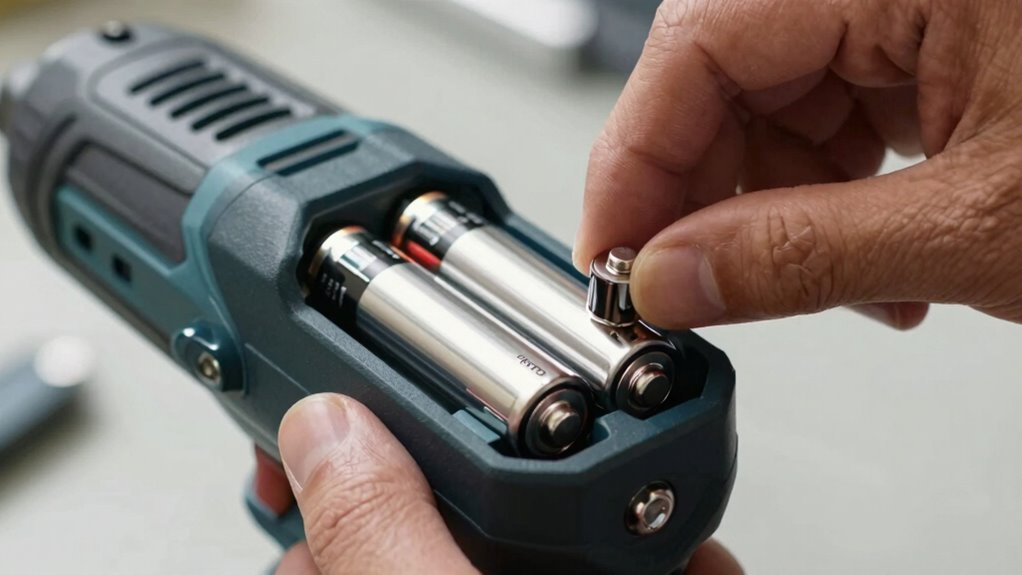
To extend your power tools’ runtime, rotate your batteries regularly by labeling each one and using them in turn. Allow batteries to cool down after use, and store them in a cool, dry space at about 40-60% charge. Avoid fully discharging or overcharging batteries, and check their health periodically. Following these steps helps spread wear evenly and prevents premature capacity loss. Keep going to discover more tips on keeping your batteries in top shape.
Key Takeaways
- Establish a battery rotation schedule, using each battery in turn to distribute wear evenly.
- Label batteries to easily track usage and ensure proper rotation.
- Allow batteries to rest and cool between uses to prevent overheating and prolong lifespan.
- Store batteries in a cool, dry place and avoid overcharging or fully discharging during rotation.
- Regularly monitor battery health to replace aging batteries and maintain optimal tool runtime.
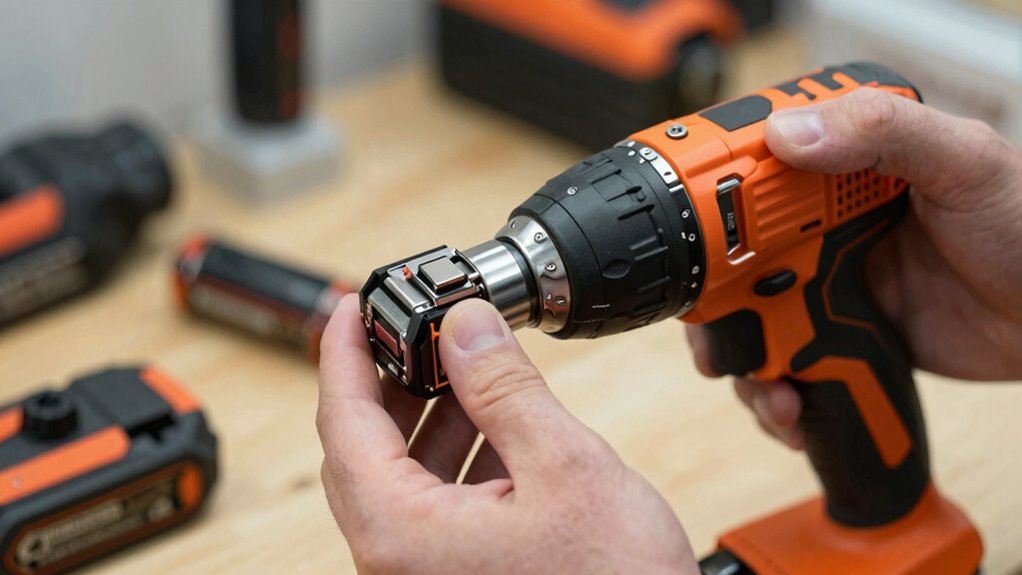
Rotating your batteries is a simple yet effective way to maximize your power tools’ runtime and lifespan. When you regularly switch between batteries, you give each one a chance to rest and recover, which can markedly improve their overall performance. Proper battery storage is key to this process. Keep your batteries in a cool, dry place, away from direct sunlight or extreme temperatures. This helps prevent deterioration caused by heat or cold, which can shorten their lifespan. When storing batteries, it’s best to keep them partially charged—around 40-60%. Fully discharged or overcharged batteries can suffer from capacity loss over time, so maintaining an ideal charge level during storage is essential for longevity.
Rotating batteries and storing them in a cool, dry place at 40-60% charge extends their lifespan and performance.
Charging cycles are at the heart of battery health. Every time you charge and then use your battery, you’re completing a charging cycle. Over time, repeated cycles cause wear, reducing the battery’s ability to hold a full charge. By rotating your batteries, you distribute the wear evenly across multiple units, preventing any single battery from experiencing excessive cycles that can degrade its capacity prematurely. This not only extends each battery’s life but also ensures you always have a ready-to-use backup when needed. Additionally, understanding the importance of battery chemistry can help you better care for your batteries and optimize their lifespan. Proper management of battery capacity is also crucial to prevent over- or under-utilization, which can impact performance. Regularly monitoring battery health can help you identify when a battery is nearing the end of its useful life, allowing for timely replacement and avoiding unexpected tool downtime. Incorporating manufacturer’s guidelines into your maintenance routine can further enhance your batteries’ longevity and ensure safe operation.
When you’re using your tools, keep an eye on the batteries’ charge levels. Don’t run them down completely before recharging—partial discharges are better for most modern lithium-ion batteries. Alternating between batteries allows each one time to cool down after use, which is essential because heat accelerates battery deterioration. Charging your batteries promptly after use, rather than letting them sit in a discharged state, helps maintain their health and ensures each cycle is as effective as possible. To optimize performance, consider establishing a battery rotation routine that includes labeling or marking each unit, so you know which batteries are used more frequently. Creating a routine of rotating your batteries involves marking or labeling them, so you know which ones are used more frequently. Use each battery in turn, and give each sufficient time to rest and cool down before recharging. This practice balances the load and reduces stress on individual batteries, leading to more consistent performance over time. Remember, proper battery storage, mindful management of charging cycles, and regular rotation are simple steps that can greatly improve your tools’ runtime and extend the overall life of your batteries. A little planning today saves you money and hassle in the long run, keeping your power tools ready whenever you need them.

Sundpey 267 Pcs Tool Kit Set for Home with 21V Cordless Drill & Drawer Case
- Cordless Drill with LED Light: 21V, two-speed, keyless chuck, lightweight design
- Rechargeable Battery & Charger: 2.0Ah lithium-ion, 1.5-hour charge, 1-hour runtime
- Complete Home Tool Kit: Includes drill, wrenches, screwdrivers, pliers, and more
As an affiliate, we earn on qualifying purchases.
As an affiliate, we earn on qualifying purchases.
Frequently Asked Questions
Can Rotating Batteries Damage the Tool or Battery Contacts?
Rotating batteries typically doesn’t damage your tool or battery contacts if done properly. However, frequent swapping can lead to contact wear or battery corrosion over time. To prevent this, regularly clean the contacts and make sure they’re dry before inserting batteries. Proper maintenance minimizes the risk of damage, helping your tool stay in good shape. Always handle batteries carefully and follow manufacturer instructions to extend their lifespan and performance.
How Often Should I Rotate My Batteries During Use?
You should rotate your batteries every 15-20 minutes during use for dependable power management and battery maintenance. This helps prevent overheating and guarantees even wear, extending both battery life and tool performance. Keep an eye on each battery’s temperature and performance, swapping them out as needed. Regular rotation not only maintains consistent power output but also promotes longer-term reliability of your tools and batteries.
Are There Specific Indicators to Know When to Rotate Batteries?
Did you know that proper battery calibration can improve your tool’s performance by up to 20%? To know when to rotate batteries, look for signs like decreased runtime, slower operation, or overheating. These indicators suggest your batteries need a rest for power management. Regularly calibrate your batteries to guarantee accurate readings, and rotating them prevents overuse, extending their overall lifespan and maintaining peak tool performance.
Does Battery Rotation Affect Charging Cycles or Battery Lifespan?
Rotating batteries doesn’t negatively impact charging cycles or battery lifespan if you follow proper storage optimization and calibration practices. Regularly calibrate your batteries to guarantee accurate power readings, and store them in a cool, dry place when not in use. By doing so, you help maintain their health, extend their overall lifespan, and improve performance. Proper rotation and maintenance support long-term battery efficiency and prevent premature degradation.
What Tools Are Compatible With Battery Rotation Techniques?
Like a knight with his sword, you need compatible tools for effective battery rotation. Many cordless power tools from brands like DeWalt, Milwaukee, and Makita support rotation strategies, allowing you to switch batteries seamlessly. Check each tool’s battery compatibility before rotating. This guarantees balanced usage, prolongs battery life, and keeps your tools ready for action. Proper rotation is your secret weapon against unexpected downtime and unnecessary replacements.

FLASLD Large Fireproof Lipo Bag for 100Ah Lithium Battery Storage and Charging, 14 x 7.8 x 9.5in Waterproof Box for Documents and Valuables
- Purpose of the Battery Bag: Minimizes fire risk from lithium batteries
- Fireproof Feature: Resists temperatures up to 1000℉
- Explosionproof Design: Three-layer composite for safety
As an affiliate, we earn on qualifying purchases.
As an affiliate, we earn on qualifying purchases.
Conclusion
By rotating your batteries, you’re basically giving each one a well-deserved break, much like athletes swapping in fresh players during a game. I once had a friend who kept his drill running all day by simply switching batteries every hour. That small trick kept his tools working like new, saving him time and frustration. Remember, a simple rotation isn’t just about extending runtime—it’s about keeping your tools in top shape, ready for whatever project comes next.

ANCEL BA101 Car Battery Tester, 12V Digital Automotive Alternator Meter Diagnostic Tool,100-2000 CCA Load Capacity, Charging & Cranking Analyzer for Truck, Boat, RV, Marine Vehicle, and More
- Early Battery Issue Detection: Identifies problems before breakdowns
- Comprehensive Battery Analysis: Displays SOH, SOC, voltage, current, CCA
- High-Quality Clamps and Chip: Ensures accurate, reliable readings
As an affiliate, we earn on qualifying purchases.
As an affiliate, we earn on qualifying purchases.

DEWALT 20V MAX Portable Fan, Battery Powered Rechargeable Cordless Shop Fan, Up to 4.5 Hrs Runtime, Variable Speed, 650 CFM, Tool Only (DCE512B)
- Variable Speed Control: Adjustable airflow up to 650 CFM
- Dust and Water Resistant: IP54-rated for tough job sites
- Efficient Axial 3-Blade Design: Maximizes airflow and runtime
As an affiliate, we earn on qualifying purchases.
As an affiliate, we earn on qualifying purchases.