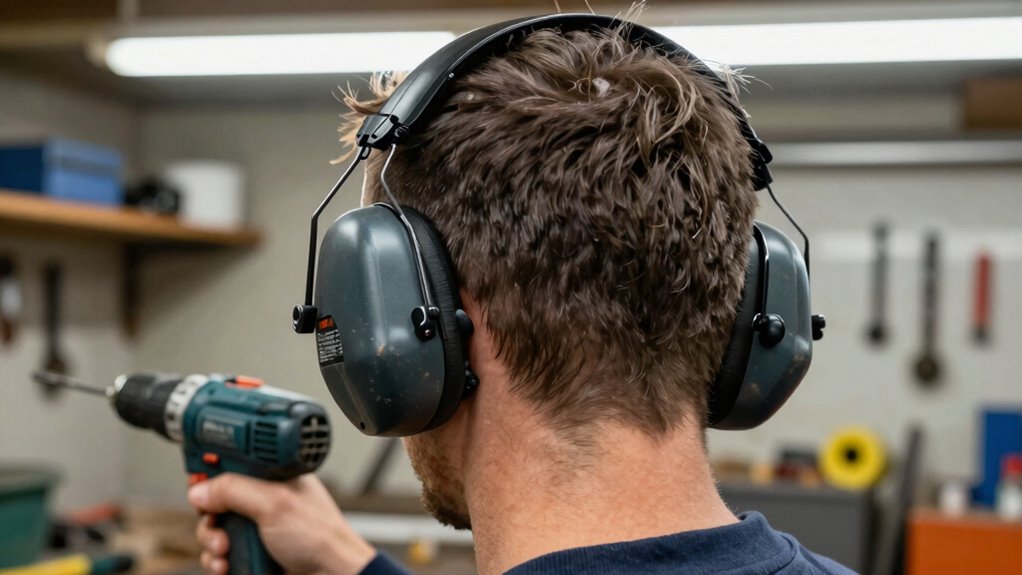

To protect your hearing during long tool sessions, always wear appropriate noise protection like earplugs or earmuffs with high NRR ratings, and use them consistently when working loud tools. Take regular breaks to give your ears a chance to recover, and consider adding noise barriers or quieter tools to your workspace. Properly maintaining your hearing protection and using combined devices offers maximum safety. Keep learning about effective noise control methods to keep your hearing safe for years to come.

Get business pricing on tools and workshop supplies
- Business-only prices and quantity discounts
- Tax-exempt purchasing
- Multiple users, one account, clear invoices
Key Takeaways
- Always wear appropriate hearing protection like earplugs or earmuffs during loud tool use.
- Choose hearing protection with high NRR ratings suited for the noise level.
- Take regular breaks to allow your ears to recover from prolonged noise exposure.
- Use noise barriers, enclosures, or quieter tools to reduce overall sound levels.
- Maintain proper distance from noise sources and combine protective measures for maximum safety.
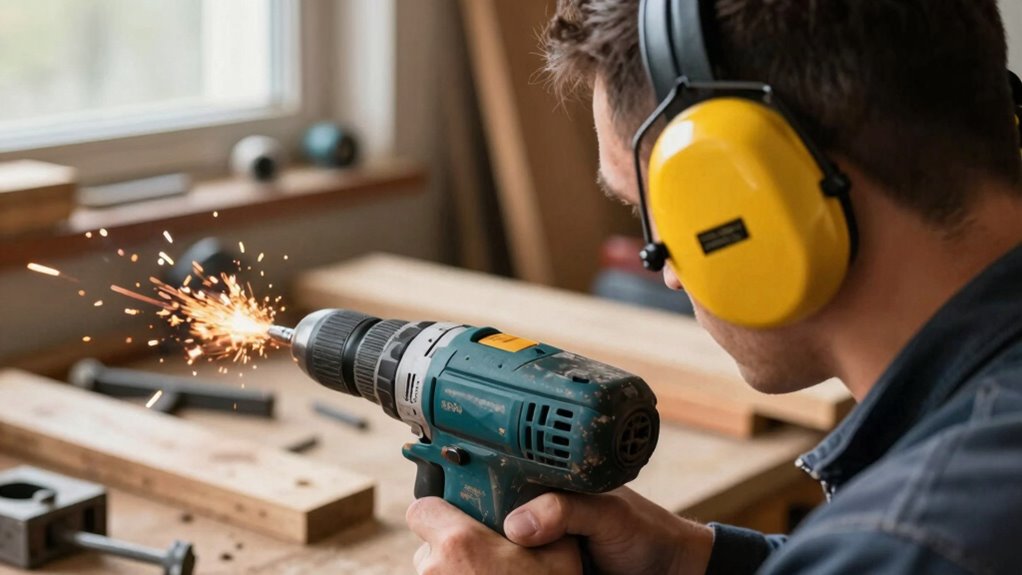
Long tool sessions can expose you to loud noises that may damage your hearing if you’re not careful. When you’re working with power tools, machinery, or any equipment that produces high decibel levels, protecting your ears should be a top priority. Hearing protection is essential to prevent noise-induced hearing loss, which can happen gradually without you even realizing it. By using the right gear, you can markedly reduce the risk of hearing damage and stay focused on your work without discomfort or distraction.
Long tool sessions can harm your hearing; protect your ears with proper gear to prevent damage and stay focused.
One of the most effective ways to safeguard your hearing is to utilize proper hearing protection devices. Earplugs and earmuffs are your best options for noise reduction during long sessions. Earplugs are small, easy to carry, and can be inserted directly into your ear canal to block out loud sounds. Earmuffs, on the other hand, fit over your ears and create a seal that prevents excessive noise from reaching your eardrum. For prolonged use, earmuffs tend to be more comfortable and easier to wear for extended periods, especially if you need to switch between different tasks frequently. Combining both earplugs and earmuffs offers maximum noise reduction, giving you an extra layer of protection when working in particularly loud environments.
Choosing hearing protection with appropriate noise reduction ratings (NRR) is vital. Higher NRR ratings mean better noise-blocking capabilities. Always check the specifications and select gear suited to the decibel levels of your tools. Remember, not all hearing protection is created equal, so investing in quality equipment pays off in the long run. It’s also important to wear your hearing protection consistently, especially during the loudest parts of your work. Removing your ear protection even briefly can expose your ears to damaging levels of noise.
Beyond wearing hearing protection, consider creating a quieter work environment whenever possible. Use noise barriers, enclose loud machinery, or opt for quieter tools if available. These steps can help with noise reduction and make long tool sessions less damaging and more manageable. Maintaining a safe distance from noise sources when feasible also reduces sound intensity reaching your ears. Regular breaks from noisy environments give your ears time to recover, lowering the overall risk of permanent damage. Additionally, understanding the importance of biodiversity and conservation can influence the selection of quieter, more environmentally friendly tools, supporting both your health and sustainable practices. Incorporating noise mitigation strategies can further enhance your protection and reduce overall exposure.
Protecting your hearing during long tool sessions isn’t just about comfort; it’s about preserving your ability to hear clearly for years to come. Make hearing protection a non-negotiable part of your safety routine, and prioritize noise reduction measures to keep your ears safe without sacrificing productivity. Remember, noise exposure can accumulate over time, making consistent precautions essential for long-term hearing health.
high NRR earplugs for power tools
As an affiliate, we earn on qualifying purchases.
As an affiliate, we earn on qualifying purchases.
Frequently Asked Questions
Are There Specific Hearing Protection Devices for Different Tools?
Yes, there are specific hearing protection devices for different tools. For loud machinery, you might prefer custom ear muffs that fit snugly and offer superior noise reduction. For more versatile protection, noise canceling headphones are great—they block out noise while allowing you to hear essential sounds. Choose the device based on the noise level and your comfort, ensuring your ears stay protected during long tool sessions.
How Often Should I Take Hearing Breaks During Sessions?
You should take hearing breaks every 15 to 30 minutes during long tool sessions to prevent hearing fatigue and limit noise exposure. Regular breaks help your ears recover from the constant noise and reduce the risk of long-term damage. If you’re exposed to loud sounds for extended periods, consider using hearing protection devices and stepping away from the noise source periodically. This way, you protect your hearing effectively.
Can Earplugs Affect Communication and Safety?
Certainly, earplugs can create communication barriers and impact safety considerations. While they shield your hearing from loud noises, they may muffle voices and essential alerts, making it harder to hear warnings or instructions. To balance safety and communication, opt for earplugs with built-in filters or use alternative hearing protection methods. Always prioritize clear communication and safety, ensuring you remain alert and responsive during long tool sessions.
What Are Signs of Hearing Damage From Tool Use?
You might notice signs of hearing damage from tool use like persistent ringing in your ears, muffled sounds, or difficulty understanding speech. These symptoms indicate potential hearing loss or ear damage. If you experience them, it’s crucial to take breaks, lower noise exposure, and use proper hearing protection. Ignoring these signs can lead to permanent hearing loss, so always be vigilant and prioritize ear safety during noisy work.
Do Ambient Noise Levels Impact Hearing Protection Effectiveness?
Ambient noise levels considerably impact hearing protection‘s effectiveness. When ambient noise is high, regular earplugs or earmuffs might not provide enough protection, so you should opt for noise-canceling or high-NRR hearing protection. Always assess the ambient noise before starting work and adjust your hearing protection accordingly. Properly fitted ear gear ensures maximum noise reduction, safeguarding your hearing even in loud environments. Remember, ignoring ambient noise can lead to unnoticed hearing damage over time.
earmuffs noise reduction for woodworking
As an affiliate, we earn on qualifying purchases.
As an affiliate, we earn on qualifying purchases.
Conclusion
By taking simple steps like wearing ear protection and taking regular breaks, you can safeguard your hearing during long tool sessions. Imagine working on a construction site for hours without proper ear protection—you could risk permanent hearing damage. Instead, follow these tips and stay aware of noise levels. Protecting your hearing today guarantees you enjoy clear sound for years to come, so stay vigilant and prioritize your ear health every time you pick up your tools.
ear protection combo set for loud environments
As an affiliate, we earn on qualifying purchases.
As an affiliate, we earn on qualifying purchases.
As an affiliate, we earn on qualifying purchases.
Fall yard work Picks
leaf blowers
As an affiliate, we earn on qualifying purchases.